


RIYADH: The Saudi-Japan Vision 2030 ministerial meeting was a major step forward in strengthening the historical relations between the two countries, the Saudi minister of investment has told a business seminar.
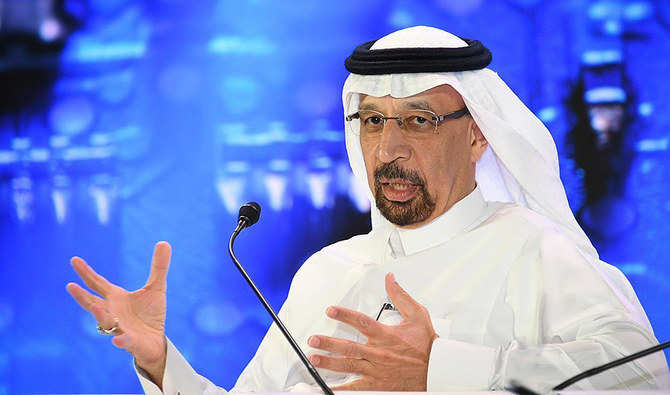
Speaking at the Saudi-Japan Vision 2030 Business Forum webinar on Tuesday, Khalid Al-Falih pledged commitment to the next phase of the initiative and pointed out that Japan had been an important economic partner of the Kingdom for many decades.
Since launching the Saudi Vision 2030 reform plan in 2016, the Kingdom had directly embarked on achieving its goals by emphasizing the important role that foreign investments played in the country, the minister said.
It had also revealed Saudi Arabia’s determination to empower investors in general, and Japanese investors in particular, to expand their businesses in the Kingdom by providing real investment opportunities, he added.
Saudi Arabia and Japan agreed on supporting the strategic partnership between the two countries in September 2016 by establishing the joint group for the Saudi-Japan Vision 2030. This was followed by entering into other important agreements and memoranda of understanding.
Last year witnessed the Saudi Arabian General Investment Authority (SAGIA) signing cooperation agreements with Mizuho Bank, and MUFG Bank, both of Japan to discuss investment opportunities provided by the Kingdom and how to start businesses there.
During the forum other memoranda of understanding and agreements were signed such as a memorandum of understanding (MoU) between Alfaisal University and Oita National University, an accord between SABIC and Yokogawa Electric Corp. to establish a local center of excellence, and a MoU between the Saudi Industrial Development Fund and Sumitomo Mitsui Banking Corp. to cooperate in business financing opportunities and developing human capital.
A group of experts from the public and private sectors participated in the forum, including representatives of the Saudi Ministry of Tourism and the Royal Commission for Riyadh. During the forum, the growing range of investment opportunities in the Kingdom were reviewed, including in the entertainment and tourism sectors, and startups in Japan.
In addition, Japanese and Saudi experts delivered presentations on cooperation opportunities in economic zones and new projects in the Kingdom, as well as on the radical changes taking place in the country through the establishment of development projects aimed at improving living standards and quality of infrastructure in Riyadh.
One example highlighted was the hi-tech Riyadh Metro project that when completed will be 176 km long with 85 stations.
Another infrastructure project for the Saudi capital was the King Abdul Aziz Public Bus Transport Network. The under-construction network will cover 1,900 km over 80 routes across all districts of Riyadh. The project will serve as a major support to the train network and means of passenger transport within neighborhoods and throughout the city.
Also, the Green Riyadh project, one of the world’s most ambitious urban greening initiatives, will see more than 7.5 million trees planted throughout the city, at a rate of one tree for every resident of the capital.
There are nine sectors upon which the Saudi-Japan Vision 2030 depends, namely education and sports, culture, the establishment of small and medium enterprises, energy and infrastructure, competitive industry, money and investment, quality assurance, health and medical care, media, entertainment and innovation, and food and agricultural security.


