

Pakistan seeks $150 million from World Bank to buy coronavirus vaccine

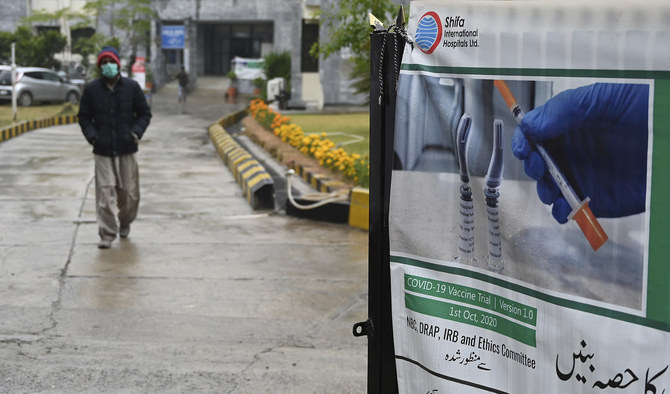
In this picture taken on November 25, 2020 a volunteer leaves after being administered the new Chinese-made vaccine for the Covid-19 coronavirus, the first ever Phase 3 clinical trial for any vaccine in Pakistan, at a hospital in Islamabad. (AFP/File)
Short Url
Updated 02 March 2021
Follow

Pakistan seeks $150 million from World Bank to buy coronavirus vaccine

  • Government wants to divert some of the $200 million Pandemic Response Effectiveness Project funds into vaccine purchase
  • World Bank officials say they are in touch with Pakistani authorities to identify funding sources for COVID-19 response

KARACHI: Pakistan has approached the World Bank for funding of about $150 million to purchase coronavirus vaccines, officials confirmed on Sunday.

The government is seeking to divert the global lender's $200 million Pandemic Response Effectiveness Project (PREP) for Pakistan into the vaccine purchase. The PREP was approved by the World Bank in April but has not been fully utilized. 

"The World Bank is actively working with GoP (Government of Pakistan) to identify funding sources among the ongoing operations supporting the country’s response to the pandemics, and beyond," Mariam Sara Altaf, external affairs officer at the World Bank office in Islamabad, told Arab News, confirming that the bank had been approached by Pakistani authorities.

A formal request for the funds was made by the Economic Coordination Division (EAD) on the recommendation of the Ministry of National Health Services.  

Officials at the EAD told Arab News that around $150 million of the PREP fund remains unutilized and could be used to purchase the vaccine.  

“The ministry of health officials have been advised that the available funds can be diverted for the purchase of vaccine,” an EAD official said, requesting not to be named.

The World Bank’s PREP was meant to help establish quarantine facilities in collaboration with public and private hospitals and supply equipment to hospitals, including ventilators and protective gear for doctors and paramedics.

Last month, the Pakistani government said it would allocate an initial $150 million to purchase COVID-19 vaccines directly from the international market with the immunization drive expected to commence by the second quarter of the next year.  

In the first phase of immunization, the most vulnerable 5 percent of the country's 210 million population, such as health workers and persons above age 65, would be vaccinated.

According to health ministry officials, Pakistan is already in direct contact with vaccine producers and the Global Alliance for Vaccines and Immunizations (GAVI).

“The health ministry is at a fast pace basis working on the data of the companies which have developed the vaccine, including the efficacy," the ministry's spokesman, Sajid Shah, told Arab News.


Pakistan’s Mahnoor Omer named among TIME’s ‘Women of the Year’ for 2026

Updated 8 sec ago
Follow

Pakistan’s Mahnoor Omer named among TIME’s ‘Women of the Year’ for 2026

  • Omer moved a Pakistani court against the so-called ‘period tax’ in Sept. 2025 which has since sparked a national debate
  • Taxes on sanitary pads in Pakistan can add up to 40 percent to retail price, UNICEF says only around 12 percent women use such products

ISLAMABAD: Pakistani women’s rights activist Mahnoor Omer, who fought against taxes on menstrual products, has been named among the TIME magazine’s ‘Women of the Year’ for 2026.

Omer’s efforts have been recognized alongside 16 activists, artists, athletes and businesswomen in the TIME’s Women of the Year 2026 list, including Olympic gold medalist Sydney McLaughlin-Levrone and Oscar-nominated filmmaker Chloe Zhao.

Dissatisfied with the efforts to educate Pakistani girls about sexual violence, Omer founded the Noor Foundation at the age of 14 and held her own workshops with village girls about everything from climate change to menstruation, according to the TIME magazine.

Two years later, a conversation with a domestic worker about the price of pads made her realize that not everyone could afford these essentials. She moved a court against the so-called “period tax” in Sept. 2025 and the case has sparked a national debate on the subject, considered a taboo by many in Pakistan, since its first hearing late last year.

“A decade and one law degree after her interest in activism was sparked, Omer, now 25, is putting her passion and expertise to work in the name of gender equity,” TIME wrote about Omer on its website.

Taxes imposed on sanitary products in Pakistan can add up to 40 percent to the retail price. UNICEF estimates just 12 percent of women in the country use commercially produced pads or tampons. The alternative, using cloth, risks health impacts including rashes and infections, and can make it impossible for girls to attend school while menstruating.

Omer’s suit, which awaits the government response, has sparked a national discussion. She says she spoke about menstruation to her father and male cousins, who thanked her for standing up for their daughters.
The 25-year-old, who is currently enrolled in a master’s degree in gender, peace, and security at the London School of Economics, sees this case as just the first of many.

“I’m not free until every woman is free,” she was quoted as saying by TIME. “I want to leave no stones unturned in terms of what I can do with the next few decades, as a lawyer for the women in my country and gender minorities in general.”