KARACHI: Leaders of an antigovernment alliance of Pakistan's opposition parties said on Saturday they would decide next week if their members should resign from national and provincial assemblies to put pressure on Prime Minister Imran Khan to quit office.
The en masse resignation is one of the points in a roadmap of the Pakistan Democratic Movement (PDM) formed by 11 opposition parties in late September to start a countrywide campaign to remove Prime Minister Imran Khan's government and hold early elections.
"The meeting of PDM will be held on December 8, and in this meeting a final decision will be taken,” Muhammad Zubair, Pakistan Muslim League-Nawaz (PML-N) central leader and former Sindh governor, told Arab News.
"Option of resignations cannot be ruled out. Even PPP doesn’t rule it out,” he said, referring to the Pakistan People’s Party (PPP), as he dismissed recent media reports that the PML-N had decided on its own to quit the parliament.
“PML-N had already taken this decision from the very first day but we are part of eleven-party alliance. So, all understanding in terms of the action and everything has been taken jointly.”
He added that within the party some were suggesting that resignations should follow a long opposition march to Islamabad in January, if it fails to force the prime minister out.
PPP central leader Qamar Zaman Kaira told Arab News that the party has "principally" agreed with mass resignations, but when the step should be taken is a "decision which the leadership would take."
He said that holding public gatherings, the long march, pressing for a vote of no confidence against the prime minister and resigning from the assemblies were on the agenda.
“Pakistan People’s Party is committed to all 26-points of the PDM’s resolution and resignations from the assembly is one those points. So, when the leadership deem it appropriate, it will sit, decide and take it.”
According to Karachi-based political analyst Mazhar Abbas, almost all parties of the alliance, except for PPP, were in favor of resigning form legislatures. He said that keeping in mind the concerns of the PPP — which in Sindh province dominates the assembly — the PDM may first announce resignations from the national assembly.
“If the alliance announces to quit the national assembly, even then it will be major news,” Abbas said, adding that the PDM's rally in Lahore, Punjab on Dec. 13 will be important for the course of action.
A leader of the ruling Pakistan Tehreek-e-Insaf (PTI) and advisor to the chief minister of Punjab province, Dr. Firdous Ashiq Awan, warned on Friday that if the opposition held the rally, "the law would take its course."
"The opposition should work for implementation of the standard operating procedures to prevent corona instead of holding rallies," she said.
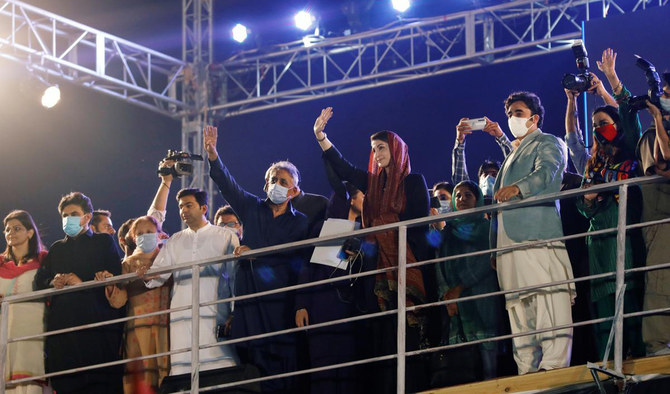
The PDM has already held five rallies — in Gujranwala, Karachi, Quetta, Peshawar and Multan — two of them despite a government ban on mass gatherings issued in November to curb the spread of a second coronavirus wave gripping the country.


![]()

Pakistan opposition says to decide next week on resigning from assemblies
Short Url
https://arab.news/2xvur
Pakistan opposition says to decide next week on resigning from assemblies
- Mass resignation is part of a strategy by the Pakistan Democratic Movement to remove Prime Minister Imran Khan and hold early elections
- Opposition leaders say resignations may follow a long antigovernment march to Islamabad planned for January
Latest updates


Recommended


© 2026 SAUDI RESEARCH & PUBLISHING COMPANY, All Rights Reserved And subject to Terms of Use Agreement.