



LONDON: The news that Britain has approved the coronavirus vaccine developed by Pfizer/BioNTech has raised expectations that other countries could also begin immunizations in the near future and slowly bring the curtain down on a pandemic that disrupted the global social and economic order like no other event in living memory.
Trials have shown that the Pfizer/BionTech shot offers 95 percent protection against SARS-CoV-2, the virus that causes the coronavirus disease (COVID-19), which to date has infected 64 million people worldwide and killed nearly 1.5 million since it first emerged in the Chinese city of Wuhan in late 2019.
The approval by Britain’s medicines regulator, MHRA, means a mass vaccination campaign could begin in the UK as early as next week, with the first 800,000 doses distributed to the elderly and most vulnerable as a priority. The government has already ordered some 40 million doses — enough to vaccinate 20 million people.
Recipients will be given two injections, spaced 21 days apart, with immunity developing after the first dose. Its full effect kicks in around a week after the second booster. Scientists say the side effects are mild and tend to last no more than a day or two. Pfizer/BioNTech has priced the vaccine at around $19.50 per dose, or $39 per patient.
“With 450 people dying of COVID-19 infection every day in the UK, the benefits of rapid vaccine approval outweigh the potential risks,” Andrew Hill, senior visiting research fellow in the Department of Pharmacology at the University of Liverpool, told Reuters news agency.
The messenger RNA (mRNA) vaccine itself is truly revolutionary, taking a small fragment of genetic code from COVID-19 to train the body’s immune response to recognize the virus. Until Wednesday, nothing like it had been approved for use in humans.
This announcement came as a huge relief to publics, businesses and governments worldwide after months of lockdown measures, crippling pressure on health services and grinding economic turmoil. It is also expected to calm anxiety and stress as families and individuals forced to remain indoors and separated from loved ones see the first glimmer of light at the end of the tunnel.
“It’s the protection of vaccines that will ultimately allow us to reclaim our lives and get the economy moving again,” Boris Johnson, the UK prime minister, said in his remarks lauding the approval.
Pfizer/BioNTech announced the success of its phase three advanced trials in early November — a remarkable feat given it only began work 10 months ago. Vaccine development can take up to a decade under normal circumstances.
Since then, US pharmaceutical giant Moderna and the UK’s Oxford University/AstraZeneca team have unveiled their own workable vaccines — a reassuring sign that the virus can be fought on multiple fronts.
Although the Pfizer/BioNTech vaccine is highly effective, it is also expensive, must be stored in special boxes packed in dry ice at -70 C, and can only be kept in a fridge for five days once delivered. For developing countries, the high cost and logistical challenges could prove prohibitive. If more vaccine approvals follow in the coming days and weeks, governments will likely shop around for the best deal.
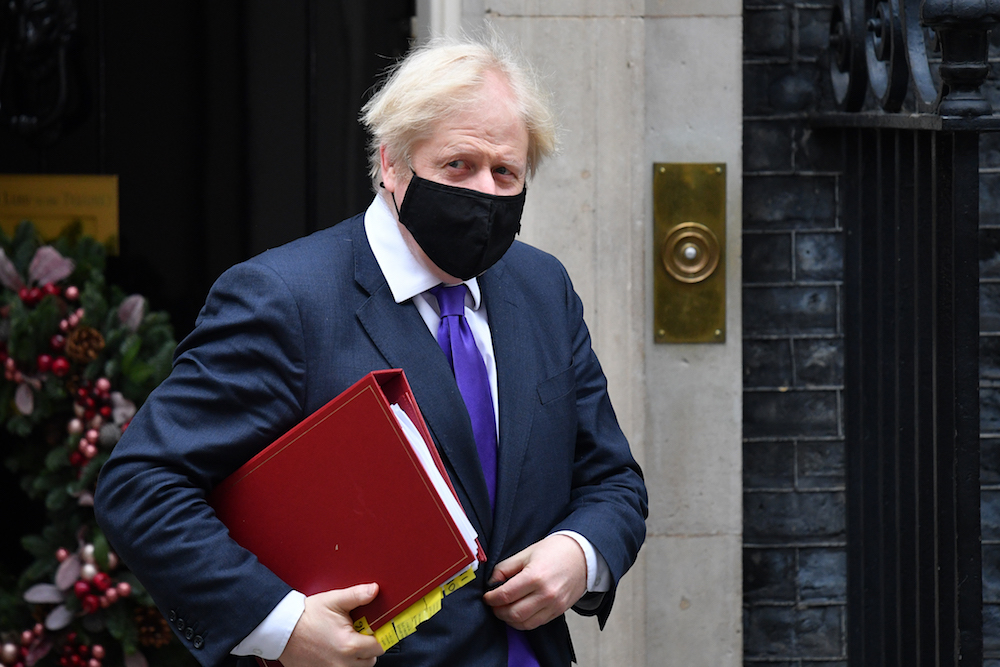
Britain's Prime Minister Boris Johnson wearing a face mask because of the coronavirus pandemic leaves number 10 Downing Street in central London on December 2, 2020, to take part in the Prime Minister Question (PMQs) session in the House of Commons. (AFP)
The Moderna vaccine, which uses the same mRNA model employed by Pfizer/BioNTech, had an equally impressive efficacy rate (95 percent) in phase three trials. Better yet, it is stable at normal refrigerator temperatures of 2-8 C for up to 30 days, and can be stored for months at -20 C.
The Oxford team has found a lower-cost alternative with an average of 70 percent effectiveness but which can be stored at fridge temperature. The vaccine, which adapts a chimpanzee virus that is harmless to humans to train the immune system, may prove a far more practical option for developing countries.
Although this is all positive news, experts have repeatedly cautioned that the world should not expect the pandemic to be fixed overnight. Production, distribution and repairing the economic damage caused by the lockdowns will take several months assuming no new, unforeseeable problems crop up.
“Distribution of the vaccines across the whole of the globe means that there will be a substantial time lag before COVID-19 is truly tamed, with more and greater personal and economic losses along the way,” Dr. John C. Hulsman, president and managing partner of John C. Hulsman Enterprises, said in a recent oped for Arab News.
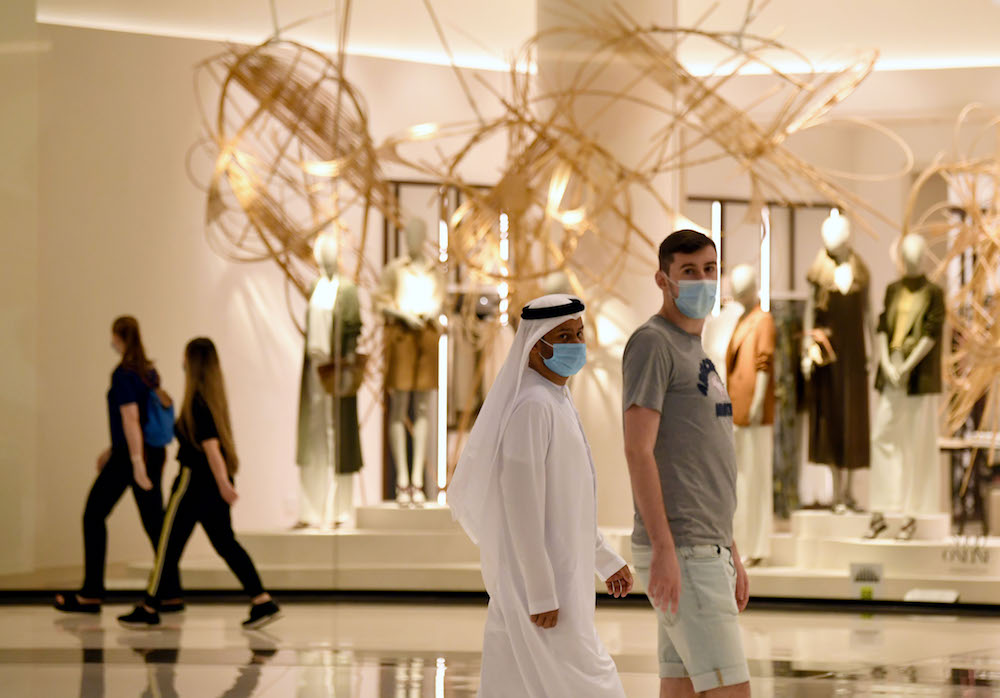
The UK news has raised expectations that other countries could also begin immunizations in the near future and slowly bring the curtain down on a pandemic that disrupted the global social and economic order like nothing else in living memory. (AFP/File Photo)
“It is estimated it will take until the end of next summer (August or September) before the virus is fully under control and the world can begin to breathe again and return to normal. Even then, humanity will not yet be out of the woods, as it is unclear how long the immunity the vaccines offer will last.”
Several countries, including some in the Middle East, are involved in talks with leading companies and research institutes engaged in various phases of trials. The World Health Organization (WHO), meanwhile, is engaged in preparatory talks with countries on ways to ensure prompt and fair distribution of successful vaccine candidates.
Many nations, including Arab countries with strong relations with potential producer states, began talks earlier this year with a view to obtaining a vaccine. “I know that most ministries of health have had talks with Moderna and AstraZeneca to book their quantities,” Belal Zuiter, senior consultant at Cambridge Pharma Consultancy in London, told Arab News in August. “I think the Arab world will have enough doses within the first two or three months after a vaccine is produced.”
On Nov. 27, Saudi Pharmaceutical Industries and Medical Appliances Corp. (SPIMACO) signed an agreement with German biopharmaceutical company CureVac to supply and distribute a coronavirus vaccine in the Kingdom. The CureVac vaccine successfully passed the first phase of clinical trials with more than 90 percent effectiveness in early November.
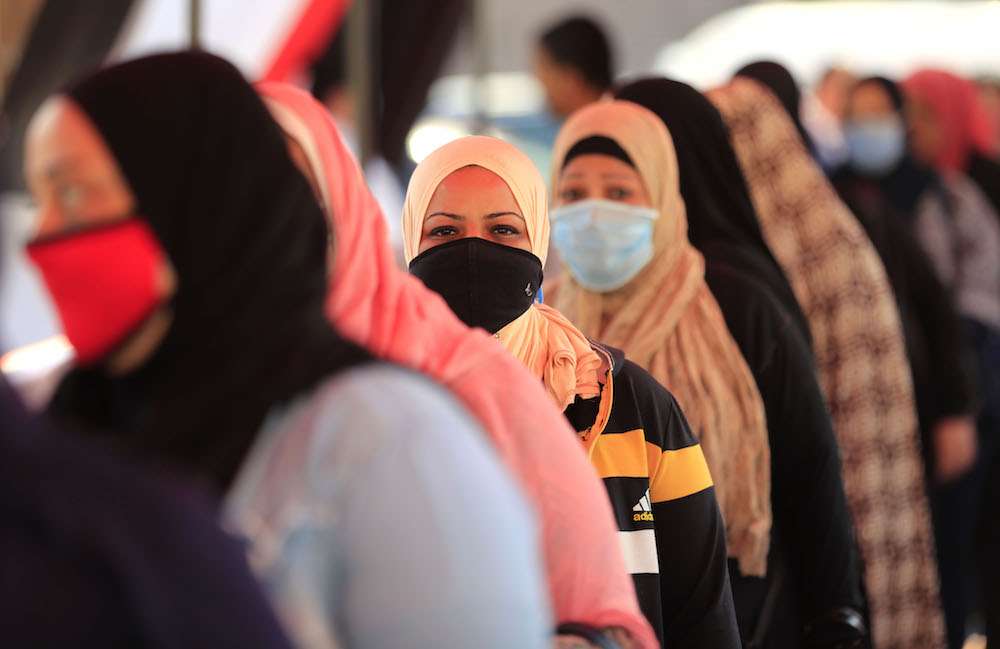
A Saudi and German pharmaceutical deal signed in November includes the possibility of extending the supply and distribution rights to the UAE, Kuwait, Bahrain and Oman. (AFP/File Photo)
The agreement includes the possibility of extending the supply and distribution rights to the UAE, Kuwait, Bahrain and Oman.
“Saudi Arabia will be one of the first countries to receive the vaccines,” Abdullah Al-Assiri, assistant deputy minister for preventive health, said during an interview on Saudia TV in early November. Saudi health officials have previously announced plans to offer free vaccinations by the end of 2021 to 70 percent of residents who have not contracted the virus.
Incidentally, several Arab countries were among those that formally expressed their interest in participating in the COVAX facility, described as an “insurance policy” to access COVID-19 vaccines. The mechanism is designed to guarantee rapid, fair and equitable access to the world’s largest and most-diverse vaccine portfolio.
“The idea behind COVAX is just to make sure all countries, whether rich or middle-income or low-income, will be able to access at least enough supplies of the vaccine for priority groups,” Dr. Abdinasir Abubakar, head of Infectious Hazard Management Unit at WHO’s Cairo office, told Arab News earlier.
Once a vaccine has been approved by regulatory agencies and/or prequalified by WHO, the COVAX facility will then purchase these vaccines to try and initially provide doses for an average of 20 percent of each country’s population, focusing on healthcare workers and the most vulnerable groups.
The goal is to deliver 2 billion doses by the end of 2021.
--------------------
Twitter: @RobertPEdwards


