

Pakistani and Italian archaeologists unearth Hindu temple dating back 1,100 years 

In this undated photo, the site of a newly-discovered Hindu temple in Barikot Ghundai in northwestern Khyber Pakhtunkhwa, Pakistan, can be seen. (Photo courtesy: KP Directorate of Archeology and Museums)
Short Url
Updated 25 November 2020
Follow

Pakistani and Italian archaeologists unearth Hindu temple dating back 1,100 years 

  • Pakistan’s Khyber Pakhtunkhwa region was once the center of Buddhist civilization that took root under the Mauryan king Ashoka 2,300 years ago
  • The province is also home to Takht-i-Bahi, considered among the most imposing relics of Buddhism in all of Gandhara

PESHAWAR: The archaeology and museums directorate in Pakistan’s northwestern Khyber Pakhtunkhwa province, in collaboration with an Italian archaeological mission, has discovered an ancient Hindu temple in Swat Valley believed to be around 1,100 years old, the region’s archaeologists have said.
In recent years, Pakistan has moved to restore ancient temples and relics in the province as part of an initiative to encourage tourism and project religious harmony in a region roiled for decades by militancy.
The Khyber Pakhtunkhwa region was once the center of Buddhist civilization that took root under the Mauryan king Ashoka 2,300 years ago.
“The temple was discovered almost ten days back, which is believed to have been built by the Hindu Shahi or Hindu dynasty (850-1026 CE) during their rule in Gandhara and Kabul Valley,” Dr. Abdul Samad, director for archaeology and museums in the province, told Arab News. “It is believed the temple is of Lord Vishnu,” he added, referring to one of the principal deities of Hinduism.

He said Barikot Ghundai, a hillside on the outskirts of the scenic Swat Valley where the temple has been discovered, was an important archaeological site dating back to the twelfth century BC till the Islamic period. He said the newly-discovered temple dated back to roughly the ninth or tenth century AD.
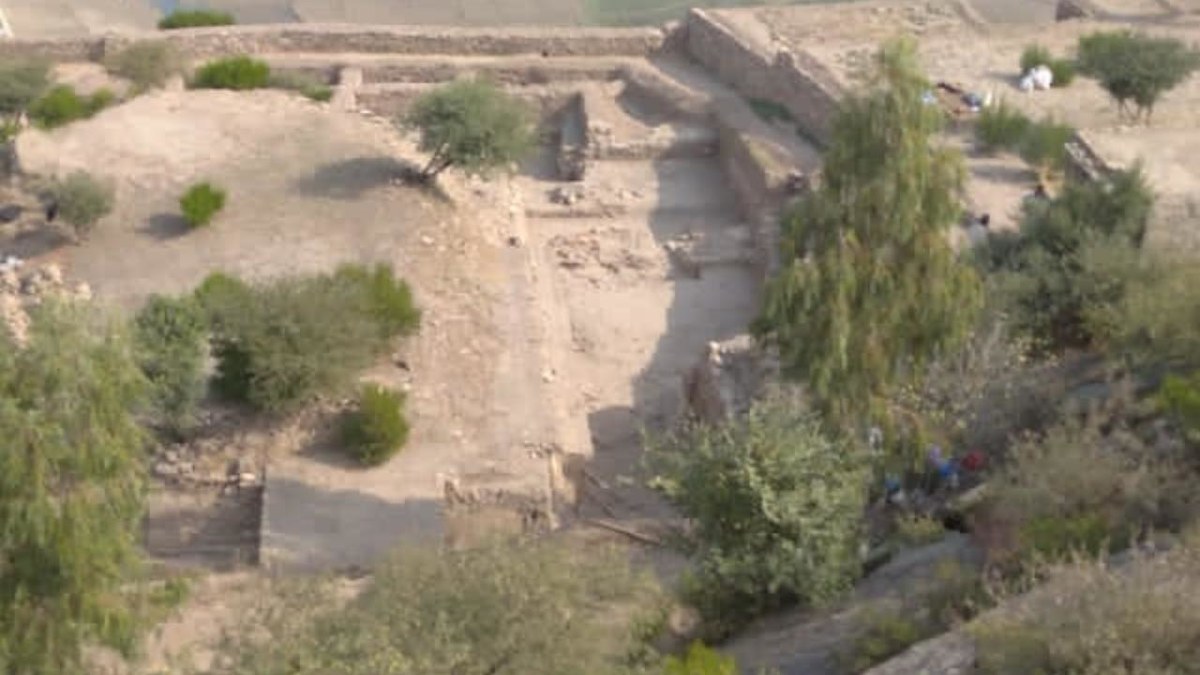


 In this undated photo, the site of a newly-discovered Hindu temple in Barikot Ghundai in northwestern Khyber Pakhtunkhwa, Pakistan, can be seen. (Photo courtesy: KP Directorate of Archeology and Museums)

Niaz Ali Shah, a regional officer at the KP directorate of archaeology and museums in Malakand region, said excavation work in the Barikot Ghundai area was reinitiated by his directorate in collaboration with an Italian archaeological mission in 2010 after it was marked safe following a Taliban insurgency in the area.
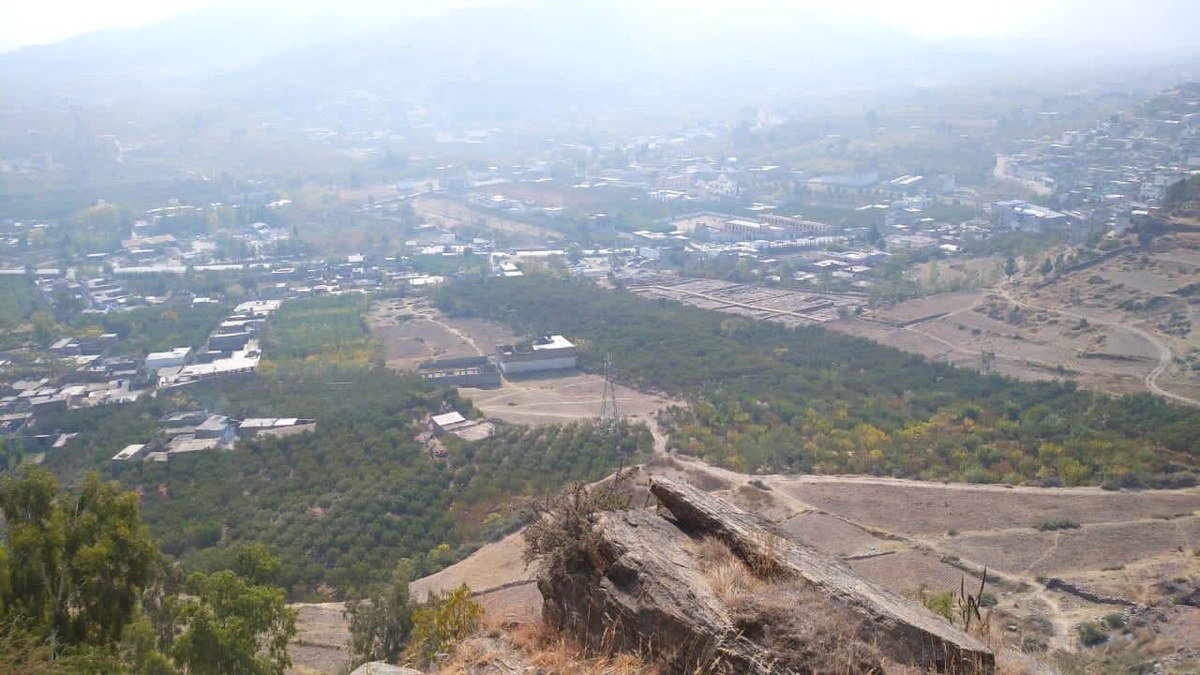


In this undated photo, a view of the village in Barikot Ghundai, a hillside on the outskirts of Swat valley in northwestern Khyber Pakhtunkhwa, Pakistan, where the provincial archeology and museums directorate, in collaboration with an Italian archeological mission, has discovered an ancient Hindu temple believed to be 11,000 years old. (Photo courtesy: KP Directorate of Archeology and Museums)

The excavation has so far revealed what looks like a lookout tower and a water tank most likely used for bathing by followers of Vishnu, Shah added.
Khyber Pakhtunkhwa province is home to Takht-i-Bahi, or ‘Throne of the Water Spring,’ an Indo-Parthian archaeological site of an ancient Buddhist monastery, considered among the most imposing relics of Buddhism in all of Gandhara.
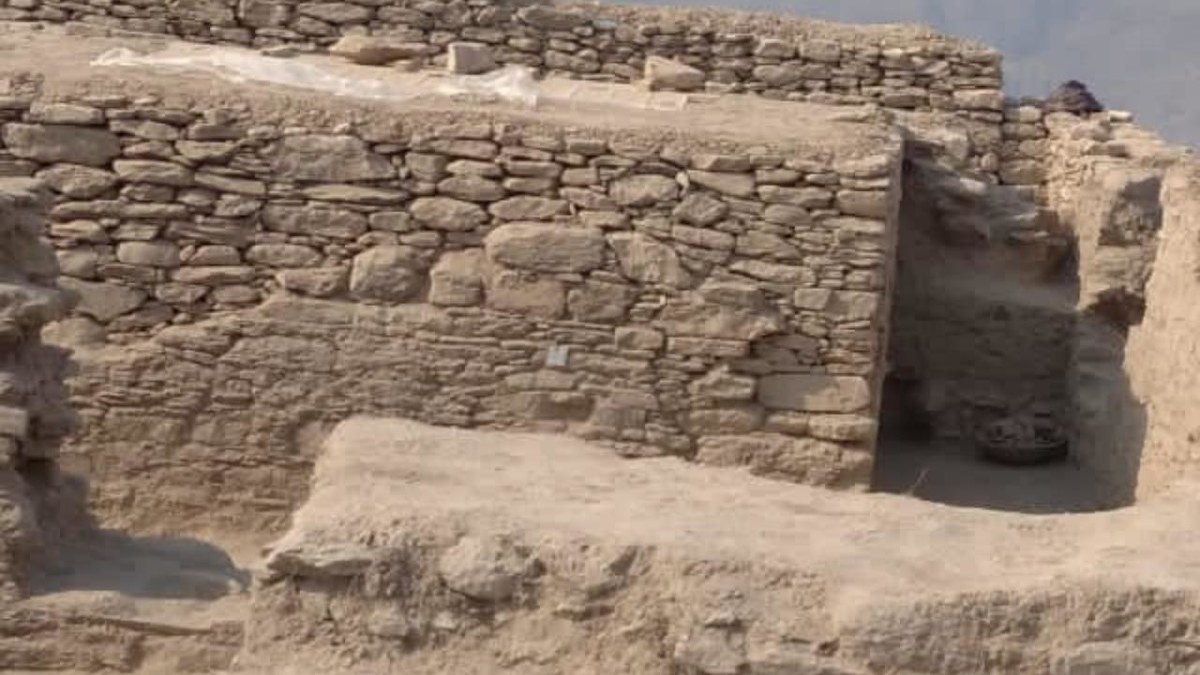


In this undated photo, a view of Barikot Ghundai, a hillside on the outskirts of Swat Valley in northwestern Khyber Pakhtunkhwa, Pakistan, where the provincial archeology and museums directorate, in collaboration with an Italian archeological mission, has discovered an ancient Hindu temple believed to be 11,000 years old. (Photo courtesy: KP Directorate of Archeology and Museums)

In 2017, Pakistan unveiled the remains of a 1,700-year-old sleeping Buddha image. A reflection of the diverse history and culture of the South Asian country, the ancient Buddhist site in Bhamala province was first discovered in 1929. Eighty-eight years on, excavations resumed and the 14-meter-(48-foot)-high Kanjur stone Buddha image was unearthed, with then opposition leader and now Prime Minister Imran Khan presiding over the presentation.


IMF Executive Board to review $1.2 billion loan disbursement for Pakistan today

Updated 4 sec ago
Follow

IMF Executive Board to review $1.2 billion loan disbursement for Pakistan today

  • Pakistan, IMF reached a Staff-Level Agreement in October for second review of $7 billion Extended Fund, climate fund program
  • Economists view IMF bailout packages as essential for cash-strapped Pakistan grappling with a prolonged macroeconomic crisis

ISLAMABAD: The Executive Board of the International Monetary Fund (IMF) is set to meet in Washington today to review a $1.2 billion loan disbursement for Pakistan, state media reported on Monday.

Pakistan and the IMF reached a Staff-Level Agreement (SLA) in October for the second review of a $7 billion Extended Fund Facility (EFF) and the first review of its $1.4 billion Resilience and Sustainability Facility (RSF). 

The agreement between the two sides took place after an IMF mission, led by the international lender’s representative Iva Petrova, held discussions with Pakistani authorities during a Sept. 24–Oct. 8 visit to Karachi, Islamabad and Washington D.C.

“The International Monetary Fund’s (IMF) Executive Board is set to meet in Washington today to review and approve $1.2 billion in loan for Pakistan,” state broadcaster Pakistan TV reported. 

Pakistan has been grappling with a prolonged macroeconomic crisis that has drained its financial resources and triggered a balance of payments crisis for the past couple of years. Islamabad, however, has reported some financial gains since 2022, which include recording a surplus in its current account and bringing inflation down considerably.

Economists view the IMF’s bailout packages as crucial for cash-strapped Pakistan, which has relied heavily on financing from bilateral partners such as Saudi Arabia, China and the United Arab Emirates, as well as multilateral lenders including the IMF, World Bank, Asian Development Bank and Islamic Development Bank. 

Speaking to Arab News last month, Pakistan’s former finance adviser Khaqan Najeeb said the $1.2 billion disbursement will further stabilize Pakistan’s near-term external position and unlock additional official inflows.

“Continued engagement also reinforces macro stability, as reflected in recent improvements in inflation, the current account, and reserve buffers,” Najeeb said.

Pakistan came close to sovereign default in mid-2023, when foreign exchange reserves fell below three weeks of import cover, inflation surged to a record 38% in May, and the country struggled to secure external financing after delays in its IMF program. Fuel shortages, import restrictions, and a rapidly depreciating rupee added to the pressure, while ratings agencies downgraded Pakistan’s debt and warned of heightened default risk.

The crisis eased only after Pakistan reached a last-minute Stand-By Arrangement with the IMF in June 2023, unlocking emergency support and preventing an immediate default.