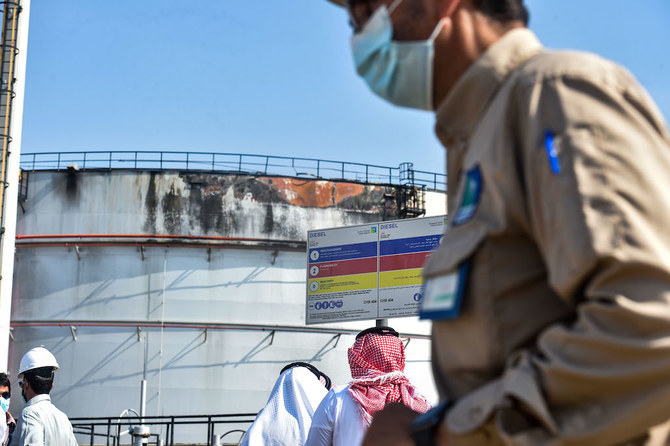
RIYADH: Saudi Arabia reiterated on Tuesday the Kingdom’s condemnation of the cowardly terrorist attacks carried out by Iran-backed Houthi militias.
In a virtual session chaired by King Salman, the Cabinet stressed that such terrorist attacks against vital installations strike not only at Saudi Arabia’s national capabilities, but also at the core of the global economy. It underscored the importance of confronting such attacks and the sides behind them.
King Salman thanked heads of state as well as leaders of international organizations for their effective participation in the 15th session of the G20 leaders’ summit, which was held virtually under the Saudi presidency.
The Cabinet also stressed the Kingdom’s keenness on expanding cooperation
with Iraq to bolster their common interests in all fields, hailing the reopening of the Arar border crossing between their countries.
In a statement to Saudi Press Agency, acting Minister of Media Majid Al-Qasabi pointed out that the Cabinet was also briefed on reports and developments on local and international levels.


![]()

Saudi Cabinet denounces Houthi attack on Jeddah petroleum facility
Short Url
https://arab.news/ggtmv
Saudi Cabinet denounces Houthi attack on Jeddah petroleum facility


Latest updates


© 2026 SAUDI RESEARCH & PUBLISHING COMPANY, All Rights Reserved And subject to Terms of Use Agreement.