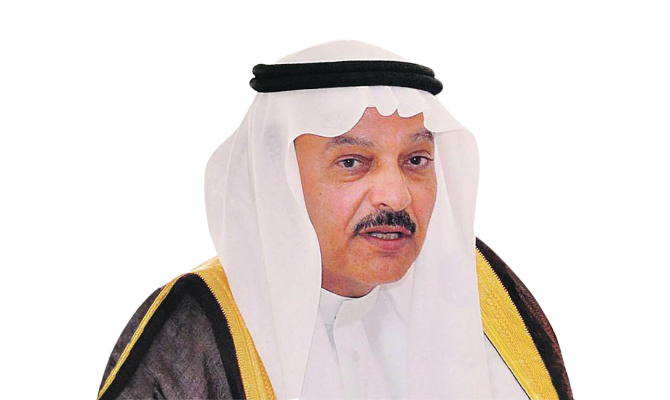
Dr. Abdul Karim Al-Zaid, deputy general supervisor of the King Abdul Aziz Public Library in Riyadh

Dr. Abdul Karim Al-Zaid
Short Url
Updated 22 November 2020
Follow

Dr. Abdul Karim Al-Zaid, deputy general supervisor of the King Abdul Aziz Public Library in Riyadh

Dr. Abdul Karim Al-Zaid has been a deputy general supervisor of the King Abdul Aziz Public Library in Riyadh since 1996. He is also an assistant professor at the College of Computer and Information Sciences at Imam Muhammad bin Saud Islamic University, Riyadh.

Al-Zaid is an expert in information studies and library sciences, and a researcher in historical and cultural studies.

He gained a bachelor’s degree in libraries and information from the College of Social Sciences from Imam Muhammad bin Saud Islamic University in 1983 and a master’s degree in the same field from Wisconsin University in 1989. Al-Zaid also attained his Ph.D. in the same field from Imam Muhammad bin Saud Islamic University in 1995.

Al-Zaid has participated in many conferences and seminars in the fields of cultural, historical and cognitive dialogue, and served as a member of many specialized committees, including as a member of the board of directors of the King Abdul Aziz Public Library, a member of the board of directors of King Abdul Aziz Circuit and a member of the advisory board of the chair of Sheikh Abdul Aziz Al-Tuwaijri at Imam Muhammad bin Saud Islamic University.

He has also participated in activating cultural relations between Saudi Arabia and China.

Al-Zaid has supervised a number of Hajj exhibitions in London and Paris, as well as many exhibitions specializing in the fields of libraries, translation, documents and Islamic manuscripts. He participated in the activation of dozens of cultural and cognitive projects and programs in the fields of technology and libraries, and worked as a member of associations developing the structure of libraries and cultural centers in the Kingdom.


The founding economy: A blueprint for stability in the First Saudi State

Updated 23 February 2026
Follow

The founding economy: A blueprint for stability in the First Saudi State

  • The establishment of the First Saudi State created a secure environment that facilitated the arrival of caravans, secured vast trade routes, and revived commerce across the Arabian Peninsula

RIYADH: The economy during the founding stage of the First Saudi State served as a fundamental pillar in building the nation, consolidating its influence, and ensuring its stability. This early economic growth was inextricably linked to achieving security, unifying regions, and organizing society—factors that directly stimulated trade, stabilized markets, and enhanced the foundations of daily life in Diriyah and its surrounding areas.
According to Dr. Abdullah Al-Saleh Al-Othaimeen's "Diriyah: Origins and Development during the First Saudi State," published by the King Abdulaziz Foundation for Research and Archives (Darah), the founding economy stands as a historical model reflecting the reciprocal relationship between political stability and early economic prosperity.

Beyond its political and intellectual prominence, Diriyah emerged as a vibrant economic hub. (SPA)

The establishment of the First Saudi State created a secure environment that facilitated the arrival of caravans, secured vast trade routes, and revived commerce across the Arabian Peninsula.
Beyond its political and intellectual prominence, Diriyah emerged as a vibrant economic hub. Its active markets attracted merchants and students from across the region, all of whom benefited from the state-provided stability. The local society relied on diverse activities for its livelihood, including trade, agriculture, and livestock breeding, with horses and camels playing crucial roles in transportation, commerce, and securing roads.
The social and administrative organization upon which the state was founded ensured the continuous availability of goods and sustained market stability. Ultimately, the close relationship between public security and economic growth during this founding phase solidified Diriyah's position as a premier political and commercial center in the Arabian Peninsula.