
Short film about Pakistani construction worker wins award in China

Winners of the second Belt and Road Initiative Short Video Competition receive awards during a ceremony in Wuhan, China on Nov. 20, 2020. (Photo courtesy: Global Times)
Short Url
Updated 22 November 2020
Follow

Short film about Pakistani construction worker wins award in China

  • Film featuring Pakistani worker Naseer was submitted Gezhouba Company, which is developing the Dasu Dam in northwestern Pakistan
  • Contest aims to share the stories of builders and communities involved in Beijing's multibillion-dollar Belt and Road infrastructure project

ISLAMABAD: A short film about a Pakistani construction worker at the Dasu Dam in Khyber Pakhtunkhwa has won an award at the second Belt and Road Initiative (BRI) Short Video Competition in China, local media reported. 
The award ceremony of the competition organized by the China Public Diplomacy Association, the News Center of the State-owned Assets Supervision and Administration Commission of the State Council (SASAC), and Chinese government-owned Global Times Online, was held in Wuhan, Hubei province on Friday.

The contest aims to share the stories of builders and communities involved in BRI — Beijing’s multibillion dollar push to develop geopolitical ties through infrastructure and ports. The Dasu Dam hydropower project on the Indus River near Dasu in Kohistan district
is a part of the China-Pakistan Economic Corridor (CPEC) under the BRI.

The awarded film featuring Pakistani worker Naseer was submitted to the competition by Hubei-based Gezhouba Group Company, which is developing the hydroelectric gravity dam in Dasu.

"Naseer's work at the Dasu Dam has changed the lives of his family and enables his kids to study at school," Global Times Online reported.

According to Wu Hailong, president of China Public Diplomacy Association, more than 500 entries were submitted to the competition by Chinese enterprises and their employees in BRI countries, who used their cameras to tell stories of beating COVID-19 together with local people.

"The short video competition was a concrete action of telling Chinese stories, an example of people-to-people exchanges between China and foreign countries, and also a lively public diplomatic activity," he said during the award ceremony, as quoted by Global Times.
IMF board to meet tomorrow to consider $1.2 billion disbursement for Pakistan

Updated 11 sec ago
Follow

IMF board to meet tomorrow to consider $1.2 billion disbursement for Pakistan

  • Pakistan, IMF reached a Staff-Level Agreement for second review of $7 billion loan program 
  • Economists view disbursement crucial for cash-strapped Pakistan as it tackles economic crisis

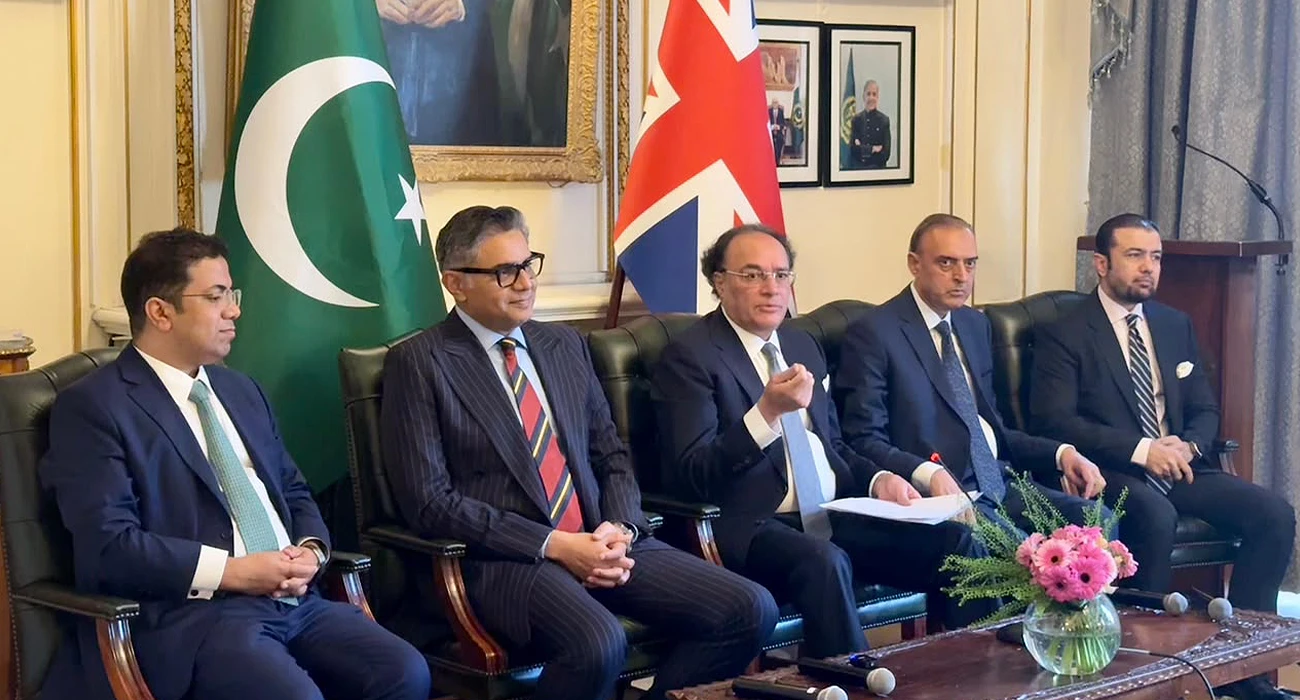
ISLAMABAD: The International Monetary Fund’s (IMF) Executive Board will meet tomorrow, Monday, to consider and approve a $1.2 billion disbursement for Pakistan, according to the global lender’s official schedule. 

The meeting takes place nearly two months after the Fund reached a Staff-Level Agreement (SLA) with Pakistan for the second review of its $7 billion Extended Fund Facility (EFF) and the first review of its $1.4 billion Resilience and Sustainability Facility (RSF). 

The SLA followed a mission led by IMF’s Iva Petrova, who held discussions with Pakistani authorities during a Sept. 24–Oct. 8 visit to Karachi, Islamabad and Washington, DC.

“The International Monetary Fund’s (IMF) Executive Board will convene on Dec. 8 to consider Pakistan’s request for a $1.2 billion disbursement under the Extended Fund Facility (EFF) and the Resilience and Sustainability Facility (RSF), according to the Fund’s updated schedule,” the state-run Pakistan TV reported on Sunday.

Economists view IMF’s bailout packages as crucial for cash-strapped Pakistan, which has relied heavily on financing from bilateral partners such as Saudi Arabia, China and the United Arab Emirates, as well as multilateral lenders including the IMF, World Bank, Asian Development Bank and Islamic Development Bank. 

The South Asian country has been grappling with a prolonged macroeconomic crisis that has drained its financial resources and triggered a balance of payments crisis. Islamabad, however, has recorded some financial gains since 2022, which include recording a surplus in its current account and bringing inflation down considerably. 

Speaking to Arab News last month, Pakistan’s former finance adviser Khaqan Najeeb said the $1.2 billion disbursement will further stabilize Pakistan’s near-term external position and unlock additional official inflows. 

“Continued engagement also reinforces macro stability, as reflected in recent improvements in inflation, the current account, and reserve buffers,” Najeeb said. 

Pakistan came close to sovereign default in mid-2023, when foreign exchange reserves fell below three weeks of import cover, inflation surged to a record 38 percent in May, and the country struggled to secure external financing after delays in its IMF program. Fuel shortages, import restrictions, and a rapidly depreciating rupee added to the pressure, while ratings agencies downgraded Pakistan’s debt and warned of heightened default risk.

The crisis eased only after Pakistan reached a last-minute Stand-By Arrangement with the IMF in June 2023, unlocking emergency support and preventing an immediate default.