Saudi ambassador to US: Kingdom wants political solution in Yemen

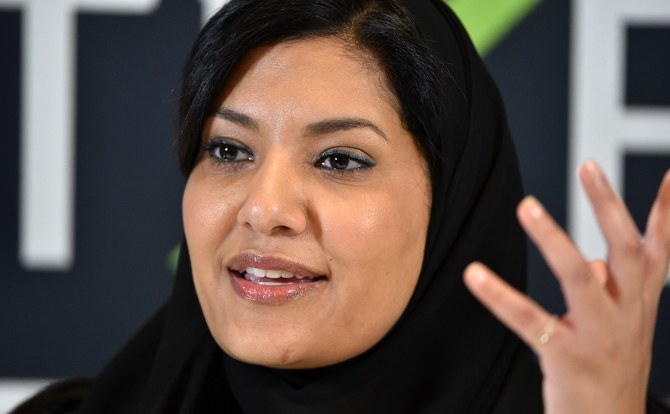
Saudi Arabia’s sole goal in Yemen is to reach a political solution that would restore a “peaceful and prosperous state,” the Kingdom’s ambassador to the US said on Wednesday. (File/AFP)
Short Url
Updated 20 November 2020
Follow

Saudi ambassador to US: Kingdom wants political solution in Yemen

  • 300 ballistic missiles have been fired into Saudi Arabia by the Houthis since 2016, the ambassador said
  • “We’ll continue to support a political solution in Yemen but always defend our national security”: Princess Reema

LONDON: Saudi Arabia’s sole goal in Yemen is to reach a political solution that would restore a “peaceful and prosperous state,” the Kingdom’s ambassador to the US said on Wednesday.
Princess Reema bint Bandar said Saudi Arabia has participated in every international negotiation and has honored every UN agreement aimed at achieving peace in the war-torn country.
Despite this, Houthi aggression has not stopped, and the militia responded to a cease-fire announced in April with a “rain of ballistic missiles on our soil,” the ambassador told the Arab-US Policymakers Conference.
“It has been the Houthis and their Iranian benefactors that break every agreement, walk away from every table and divert and block aid,” Princess Reema said.


The ambassador said that 300 ballistic missiles have been fired into Saudi Arabia by the Houthis since 2016, most of them aiming at civilian targets.
“We’ll continue to support a political solution in Yemen but always defend our national security.
The Kingdom is the world’s largest donor to Yemen and provides it with humanitarian assistance and reconstruction support, Princess Reema said.
“Our foreign policy is grounded in the belief that stability and peace create prosperity and opportunity, that when people are included, given a hand up, when people are respected and empowered, there is no soil for extremism, no place for it to grow,” she added


Economic growth and resilience at heart of 2nd AlUla Emerging Market Economies Conference

Updated 03 February 2026
Follow

Economic growth and resilience at heart of 2nd AlUla Emerging Market Economies Conference

  • Event on Feb. 8 and 9 will bring together ministers, governors of central banks, policymakers, economic experts and international financial institutions
  • Emerging-market economies a ‘pivotal element’ in global economic system due to effect they have on growth and stability, says Saudi Finance Minister Mohammed Al-Jadaan

RIYADH: The second annual AlUla Conference for Emerging Market Economies, which Saudi Arabia will host next week, offers a platform to exchange views on global developments and discuss policies and reforms that support inclusive growth and strengthen economic resilience, the Kingdom’s finance minister said.

The event on Feb. 8 and 9 will bring together finance ministers, governors of central banks and policymakers, alongside economic experts and representatives of international financial institutions.

Organized by the Saudi Ministry of Finance in partnership with the International Monetary Fund, it takes place as emerging-market economies face mounting challenges amid rapid global economic change.

Finance Minister Mohammed Al-Jadaan said the decision to host the conference reflects Saudi Arabia’s ongoing commitment to efforts that support global financial and economic stability, and highlights the growing influence of emerging economies on worldwide growth.

Emerging-market economies represent a “pivotal element” in the global economic system due to the direct impact they have on economic growth and stability, he added.

“The AlUla Conference for Emerging Market Economies provides a unique platform for exchanging views on global economic developments, and discussing policies and reforms that will support inclusive growth and enhance economic resilience, in light of broader international cooperation that contributes to confronting common challenges,” Al-Jadaan said.

Kristalina Georgieva, managing director of the IMF, said the event would help emerging economies deal with growing uncertainty driven by technological change, demographic shifts and geopolitical tensions.

“The AlUla conference provides a vital platform for emerging economies to discuss how they can navigate the risks and embrace the opportunities ahead,” she said.

“In these times of sweeping transformations in the global economy, policymakers face a more challenging and uncertain environment. Countries should work together to strengthen resilience through sound macroeconomic and financial policies.”