G20 summit reflects Saudi Arabia’s key role, says minister

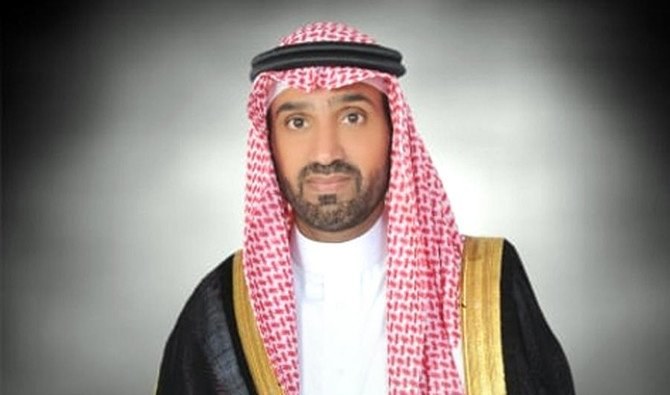
Ahmed Al-Rajhi. (Supplied)
Short Url
Updated 17 November 2020
Follow

G20 summit reflects Saudi Arabia’s key role, says minister

RIYADH: Hosting the G20 Leaders’ Summit reflects the Kingdom’s pivotal role regionally and internationally, and is an opportunity to represent the Middle East and North Africa region and developing countries, according to Saudi Minister of Human Resources and Social Development Ahmed Al-Rajhi.

“The G20 summit hosted by Riyadh in November is a historical summit on the international level and the first of its kind in the Arab world, where the G20 member countries represent two-thirds of the world’s population, 85 percent of the global economy and 75 percent of the world’s trade,” Al-Rajhi said.

The summit was an opportunity to share the Saudi Vision 2030 with the rest of the world, given the consistency of the vision’s development plans with the G20’s objectives, especially those related to achieving macroeconomic stability and sustainable development, promoting the movement of trade and investment and empowering women, he said.

The Kingdom’s presidency focuses on three main themes: Empowering people by creating the conditions in which everyone — especially women and youth — can live, work and thrive; safeguarding the planet by promoting collective efforts to protect food and water security, the climate, energy and environment; and shaping new horizons by adopting long-term and bold strategies to share the benefits of innovation and technological advancement.

“During its G20 presidency, Saudi Arabia is committed to ensuring the G20 continues to reflect a broad and inclusive range of international perspectives and has therefore extended invitations to the UAE, Jordan, Vietnam, South Africa, the Arab Monetary Fund, the Islamic Development Bank (IDB), Singapore and other countries to be involved in the largest international economic groupings,” Al-Rajhi said.

He added that the G20 meetings under the Kingdom’s presidency had tackled several issues including youth unemployment, especially for those with no access to education, training or employment.

The meetings discussed the reduction of youth unemployment — especially those at risk of social exclusion — by 15 percent by 2025, as agreed by the G20 members states during the summit held by Turkey in 2015.

Al-Rajhi said: “The meetings have also discussed the impacts of COVID-19 on the labor markets and the need to develop and implement efficient and comprehensive measures to mitigate the impacts on our societies and local and international market labors.”

He added that the L20 Workers Communication Group in the G20 represents the voice of workers, where the protection and safety of workers was among its priorities.

It has invited the G20’s Employment Working Group (EWG) to promote and support staffing issues.

The L20 Workers Communication Group summit stressed the commitment of the Kingdom to preserve the accomplishments achieved during the previous presidencies, he said, and achieve significant progress in empowering women and youth and increasing their participation in the labor market.

Saudi Arabia has also focused on addressing the challenges of women's empowerment through initiatives targeting less-favored groups, and taking measures that served the interests of women and youth by supporting initiatives such as “Enabling and Supporting the Economic Representation of Women.”

Al-Rajhi shed light on the measures elaborated in the final statement of the G20 labor ministers: Supporting employees and entrepreneurs during this period, ensuring the support of workers, families, facilities and societies to recover and thrive in an inclusive and equitable manner, improving the conditions of vulnerable groups, and making sure the recovery process does not exacerbates injustices and gender inequalities.

The Kingdom’s presidency focused on supporting and serving the interests of peoples of G20 member states, he said, quoting King Salman: “The Kingdom of Saudi Arabia seeks to adopt a vital environment to elaborate initiatives that achieve the hopes of peoples around the world.”

Al-Rajhi added: “The issue of youth and women employment dominated the agenda of the L20 Workers Communication Group meetings, as it is a top priority for the group.

“Discussions covered preparing young men and women between 15 and 29 years old to enter the labor market, as well as developing reports to measure the progress made on the Antalya objective and providing the Youth Road Map 2025, in line with the states’ national conditions to improve the horizons of labor market for women and youth and seize the opportunities for all.”


Games and street flavors celebrate community spirit during Ramadan

Neighborhoods across Jeddah transform into lively hubs of laughter and friendly competition at night during Ramadan.
Updated 55 min 2 sec ago
Follow

Games and street flavors celebrate community spirit during Ramadan

  • Beyond the spiritual reflection of the holy month, long-held traditions — from classic games to humble food stalls — continue to bring families and communities together

JEDDAH: As night falls during Ramadan, neighborhoods across Jeddah transform into lively hubs of laughter, friendly competition and the aroma of sizzling street food. 

Beyond the spiritual reflection of the holy month, long-held traditions — from classic games to humble food stalls — continue to bring families and communities together.

For many, Ramadan evenings are incomplete without traditional games that once defined social life after iftar and Taraweeh prayers. 

While digital entertainment has become widespread, classics such as carrom and baloot still hold their place in homes and gathering spots.

Carrom, a tabletop game with roots in the Indian subcontinent, remains a favorite across generations. 

Played on a square wooden board with four corner pockets, the game challenges players to flick colored discs into the pockets using precise finger movements. Two or four players compete, and victory goes to the side that collects the highest score. Its mix of patience and strategy makes it ideal for long Ramadan nights.

Baloot, a trick-taking card game widely enjoyed in Saudi Arabia and across the Gulf, is another staple. Played by two teams of two using a 32-card deck, the game requires coordination and quick thinking. The first team to reach 152 points claims the win, often after hours of animated rivalry. 

Yasser Al-Soufi, who organizes late-night baloot games in Al-Balad, said: “Every night from 10 to 12, people gather to play baloot and enjoy some social time together. It’s a wonderful way for friends and neighbors to connect, laugh and share the spirit of Ramadan.”

Alongside these classics, families are also embracing newer Ramadan-themed games designed to blend fun with learning. 

Stores such as Akwan offer interactive games including the Ramadan Memory Game, which introduces children to Arabic culture while boosting memory and cognitive skills, and Tharaba Cards, a set of 50 educational cards teaching polite expressions, manners and everyday social phrases across themes such as daily life, hospitality, gratitude and special occasions.

Founder Lujain Abulfaraj told Arab News: “We design child-centered toys that help little ones feel connected to their culture, language and the spirit of Ramadan through playful, meaningful experiences. 

“Our Ramadan collection is created to plant seeds of generosity, gratitude, social awareness and pride in identity. It includes Little Dailies (Buthoor Al-Khair) for practicing conscious acts of kindness; the Dallah toy, which celebrates hospitality through role-play and coffee-serving etiquette, and an Athkar book that holds daily prayers children can recite throughout their day.”

The brand also offers free Ramadan printables on their website.

Sarah Laban, a mother of three, said: “I first discovered these games during Hayy Jameel’s Ramadan Nights and since then, buying Ramadan program cards from Akwan for my children has become a family tradition. Playing memory and trivia games together makes learning about our faith fun, and it’s wonderful to see my kids laugh, explore and connect with Islamic history in a meaningful way.”

Additionally, Jarir Bookstore offers Islamic trivia cards covering key events from the life of Prophet Muhammad, the companions, and the names of Allah, as well as Islamic history and the virtues of the holy month, encouraging children and adults alike to test their knowledge in an engaging and meaningful way.

Another growing favorite is Ramadan bingo, where traditional numbers are replaced with words and themes linked to the month, such as fasting, charity, prayer and patience. 

As family members mark off squares, conversations naturally turn toward the values and stories behind each term, making the activity both entertaining and meaningful. 

Deena Rahman, who organizes the game at least twice a week, said: “I invite my friends and family to join me at a cafe, enjoy some coffee, and play Ramadan bingo together. These gatherings bring my family closer and allow us to talk more openly without hesitation. Since Ramadan is all about forgiveness and moving forward, the game becomes a wonderful way to strengthen bonds and reconnect in a meaningful way.”

While homes echo with the sounds of competition and learning, the streets outside come alive with food stalls that reflect the spirit of togetherness.

Opposite a shopping center in Makronah, Abu Saad stands over a hot pan, preparing fried liver, a staple during the month. 

Speaking to Arab News, he said: “We serve the fresh fried liver straight to customers’ tables and truly enjoy it. With the pleasant weather this year, I was able to expand my stall with tables and chairs to offer a better experience. My father started this as a small street-side cart, and I’m hoping to grow it into something more profitable.”

Despite rising costs of ingredients such as oil, liver and vegetables, many vendors say they try to keep prices stable to serve the community. Among the most recognizable Ramadan street foods is balila, a warm chickpea dish seasoned with cumin, vinegar and pickles often sold from seasonal “basta” pop-ups. French fries have also become a late-night favorite and a staple of late-night strolls.

Traditional drinks such as sobia, Qamar Al-Din, karkadeh and Vimto complete the Ramadan street scene, with many carts offering them alongside their snack selections.

Sultan Mohammed, who runs a food cart in Al-Zahrah district, said: “My friend and I started this because we love learning about new people and traditions, sharing food, and giving a little something for free. After all the hard work, it’s always rewarding to see people enjoying it. 

“Every year, we plan to introduce something new while keeping our products fresh and healthy. This year, we’ll be serving French fries, balelah fish, chips, shrimp, kebda, and of course, sobia. We’ll be open from 9 a.m. to 3 p.m the entire Ramadan.”

Seasonal stalls are deeply rooted in Hijazi culture, with young people often stepping in to keep traditions alive. In Ruwais district, 19-year-old Mohammed Saeed and his six friends operate a tea and coffee stand throughout the month. 

“We are a group of seven young people and run this stall in our area to keep the Ramadan spirit alive. We open our stalls immediately following Isha prayers and continue till 3:30 a.m.,” he said.