Turkey probes Istanbul mayor in fight over ‘crazy’ canal

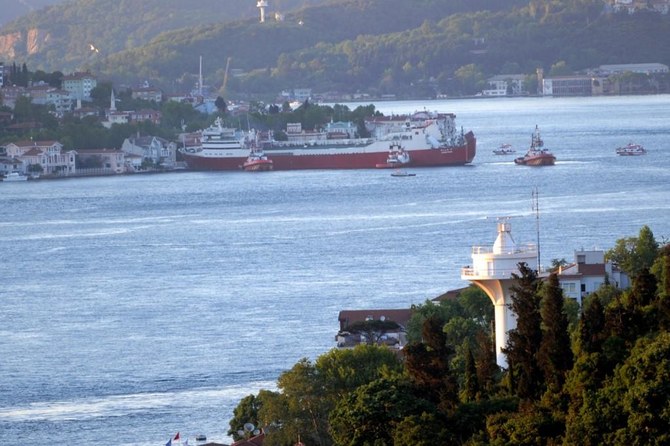
The proposed $9.8-billion alternative canal would run to the west of Bosphorus Strait along a new 45-kilometer route to relieve pressure on one of the world’s busiest shipping lanes. (AFP)
Short Url
Updated 16 November 2020
Follow

Turkey probes Istanbul mayor in fight over ‘crazy’ canal

  • Proposed $9.8-billion alternative would run to the west of the Bosphorus along a new 45-kilometer route

ISTANBUL: Turkey’s interior ministry has launched a probe into the Istanbul mayor over his opposition to President Recep Tayyip Erdogan’s dream of building an alternative to the Bosphorus Strait, the mayor’s spokesman said Monday.
Erdogan argues that the new Istanbul canal, which he has dubbed one of his “crazy projects,” would relieve pressure on one of the world’s busiest shipping lanes.
The Bosphorus creates a border between Europe and Asia, splitting Istanbul in two as it runs between the Black and Marmara Seas.
The proposed $9.8-billion alternative would run to the west of the Bosphorus along a new 45-kilometer route.
Istanbul mayor Ekrem Imamoglu, whose election last year saw Erdogan’s ruling AK Party lose its 25-year grip on Turkey’s largest city, has been a vocal opponent of the project on financial and environmental grounds.
Since his victory, the municipality has broadcast videos on underground trains and put up posters against “Canal Istanbul.”
The investigation by the ministry’s property inspectorate is focused on posters containing the phrases, “Either Canal or Istanbul” and “Who needs Canal Istanbul?,” Imamoglu’s spokesman Murat Ongun tweeted.
The investigation was started on the grounds that the posters violated articles of the constitution prohibiting public resources from being used against “the integrity of the administration and state policy,” Ongun said.
Critics say the project would destroy nature and could even worsen the earthquake risk in the city of more than 15 million people.


UN rights chief slams dangerous ‘tit-for-tat dynamic’ in Mideast war

Updated 4 sec ago
Follow

UN rights chief slams dangerous ‘tit-for-tat dynamic’ in Mideast war

  • Turk deplored the extensive attacks in residential areas, on health facilities, schools, cultural property and water and energy infrastructure
  • He stressed that “under the laws of war, civilians and civilian infrastructure must be protected at all costs“

GENEVA: The United Nations rights chief voiced alarm Tuesday at the Middle East conflict’s deepening impact on civilians, warning of the dangers of the seeming “tit-for-tat dynamic” between the warring sides.
The United States and Israel began striking Iran on February 28, prompting waves of Iranian strikes across the Gulf.
With hostilities intensifying, UN High Commissioner for Human Rights Volker Turk deplored the extensive attacks in residential areas, on health facilities, schools, cultural property and water and energy infrastructure.
“This apparent tit-for-tat dynamic, involving essential infrastructure with extremely significant civilian impacts, will only increase risks for civilian populations more broadly, with potentially dire consequences across the entire region,” he warned in a statement.
Turk stressed that “under the laws of war, civilians and civilian infrastructure must be protected at all costs.”
“All parties are bound by these rules, and must be held to account if they do not,” he said, warning: “the world is watching.”
The UN rights chief warned that “strikes against vital civilian infrastructure in the Middle East — as well as the widening geographic spread of strikes — are further increasing risks for populations across the region, and beyond.”
He pointed to strikes on a water desalination plant and fuel facilities in Iran over the weekend, igniting fires and reportedly disrupting water access for dozens of villages.
It also prompted warnings of “acid rain” that could cause chemical burns and serious lung damage.
“The foreseeable impacts on civilians and the environment of these strikes raise serious questions as to compliance of these attacks with the requirements of international humanitarian law of proportionality and precaution,” Turk said.
“This warrants careful legal scrutiny.”
He also highlighted the broader impact of the war.
The plunge in commercial shipping activity through the Strait of Hormuz was taking a severe toll on access to energy, food and fertilizer across the region and beyond — hitting the world’s most vulnerable people the hardest.
Turk raised concern about reports of detentions, charges and other forms of repression and intimidation against people in a number of countries, in connection with their expression of opinions around the Middle East conflict.
He demanded that all those arbitrarily detained be released immediately and unconditionally.
“States are reminded of their obligation under international human rights law to respect and protect people’s right to freedom of expression — particularly in times of crisis,” he said.