Saudi startup competition encourages innovation among youth

1 / 2
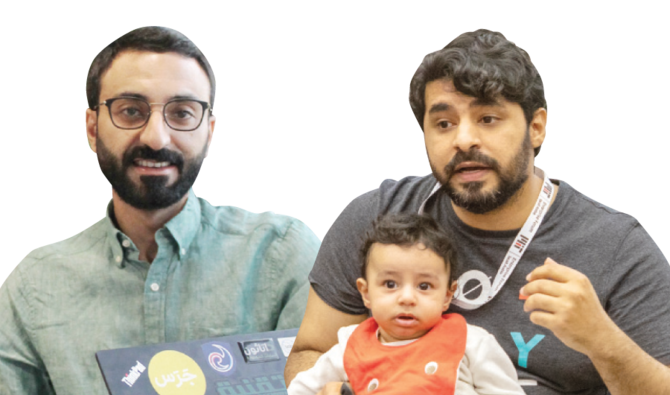
Ahmed (L) and Mohammed Jaleesa. (Photo/Supplied)
2 / 2
Osama al-Matrafi
Short Url
Updated 14 November 2020
Follow

Saudi startup competition encourages innovation among youth

  • Mohammed Domais, whose Jaleesa app — which helps parents find qualified babysitters — won the Social Enterprises track last year, told Arab News that the win had saved his business

JEDDAH: The fifth edition of the MITEF Saudi Startup Competition opened for registration on Friday, under the slogan “Innovate, Inspire, Connect.” Registration will be open until Dec. 10.
With the COVID-19 pandemic ongoing, this year’s competition will be held virtually. It will also include the second Startup Investment Forum (SIF), which is expected to include innovative startups from around the world, as well as the launch of the Saudi Alumni Network Council — a group of competition alumni, Bayan Al-Ghamdi, the head of entrepreneurship programs & MITEF Saudi at Community Jameel, told Arab News.
The startup competition has three tracks: Startups, Social Enterprises, and Ideas. The competition offers a cash prize of SR325,000, in addition to mentorship at the MITEF Saudi Accelerator, a six-week program in collaboration with the MIT Entrepreneurship Center.
The nine winning teams from the MITEF Saudi Startup Competition will also be invited to participate in the MIT Enterprise Forum Arab Startup Competition.
The winner of last year’s Startups track competition, Ahmed Bukhamseen, told Arab News how his Fruits360 software — which integrates point-of-sale systems to provide real-time analysis — has benefited from MITEF’s prizes.
“The monetary award helped us in hiring some of our needed resources as well as raise our marketing exposure,” Bukhamseen said.
“That’s besides the intangible values gained from the workshops and bootcamps and how that helped us fine-tune many aspects in the product, as well as the network gained from the StartSmart Conference and Exhibition.”

The monetary award helped us in hiring some of our needed resources as well as raise our marketing exposure. That’s besides the intangible values gained from the workshops and bootcamps and how that helped us fine-tune many aspects in the product, as well as the network gained from the StartSmart Conference and Exhibition.

Ahmed Bukhamseen, winner of last year’s Startups track competition

Mohammed Domais, whose Jaleesa app — which helps parents find qualified babysitters — won the Social Enterprises track last year, told Arab News that the win had saved his business: “If we hadn’t won the SR100,000 from the competition, we probably would have shut down the company. Now we have 10,000 users and 3,000 babysitters and over 6,000 parents have subscribed to our platform. We achieved big numbers thanks to the competition.”
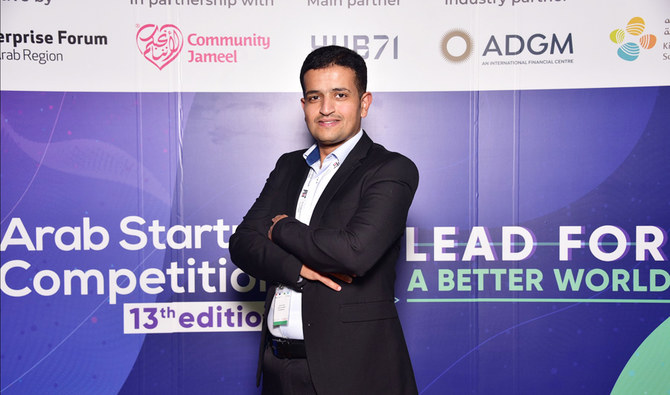
Even some of those who did not win last year say they benefited greatly from the entrepreneurial competition. Osama Al-Matrafi was one of last year’s finalists in the Social Enterprises track for Waste Turn — an app that offers rewards for safely disposing of electronic waste — and told Arab News that MITEF had given him invaluable information about creating a sustainable business.
“There are some efforts you waste in searching for investors rather than focusing on implementing your business. I identified the real needs of my customers and improved my business model and learned what investors are looking for and how to pitch the idea in front of them,” Al-Matrafi said.


Leading AI company to partner with Saudi Arabia, CEO tells Arab News

Updated 06 February 2026
Follow

Leading AI company to partner with Saudi Arabia, CEO tells Arab News

  • Argentum’s Andrew Sobko: ‘Very easy’ to build new infrastructure, data centers in Kingdom
  • In 2024, Saudi Arabia announced $100bn plan to establish AI hub

CHICAGO: The founder and CEO of Argentum AI, one of the world’s leading artificial intelligence companies, has told Arab News that he is looking forward to partnering with Saudi Arabia.

Ukrainian-born Andrew Sobko, based in Chicago, said Crown Prince Mohammed bin Salman has made a significant commitment to AI use.

In 2024, Saudi Arabia announced a $100 billion plan under Vision 2030 to build a hub to develop technology and data centers to handle a significant portion of the world’s AI workload.

The Kingdom reportedly expects AI to contribute more than $135.2 billion to its gross domestic product by 2030, representing roughly 12.4 percent of its economy.

“The US still is the kind of core leader of this AI innovation, development and infrastructure, but we quickly realized that Saudi Arabia sees this as an important asset class, not just as an innovation,” Sobko said.

“They’re deploying tons of capital. If you try to build some new infrastructure or data center, it’s very easy to do it in Saudi Arabia,” he added. “Saudi Arabia realizes and sees this compute as almost like a second asset class after oil.”

The term “compute” refers to the process of calculations that fuels AI development and applications in everyday use.

“The Middle East wants to be one of the largest exporters of compute. They realized that a couple of years ago and they’re aggressively expanding,” Sobko said, adding that AI is being used more and more in industries such as sports, in which Saudi Arabia has invested heavily.

Argentum AI recently added Majed Al-Sorour, CEO of the Saudi Golf Federation, to its board.

“Majed is also a huge believer in AI and AI infrastructure,” said Sobko. “With the help of Majed, we’re focusing on global expansion. He’s leading charge on that.”

Sobko said the challenge is not simply recognizing the importance of AI, but the ability to power data centers that it requires, and Saudi Arabia recognizes that need.

“If you secure a significant amount of power and you have data center capacity, you can actually control this kind of compute and AI,” he added.

“And the biggest bottleneck to continue expanding as we enter into this new age of robotics industry, it needs a lot more compute.”

Following meetings with US leadership, including President Donald Trump last November, Saudi Arabia secured agreements on AI technology transfers, aiming to avoid reliance on other nations’ systems.