

Saudi Arabia to host Formula 1 race in 2021

1 / 5
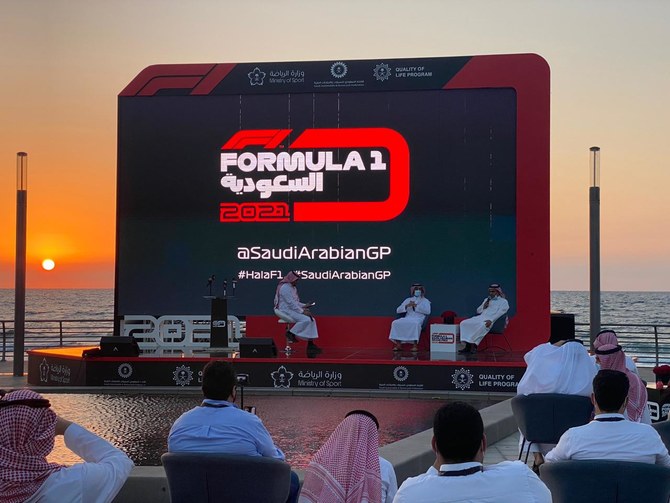
Saudi Arabia announced Thursday that it will host the Formula 1 Grand Prix in its Red Sea coastal city of Jeddah in Nov. 2021. (Ministry of Sport)
2 / 5
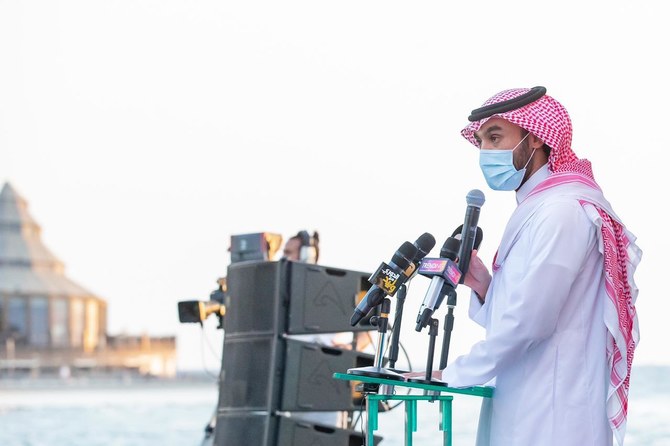
Minister of Sport Prince Abdul Aziz bin Turki Al-Faisal announces the race on Thursday. (Supplied)
3 / 5
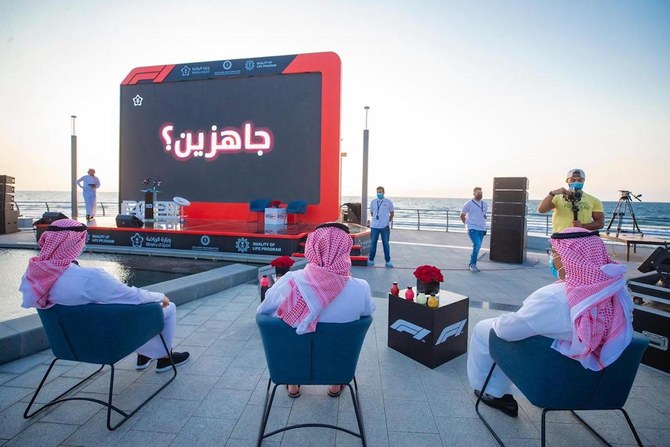
Minister of Sport Prince Abdul Aziz bin Turki Al-Faisal announced the race on Thursday. (Supplied)
4 / 5
Minister of Sport Prince Abdul Aziz bin Turki Al-Faisal announced the race on Thursday. (Supplied)
5 / 5
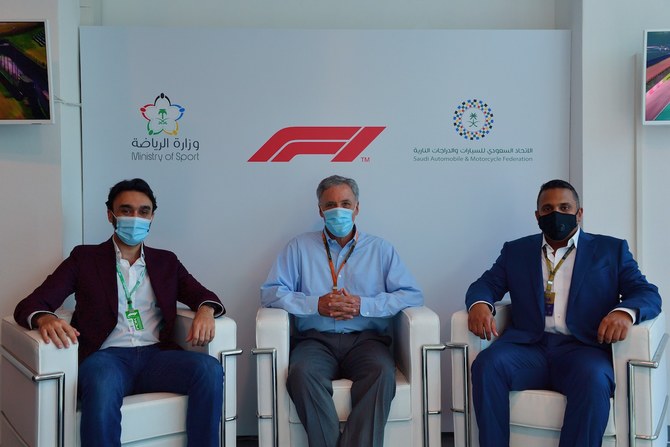
Minister of Sport Prince Abdul Aziz bin Turki Al-Faisal, Formula 1 Group CEO Chase Carey and the chairman of the Saudi Automobile and Motorcycle Federation Prince Khalid bin Sultan Al-Faisal pose for a photo. (Supplied)
Short Url
Updated 12 July 2021
Follow

Saudi Arabia to host Formula 1 race in 2021

  • Prestige event puts Kingdom in driving seat as global sports center, minister says
  • Prince Abdul Aziz: Welcome to Formula 1 and welcome to the champions

LONDON: Saudi Arabia announced on Thursday that it will host a Formula 1 Grand Prix in its Red Sea coastal city of Jeddah in November, 2021.

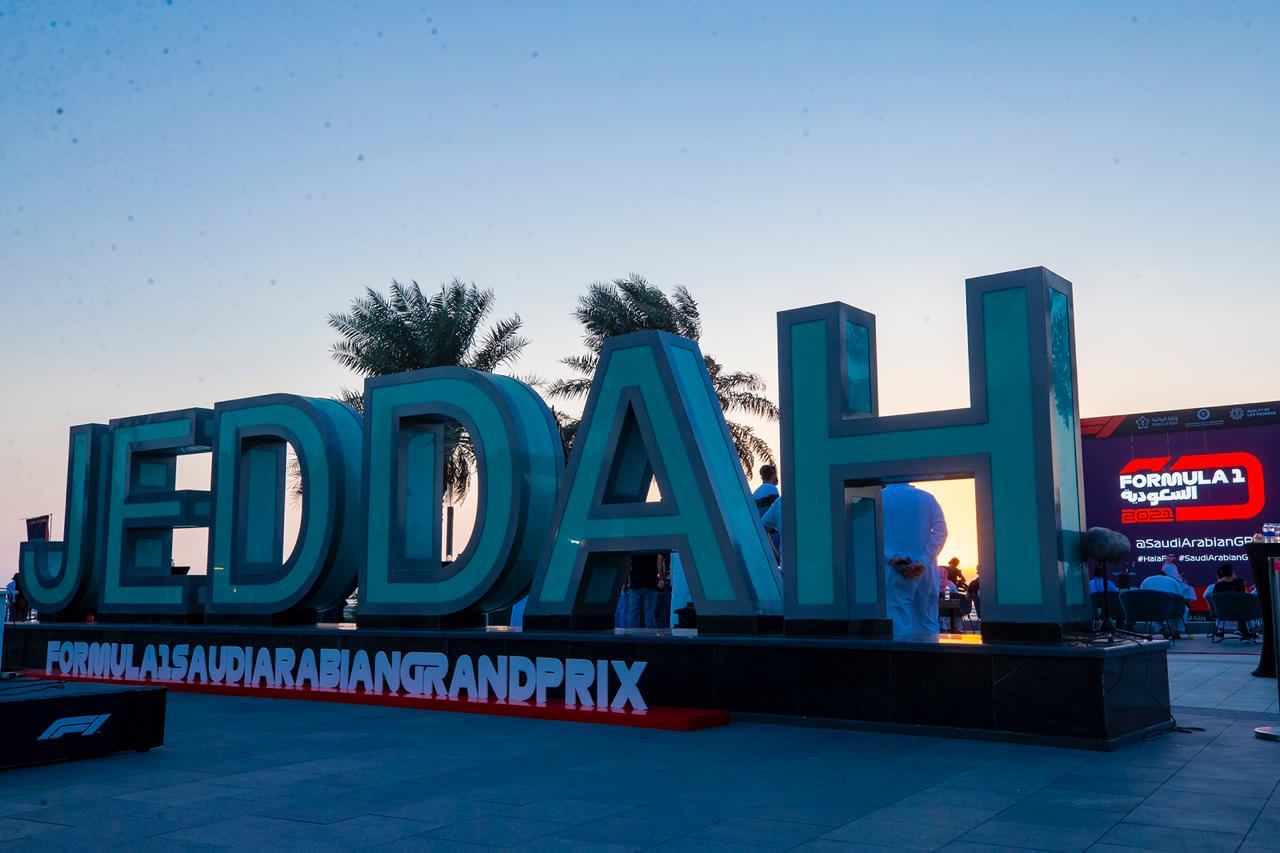
Announcing the race in a ceremony on the Jeddah waterfront, Minister of Sport Prince Abdul Aziz bin Turki Al-Faisal said that the high-profile event will increase tourist numbers to the Kingdom. 

“Welcome to Formula 1 and welcome to the champions,” Prince Abdul Aziz said.

He said that the race will help the Kingdom become a center for international sporting events. 

“We realize the extent to which the people of Saudi Arabia are keen to always be at the center of the most important sporting and international events, especially that this is the first opportunity to follow Formula 1 races on Saudi land,” the minister said.

“Formula 1 races will be a great opportunity in the future to further promote positive developments in society, provide more options to enrich the life of our community and encourage it to test new experiences,” Prince Abdul Aziz added.

The race will be held in the Kingdom as part of a 15-year partnership between the Saudi Automobile and Motorcycle Federation and Formula 1.

The Jeddah Corniche will be the start and end point of the race, and a variety of recreational and cultural events will add to spectators’ enjoyment. 
Prince Khalid bin Sultan Al-Faisal, chairman of the Saudi Automobile and Motorcycle Federation, said that the Kingdom is well qualified to host events such as the Formula 1 race.

Saudi Arabia has “learned a lot from hosting the Dakar Rally, the electric Formula E series,” and other sporting events during the past two years, he said.  

The CEO and executive chairman of the Formula 1 Group, Chase Carey, welcomed the announcement. 

“Saudi Arabia is growing tremendously to become a major center for sport in the world, and this is evident through the many international events it had held in past years, and now it will host one of the Formula 1 tours,” Carey said. 

He said the Kingdom “is a very important region for us,” adding that about 70 percent of the Saudi population is under 30.

“That is why we are excited to communicate and interact with them, and enhance their great passion for Formula 1,” the CEO added. 

The Saudi Grand Prix appears on the provisional F1 calendar for 2021 that has been distributed to race teams. It is expected to be the penultimate race of the 2021 season, which will end with the Abu Dhabi Grand Prix at the Yas Marina circuit.

Jeddah will host the Saudi race until a new purpose-built track at Qiddiyah is completed in 2023.

Al-Andalus revisited
Eight centuries of Muslim rule in Spain, during which Arab culture and science flourished, are echoed not only in the magnificent art and buildings of Al-Andalus, but also in the souls and the DNA of its descendants

Enter


keywords

‘Finally!’: Esports Nations Cup will provide new experiences for gamers and fans

Updated 6 sec ago
Follow

‘Finally!’: Esports Nations Cup will provide new experiences for gamers and fans

  • Ralf Reichert, CEO of Esports World Cup Foundation, spoke to Arab News about the new tournament that will pit countries against each other for the first time

RIYADH: With the inaugural Esports Nations Cup set for Riyadh in November, Ralf Reichert, CEO of the Esports World Cup Foundation, spoke to Arab News about the new tournament that will pit countries against each other for the first time.

How do you see the Nations Cup impacting the esports landscape in Saudi Arabia?

The Esports Nations Cup can be a meaningful catalyst for Saudi esports for two reasons. It expands the audience by adding national pride as a simple, universal entry point, and it accelerates ecosystem building by making talent pathways and country level coordination real and visible.

The Nations Cup adds a new layer next to club competition through national teams and national narratives. Club esports is the cultural backbone of the sport, but national teams widen the target group immediately because people may not follow a specific club or title, yet they will show up for their flag, in the arena and online.

It also strengthens the local ecosystem because a credible Nations Cup requires alignment across publishers, clubs, and development structures such as coaching, scouting, and youth programs. That coordination is where long-term impact comes from.

The Esports World Cup Foundation is an independent, nonprofit organization that designs and operates leading global esports competitions.

Saudi Arabia is the original host and the originator of this platform, and we are building the Nations Cup in close partnership here in Riyadh, with the long-term ambition for it to travel and become a truly global competition over time.

Did the success of the Esports World Cup play a role in the idea of the Nations Cup?

Esports grew up as a digital-first sport. From day one it was borderless, and clubs became the cultural backbone because they’re not defined by geography. Fans followed skill, story, and community across regions.

That’s why a Nations Cup isn’t the default format in esports. It’s a different layer, one that only works when the club ecosystem is stable and when you can operate cross-title competition at the highest level without compromising integrity.

The Esports World Cup proved that layer: multi-game competition at global scale, built with publishers, clubs, and players, with the operational credibility to align calendars, uphold consistent standards, and create a connected story across weeks.

Once that platform existed, adding national representation became realistic, not as EWC 2.0, but as a complementary format that brings identity and pride on top of a strong club foundation.

What has been the reaction in the gaming world to this new competition?

The reaction has been: Finally! If you do it properly.

Fans love the clarity of the story. National teams are instantly understandable, even for people who don’t follow a specific title or club. Players feel the difference too.

Representing your country is a distinct kind of pressure and pride, and it creates a new career milestone that hasn’t existed in esports in a consistent, credible way.

Clubs have been engaged from the start, because they are the backbone of esports and we are treating them that way. The Nations Cup is designed to sit next to club competition, not on top of it, with clear rules around eligibility, scheduling, and player release, and with incentives that keep the ecosystem aligned.

Publishers have reacted the way you want serious partners to react: supportive but focused on execution. They care about integrity, calendar alignment, and long-term sustainability. So the feedback isn’t make it louder, it’s make it durable.

Will we see many high-profile players from different clubs playing under the same flag, or will teams be based mostly on established clubs?

You will absolutely see high-profile players from different clubs coming together under the same flag, and that is one of the defining features of national team competition.

The Nations Cup is designed to avoid simply replicating club rosters under a national banner. The goal is real national representation, not convenience.

To reinforce that, we apply a maximum number of players per club on any national roster. That rule ensures the strongest eligible talent can still be selected, while preventing a national team from effectively becoming a club team in disguise.

Just like in traditional sports, rivals at the club level often become teammates when they represent their country. That creates new stories, new chemistry, and a different kind of pressure. It also changes how fans experience the competition, because you are no longer just watching a roster, you are watching a nation.

Selection is based on eligibility and competitive merit, not club affiliation. However, no more than two thirds of the national roster can come from the same club, providing the ability to still feature a core club line-up, if that is truly the best option, while creating exciting new teams that fans don’t get to see in club competitions.

The result can be pathways for new talents to showcase themselves next to established players or all-star rosters that are formed to represent their nation. Through this rule we will not only see new rivalries between national teams, but also some rivalries between players on the same club suddenly competing for spots on the national roster.

Will this new format bring a bigger audience to esports, including fans who may not follow clubs closely?

Yes, and that is one of the biggest opportunities.

Club esports creates the deepest fandom and the strongest stories, but it naturally speaks first to gaming and esports fans who already follow teams, leagues, and titles closely.

National teams widen the target group immediately. They are instantly understandable, they tap into national pride, and they give casual viewers a clear reason to care from the first match. You do not need to know every roster to know who you support when your country is playing.

That is how this format can bring new audiences into esports, while still respecting and strengthening the club ecosystem that built the sport in the first place.

What can fans expect that they haven’t seen before?

Fans can expect a layer of emotion and identity that club esports cannot create in the same way.

You will see flags and anthems, real national rivalries, and star players becoming teammates under one badge, fighting for something bigger than a title.

And you will get moments that stick. First appearances for countries, unexpected heroes, and matchups that return year after year and start to feel like true international classics.