


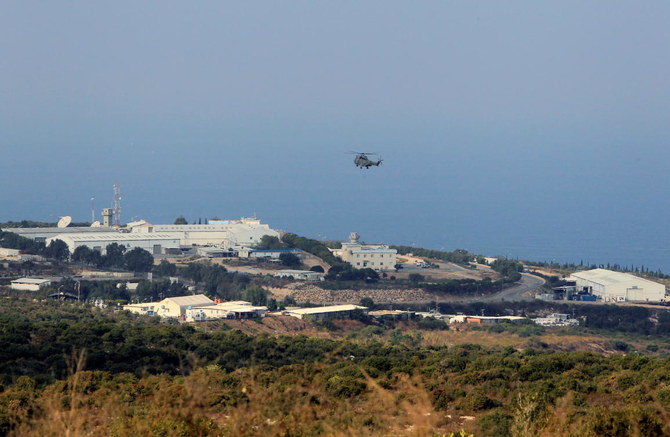

NAQURA: Lebanon and Israel, still technically at war, wrapped up a second round of maritime border talks Thursday under UN and US auspices to allow for offshore energy exploration.
The delegations met for around four hours for a second day straight at a base of the UN peacekeeping force UNIFIL in the Lebanese border town of Naqura, Lebanon's National News Agency and Israel's energy ministry said.
The talks have been shrouded in secrecy, with little information emerging about any progress being made.
"At the end it was determined that another round of talks will take place during the coming month," the Israeli energy ministry said.
A Lebanese source close to the negotiations said they would resume on November 11.
A first round of talks had been held on October 14, and the second had started on Wednesday.
After years of quiet US shuttle diplomacy, Lebanon and Israel this month said they had agreed to begin the negotiations in what Washington hailed as a "historic" agreement.
The announcement came weeks after Bahrain and the United Arab Emirates became the first Arab nations to establish relations with Israel since Egypt in 1979 and Jordan in 1994.
But Lebanon has insisted the negotiations are purely technical and do not involve any political normalisation with Israel.
Lebanon, reeling from its worst economic crisis in decades, is hoping to settle the maritime border dispute so it can continue exploring for hydrocarbon reserves in the Mediterranean.
Opinion
This section contains relevant reference points, placed in (Opinion field)
Exploration is on hold in an area off its coast named Block 9, as a section of it is located in an 860-square-kilometre (330-square-mile) area claimed by both Israel and Lebanon.
NNA said the Lebanese delegation carried with it "maps and documents showing the points of contention and the Israeli enemy infringing on the Lebanese right to include part of Block 9".
In February 2018, Lebanon signed its first contract for offshore drilling for oil and gas in Block 9 and Block 4 with a consortium comprising energy giants Total, ENI and Novatek.
Lebanon in April said initial drilling in Block 4 had shown traces of gas but no commercially viable reserves.
While the US-brokered talks look at the maritime border, a UNIFIL-sponsored track is also due to address outstanding land border disputes.
UNIFIL head Major General Stefano Del Col welcomed Tuesday what he called "a unique opportunity to make substantial progress on contentious issues along" the land frontier.


