

Newest thing in Pakistani fashion? Old clothes

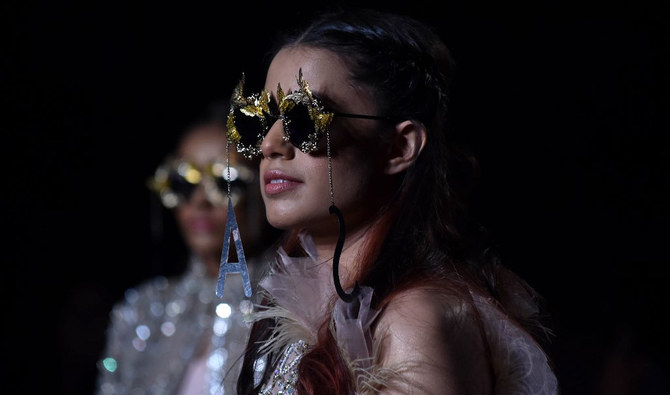
A model presents a creation by Pakistani designer Ahmad Sultan in Lahore on Sept. 27, 2019. (AFP/File)s
Short Url
Updated 29 October 2020
Follow

Newest thing in Pakistani fashion? Old clothes

  • Stigma of buying or admitting to shopping secondhand apparel and accessories is gradually disappearing in Pakistan
  • Internet, online shopping and influencers are helping shape a whole new approach toward thrifting and responsible consumption

RAWALPINDI: Selling secondhand clothes is not new in Pakistan but wearing them has only recently become fashionable, with influencers destigmatizing and making style statements from thrifted, pre-worn apparel and accessories.

A global boom in online marketplaces that let shoppers buy and sell used clothing and accessories, coupled with increasing awareness over sustainability, is changing the perception people have of shopping at thrift stores.

"There’s a surge of how young people are looking at fashion through a lens of responsible practices and approaching fashion differently," Amber Javed, the influencer behind A Wardrobe Affair — one of Pakistan’s first prominent fashion blogs — told Arab News.

"There is an idea like in our communities, specifically, that wearing pre-worn clothes can be looked down upon, but when I was abroad, I saw it was a thriving and exciting branch of fashion," she said.

To mainstream secondhand fashion, she launched Find Again, an Instagram shop where she sells personally curated thrifted and pre-worn clothing and accessories.

"I want to normalize this for people here by saying here I am doing the same, we can all participate in this," said the influencer whose Instagram account has now over 146,000 followers. "It makes it okay for the people who follow me as well to say 'if she can do, it we can do it too.'"

Her Find Again pieces have already been bought and worn by others from the fashion industry, including stylists and fellow influencers.

The internet and online shopping are helping shape a whole new approach toward buying second hand, which in Pakistan has been seen more as a necessity and, sometimes, a possibly a source of shame.

Landa bazars (flea markets), kabaris, itwar bazars, Sunday markets are nothing new in Pakistani cities and have since time immemorial offered fashion on the cheap. Like elsewhere in the world, they sell branded items, high-street finds, factory rejects and often clothes of ex-pats and diplomats who upon leaving Pakistan also leave some of their wardrobes behind.

There used to be a stigma about shopping there. "In college, students would make fun of people who bought from there," said Tabraiz Bukhari, a 25-year-old tech industry professional from Lahore.

With new online shops and initiatives, the stigma of buying or admitting to shopping secondhand apparel is gradually disappearing and has been replaced by a playful attitude toward vintage clothing.

"Because who wouldn't want a good deal on a denim jacket?" said Sara Mehdi from Karachi, who recently bought her first pre-loved embroidered denim jacket for roughly Rs1,000 ($6).

"People are taking thrift shopping in stride, and the question of 'oh you shop thrift because you can't afford branded new clothes' doesn't come up."


Pakistani, Bangladeshi officials discuss trade, investment and aviation as ties thaw

Updated 28 December 2025
Follow

Pakistani, Bangladeshi officials discuss trade, investment and aviation as ties thaw

  • Pakistan and Bangladesh were once one nation, but they split in 1971 as a result of a bloody civil war
  • Ties between Pakistan, Bangladesh have warmed up since last year and both nations have resumed sea trade

ISLAMABAD: Pakistan's High Commissioner to Bangladesh Imran Haider on Sunday met Chief Adviser Muhammad Yunus in Dhaka, the latter's office said on, with the two figures discussing trade, investment and aviation.

Pakistan and Bangladesh were once one nation, but they split in 1971 as a result of a bloody civil war, which saw the part previously referred to as East Pakistan seceding to form the independent nation of Bangladesh.

Ties between Pakistan and Bangladesh have warmed up since former prime minister Sheikh Hasina’s ouster as a result of a student-led uprising in August 2024. Relations remain frosty between Dhaka and New Delhi over India’s decision to grant asylum to Hasina.

Pakistan has attempted to forge closer ties with Bangladesh in recent months and both South Asian nations last year began sea trade, followed by efforts to expand government-to-government commerce.

"During the meeting, both sides discussed ways to expand cooperation in trade, investment, and aviation as well as scaling up cultural, educational and medical exchanges to further strengthen bilateral relations between the two South Asian nations," Yunus's office said in a statement on X.

In 2023-24 Pakistan exported goods worth $661 million to Bangladesh, while its imports were only $57 million, according to the Trade Development Authority of Pakistan. In Aug. this year, the Pakistani and Bangladeshi commerce ministries signed a memorandum of understanding to establish a Joint Working Group on Trade, aiming to raise their bilateral trade volume to $1 billion in the financial year that began in July.

The Pakistani high commissioner noted that bilateral trade has recorded a 20 percent growth compared to last year, with business communities from both countries actively exploring new investment opportunities, according to the statement.

He highlighted a significant increase in cultural exchanges, adding that Bangladeshi students have shown strong interest in higher education opportunities in Pakistan, particularly in medical sciences, nanotechnology, and artificial intelligence. Haider also said that Dhaka-Karachi direct flights are expected to start in January.

"Chief Adviser Professor Muhammad Yunus welcomed the growing interactions between the two countries and emphasized the importance of increased visits as well as cultural, educational and people-to-people exchanges among SAARC (South Asian Association for Regional Cooperation) member states," the statement read.

"Professor Yunus also underscored the need to further boost Bangladesh–Pakistan trade and expressed hope that during Mr. Haider’s tenure, both countries would explore new avenues for investment and joint venture businesses."
