

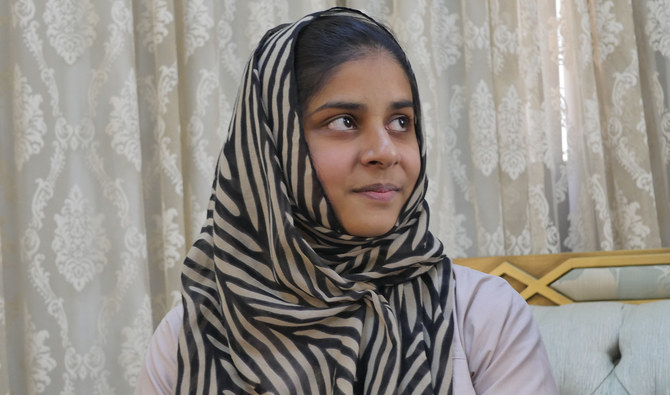

DUBAI: A Dubai-based Pakistani child prodigy, who is one year short of the minimum age limit to appear in civil service exams, has requested the prime minister to bend the rule for her so she can fulfill her dream of becoming a civil servant.
The minimum age limit to participate in Pakistan’s Central Superior Services (CSS) exams is 21. Sitara Brooj Akbar is 20.
Native of Pakistan’s Punjab province, Akbar moved to the UAE with her parents in 2015. She is now considering pursuing doctoral studies in oncology but also dreams of sitting for the civil services exam.
“I wrote to the prime minister on July 25 of this year and received a reply on August 11 saying that such a decision cannot be taken without the cabinet convening and agreeing to it,” Akbar told Arab News last week.
At age 11, Akbar became the world’s youngest person to pass five subjects in O-Levels, exams usually taken by sixteen year olds. A few years later, she was the highest IELTS band scorer.
At age 17, she became the youngest person to receive a certificate from the US-based Association of Certified Anti-Money Laundering Specialists.
Now she wants to break another record: be the youngest person to take the CSS exams.
“I cannot explain in words the love I feel for my country and my goal is to eventually go back and serve my country,” Akbar said.
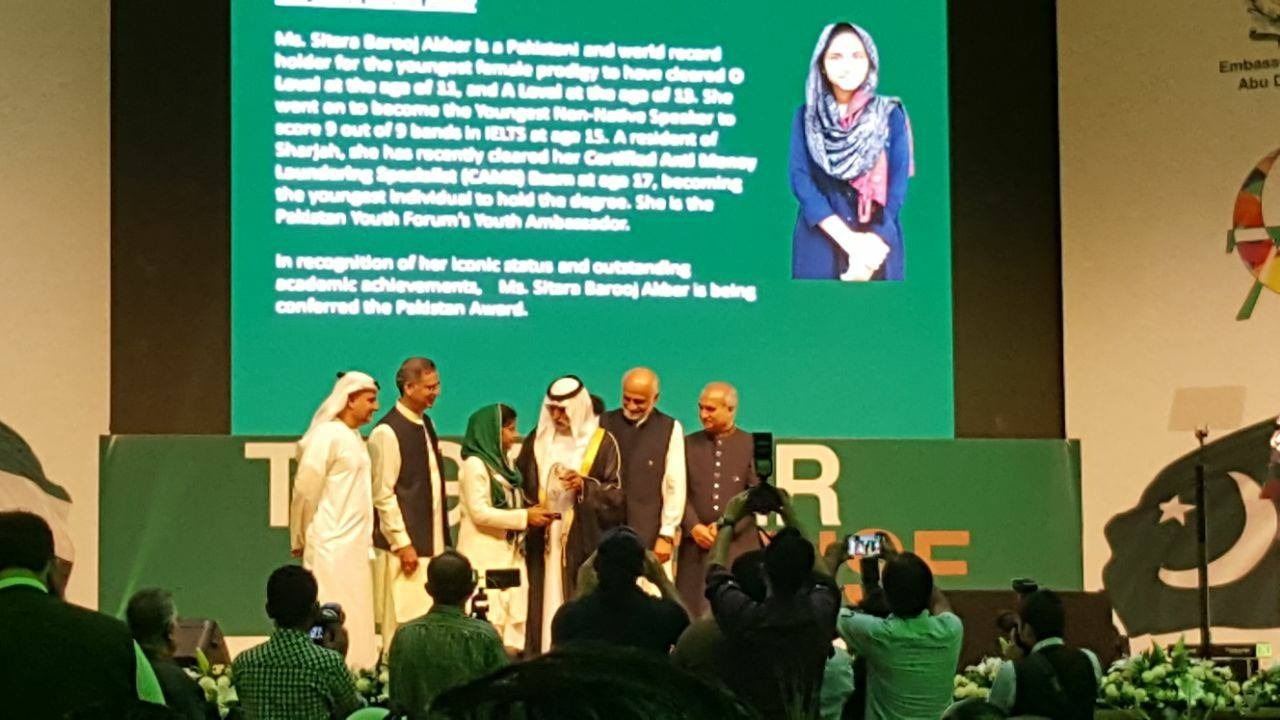
Pakistani child prodigy Sitara Brooj Akbar receives an award from Sheikh Nahyan bin Mubarak Al-Nahyan, the UAE minister for culture, youth and social development, in Dubai, UAE, on August 14, 2017. (Photo courtesy: Sitara Brooj Akbar)
Akbar has already been recognized in Pakistan. In 2013, she received a Nazriya Pakistan Council award and in 2016 was honored with a gold medal from Pakistan’s ambassador to the UAE for outstanding achievements in education. In 2017, she received the Pakistan Award for Excellent Community Work from the Pakistani government, handed to her during a special ceremony in Dubai by Sheikh Nahyan bin Mubarak Al-Nahyan, the UAE minister for culture, youth and social development.
“I have already moved a petition [with the PM] and am hoping that I am allowed to appear for this [CSS] exam soon,” she said. “When we say we will empower our youth, we need to see that in practice as well.”
Akbar and her 10-year-old brother, Qamar Muneer Akbar, are both homeschooled.
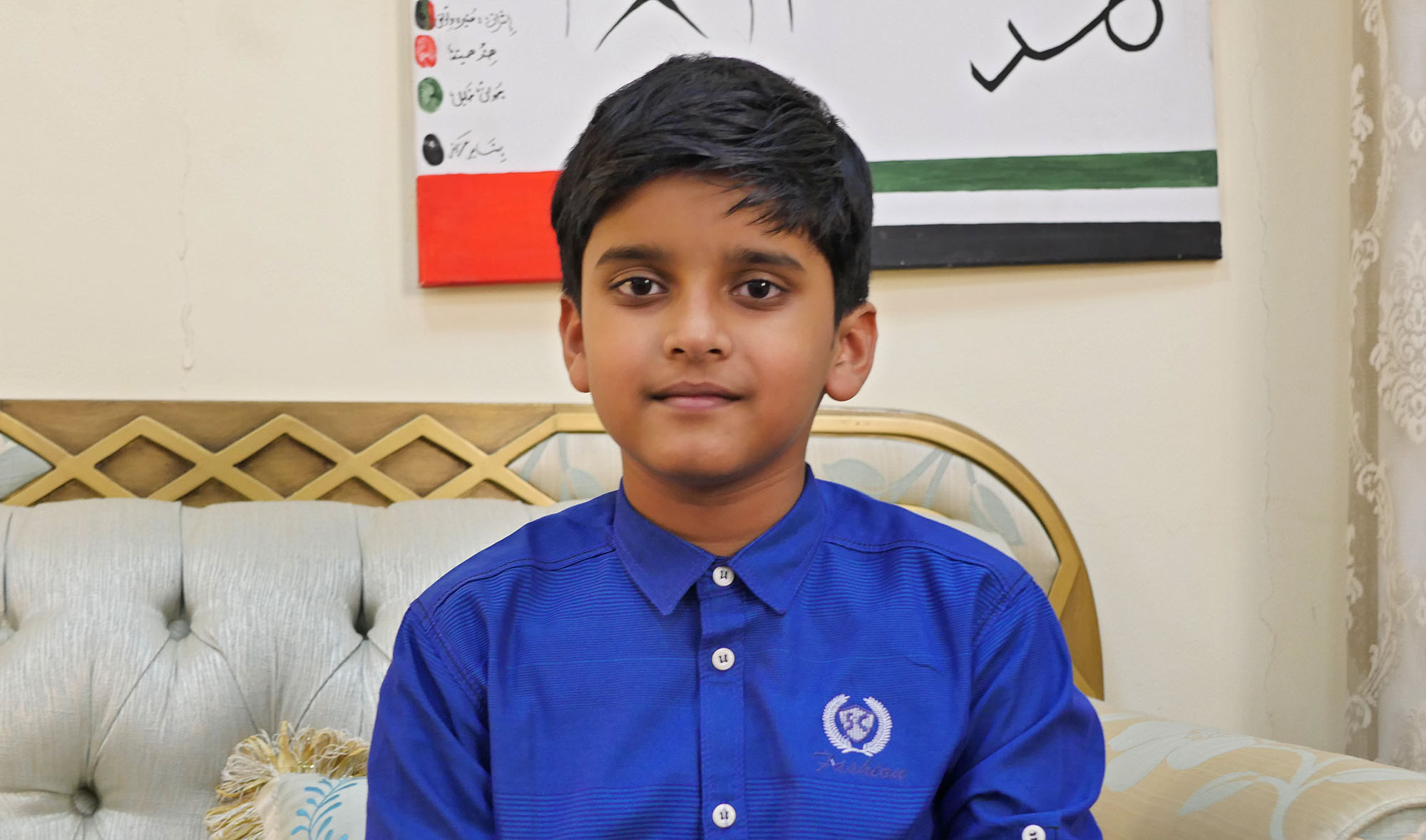
Pakistani child prodigy Qamar Muneer Akbar talks to Arab News on October 17, 2020 in Dubai, UAE. (AN photo by Asma Ali Zain)
“I used to attend school until grade one but Pakistan’s education system is so geared toward conventional learning that I was unable to cope,” Akbar said, saying her teachers complained that she asked too many questions. “I had to drop out of school and since my mother was a chemistry teacher, she started teaching me at home.”
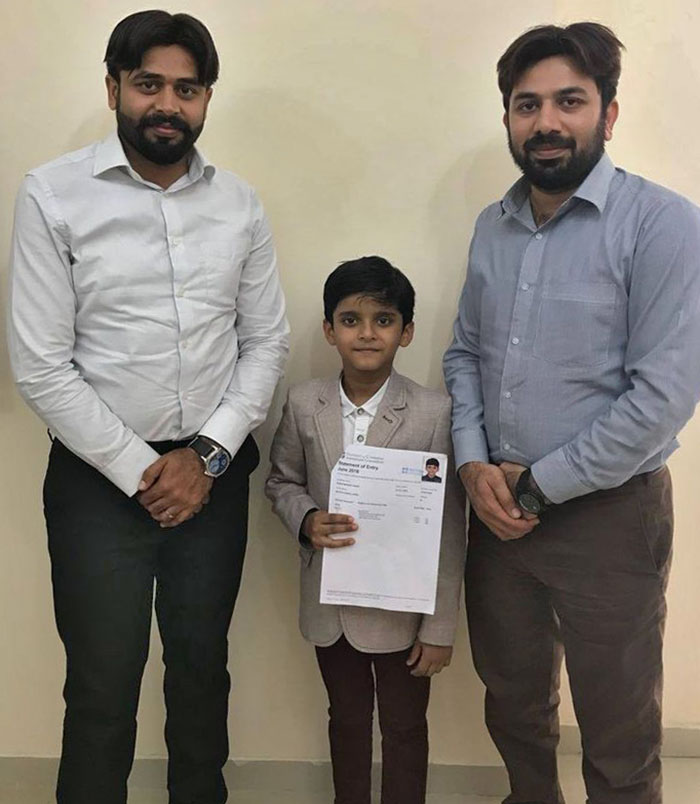
Pakistani child prodigy Qamar Muneer Akbar with officials from the British Council Pakistan in 2018. (Photo courtesy: Sitara Brooj Akbar)
Qamar is quickly following in his sibling’s footsteps. In 2018, he broke Akbar’s record and passed O-levels at the age of eight. He said he enjoys coding and developing apps and hosts a kids’ radio show in the UAE.
“I showed interest in chemistry and it was fun for me and that is the reason I chose to appear in the exam,” said Qamar, who is now hoping to break his sister’s IELTS record also.
When asked about his inspirations, he named Pakistan’s first foreign minister, Zafarullah Khan, and Abdus Salam, a theoretical physicist and the first Pakistani to receive a Nobel Prize in science.
“I really look up to Dr. Abdus Salam … he is a Nobel laureate,” Qamar said. “And also Dr. Zafarullah Khan who was the first Pakistani to serve as the president of the International Court of Justice.”


