NEW DELHI: India’s confirmed coronavirus toll crossed 7 million on Sunday with a number of new cases dipping in recent weeks, even as health experts warn of mask and distancing fatigue setting in.
The Health Ministry registered another 74,383 infections in the past 24 hours. India is expected to become the pandemic’s worst-hit country in coming weeks, surpassing the US, where more than 7.7 million infections have been reported.
The ministry also reported 918 additional deaths, taking total fatalities to 108,334.
The number of people who have died of COVID-19 has remained relatively low in South and Southeast Asia – from India to Vietnam and Taiwan – compared to European countries and the United States, said Dr. Randeep Guleria, a government health expert.
“We have been able to keep the curve rise slow, but I do agree that we have not been able to get it to move aggressively down. That’s related to our population density, diversity of our country and socioeconomic challenges in our country,” said Guleria, referring to India’s burgeoning population of nearly 1.4 billion.
Some experts say though that India’s death toll may not be reliable because of poor reporting and health infrastructure and inadequate testing.
India aims to provide vaccines to 250 million people by July 2021, Health Minister Harsh Vardhan said last week. He said that the government was planning to receive 450 million to 500 million vaccine doses and would ensure “equitable access”.
India saw a steep rise in cases in July and added more than 2 million in August and another 3 million in September. But it is seeing a slower pace of coronavirus spread since mid-September, when the daily infections touched a record high of 97,894.
It’s averaging more than 70,000 cases daily so far this month. India has a high recovery rate of 85 percent with active cases below 1 million, according to the Health Ministry.
Health officials have warned about the potential for the virus to spread during the upcoming religious festival season, which is marked by huge gatherings in temples and shopping districts.
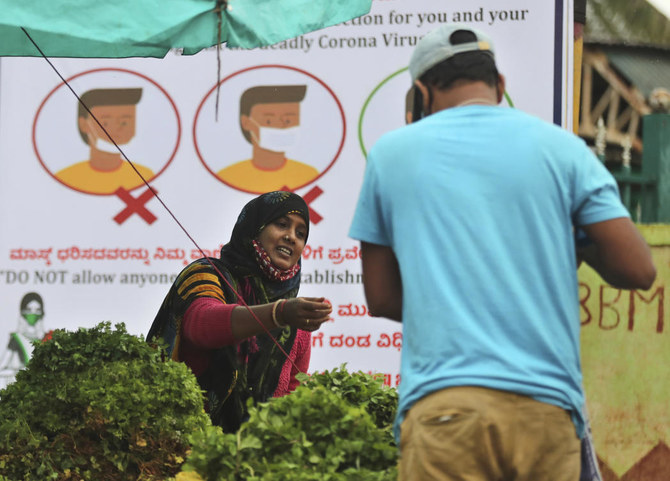
A crucial factor will be people wearing masks and maintaining a safe distance.
Dr. S.P. Kalantri, a hospital director in the village of Sevagram in India’s worst-hit western Maharashtra state, said that people in his village had stopped wearing masks, maintaining distance or washing their hands regularly. He added that the sick were still being brought in to his hospital.
India’s meager health resources are poorly divided across the country. Nearly 600 million Indians live in rural areas, and with the virus hitting India’s vast hinterlands, experts worry that hospitals could be overwhelmed.
“If we are able to have good behavior in terms of physical distancing and masks, maybe by early next year we should be able to come to a new normal. COVID-19 will not finish but it will be under reasonable control with travel and other things becoming much more easier and people relatively safer,” said Guleria.
Retired virologist Dr. T. Jacob John said there was increasing tendency among Indians not to wear masks or maintain distancing.
Social media have compounded the problem by propagating misinformation and fake cures. “And the result of this is that people have gotten fed up and have started making their own conclusions,” John said.
Nationwide, India is testing more than 1 million samples per day, exceeding the World Health Organization’s benchmark of 140 tests per 1 million people. But many of these are antigen tests, which look for virus proteins and are faster but less accurate than RT-PCR, which confirm the coronavirus by its genetic code.


![]()

India coronavirus cases cross 7 million as experts warn of complacency
Short Url
https://arab.news/v92ha
India coronavirus cases cross 7 million as experts warn of complacency
- India is expected to become the pandemic’s worst-hit country in coming weeks
- Nationwide, India is testing more than 1 million samples per day, exceeding the WHO’s benchmark


Latest updates


© 2026 SAUDI RESEARCH & PUBLISHING COMPANY, All Rights Reserved And subject to Terms of Use Agreement.