Pakistani tea seller turns tea-preneur, opens cafe after finding social media fame

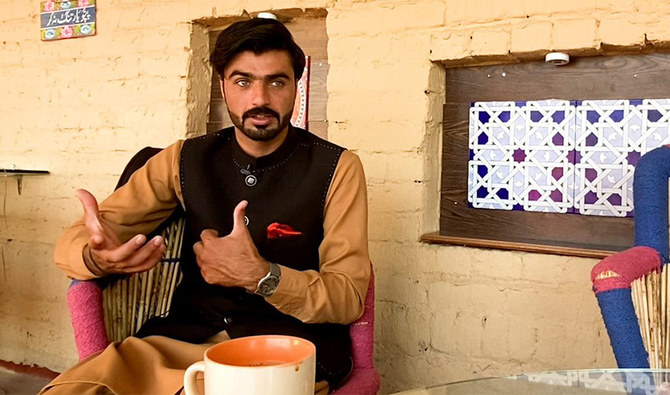
Arshad Khan, the world’s most famous chaiwala, speaks to Arab News at his Cafe Chaiwala Rooftop in Islamabad on Oct. 8, 2020. (AN photo)
Short Url
Updated 10 October 2020
Follow

Pakistani tea seller turns tea-preneur, opens cafe after finding social media fame

  • Arshad Khan, the famed ‘chaiwala,’ was propelled to stardom by a photograph and is now setting up his own chain of restaurants
  • Khan plans to build schools for the underprivileged communities to offer them free education

ISLAMABAD: Arshad Khan, the world’s most famous chaiwala, has launched his own chain of restaurants called Cafe Chaiwala Rooftop, four years after a viral photo shot him to international fame.
“Originally I thought it was pretty weird, and I was a bit shook by it,” Khan to Arab News at his new rooftop restaurant in Islamabad earlier this week. “But eventually I understood it was an opportunity I should make the most of.”
In 2016, Arshad Khan, then 18 years old, went to work, as he did every Sunday, at Islamabad’s Itwaar Bazaar (Sunday Market) where he manned a tea stall. Photographer Jiah Ali snapped a shot of the handsome young man, though neither Khan nor Ali could imagine that the photo would go viral. Shared thousands of times, Khan was dubbed “chaiwala” and showered in attention for his strikingly good looks.
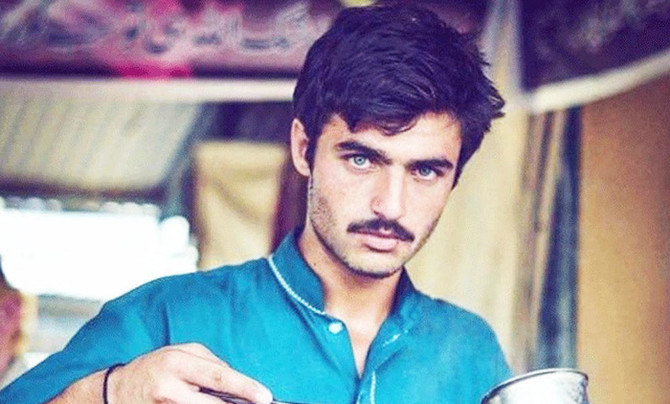


Arshad Khan is making tea at a local stall in Islamabad in October 2016. The photo went viral and shot him to international fame. (Photo courtesy: Social Media)

Initially, modeling and acting offers came pouring in, but Khan was striving for stability and decided to work smart. “From the beginning, I had this idea about setting up a business that had something to do with chai since that made sense,” said Khan who learned to make tea at the age of 12 as a means to earn his living. “I am proud of the journey that brought me here. Putting chaiwala in the name was a must.”
Khan hopes to use his success to help others by building schools in the future to cater to the underprivileged communities and provide free education.
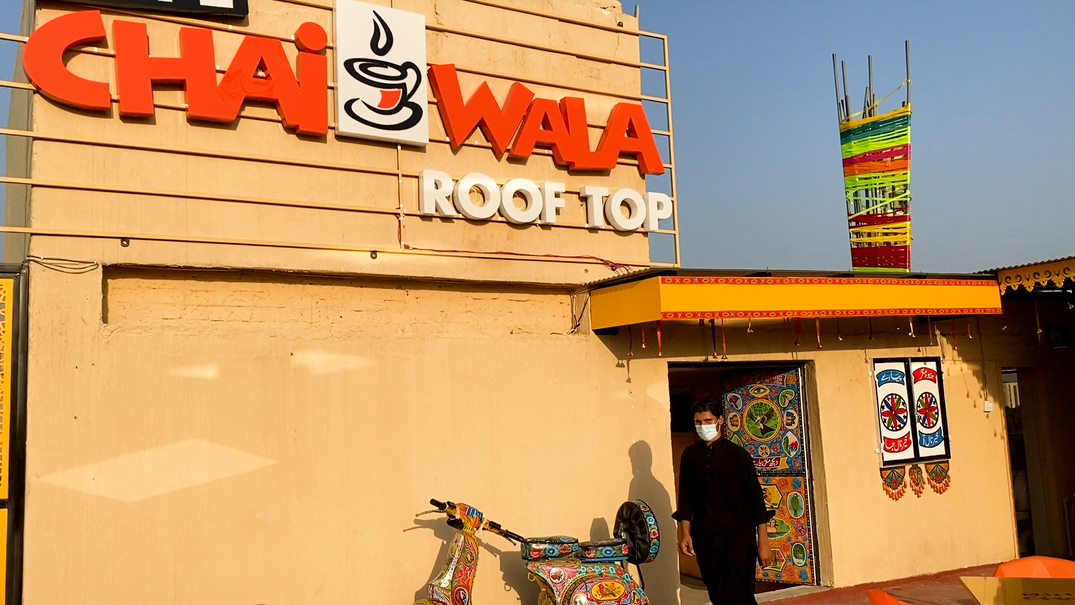


Cafe Chaiwala Rooftop belonging to Arshad Khan, the world’s most famous tea seller, is seen in Islamabad on Oct. 8, 2020. (AN photo)

In addition to Islamabad, Khan and his team are opening Cafe Chaiwala Rooftop in Murree as well and plan to further expand across Pakistan before going international. Their rooftop restaurant overlooks Islamabad’s Margalla Hills and is outfitted in truck art-inspired décor, including candy-colored table stands made of tires and lots of signs with Punjabi and Urdu puns about chai. In one of Islamabad’s busiest commercial sectors called Blue Area, it sits atop a number of offices, making it an ideal spot for people looking to grab tea and enjoy a great view after work.
As for Khan, who showed Arab News how to make a perfect karak (strong) chai, tea is not something he indulges in himself.
“I am not a big tea drinker,” he laughed. “Once a day is quite enough for me!”


Pakistan urges world to treat water insecurity as global risk, flags India treaty suspension

Updated 5 sec ago
Follow

Pakistan urges world to treat water insecurity as global risk, flags India treaty suspension

  • Pakistan says it is strengthening water management but national action alone is insufficient
  • India unilaterally suspended Indus Waters Treaty last year, leading to irregular river flows

ISLAMABAD: Pakistan on Tuesday urged the international community to recognize water insecurity as a “systemic global risk,” warning that disruptions in shared river basins threaten food security, livelihoods and regional stability, as it criticized India’s handling of transboundary water flows.

The call comes amid heightened tensions after India’s unilateral decision last year to hold the 1960 Indus Waters Treaty “in abeyance,” a move Islamabad says has undermined predictability in river flows and compounded climate-driven vulnerabilities downstream.

“Across regions, water insecurity has become a systemic risk, affecting food production, energy systems, public health, livelihoods and human security,” Pakistan’s Acting Permanent Representative to the United Nations, Ambassador Usman Jadoon, told a UN policy roundtable on global water stress.

“For Pakistan, this is a lived reality,” he said, describing the country as a climate-vulnerable, lower-riparian state facing floods, droughts, accelerated glacier melt, groundwater depletion and rapid population growth, all of which are placing strain on already stressed water systems.

Jadoon said Pakistan was strengthening water resilience through integrated planning, flood protection, irrigation rehabilitation, groundwater replenishment and ecosystem restoration, including initiatives such as Living Indus and Recharge Pakistan, but warned that domestic measures alone were insufficient.

He noted the Indus River Basin sustains one of the world’s largest contiguous irrigation systems, provides more than 80 percent of Pakistan’s agricultural water needs and supports the livelihoods of over 240 million people.

The Pakistani diplomat said the Indus Waters Treaty had for decades provided a framework for equitable water management, but India’s decision to suspend its operation, followed by unannounced flow disruptions and the withholding of hydrological data, had created an unprecedented challenge for Pakistan’s water security.

Pakistan has said the treaty remains legally binding and does not permit unilateral suspension or modification.

The issue has gained urgency as Pakistan continues to recover from last year’s monsoon floods, which killed more than 1,000 people and devastated farmland in Punjab, the country’s eastern breadbasket, in what officials described as severe riverine flooding.

Last month, Deputy Prime Minister Ishaq Dar said Pakistan had observed abrupt variations in river flows from India, creating uncertainty for farmers in Punjab during critical periods of the agricultural cycle.

“As we move toward the 2026 UN Water Conference, Pakistan believes the process must acknowledge water insecurity as a systemic global risk, place cooperation and respect for international water law at the center of shared water governance, and ensure that commitments translate into real protection for vulnerable downstream communities,” Jadoon said.