

Saudi non-oil private sector back to growth for first time since February

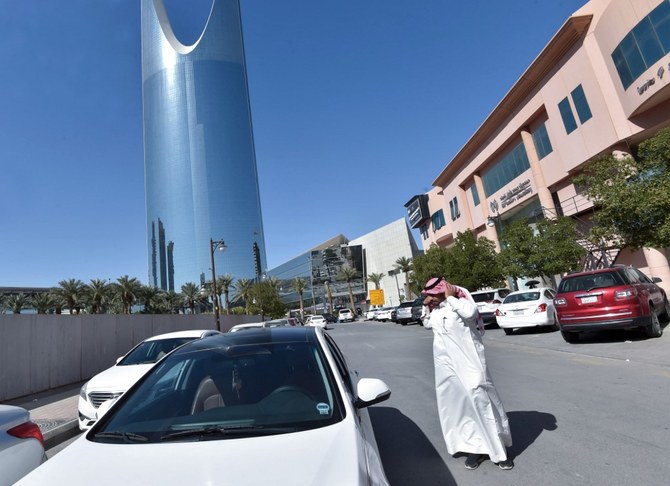
TThe Saudi economy still has ‘some way to go to fully recover,’ an economist at IHS Markit says. (AFP)
Short Url
Updated 05 October 2020
Follow

Saudi non-oil private sector back to growth for first time since February

  • ‘Business activity in the Saudi Arabia non-oil private sector ticked up in September’

DUBAI: Saudi Arabia’s non-oil private sector returned to growth in September for the first time in seven months, a survey showed on Monday, amid stronger demand after a loosening of lockdown measures imposed to stem the spread of the coronavirus.

The seasonally adjusted IHS Markit Saudi Arabia Purchasing Managers’ Index (PMI) rose to 50.7 from 48.8 in August, going above the 50 mark that separates growth from contraction for the first time since February, prior to the pandemic.

“Business activity in the Saudi Arabia non-oil private sector ticked up in September, supported by a return to sales growth as the economy started to find its footing after the COVID-19 lockdown,” said David Owen, economist at IHS Markit.

“In addition, the impact of a rise in VAT notably softened, after a sharp rise in prices and a dip in sales were seen in August. Cost inflation eased to just a marginal pace.”

Saudi Arabia, the world’s largest oil exporter, tripled VAT in July to 15 percent to boost state coffers badly hit by low oil prices and crude production cuts, in a move that economists said will likely slow economic recovery from the coronavirus downturn.

Business conditions had deteriorated in August, partly because of the impact of VAT on consumer spending and on input costs for businesses.

In September the rise in input costs was much weaker as the tax impact eased considerably, said the survey. Job markets, however, remained subdued, with employment decreasing for the eighth consecutive month.

Saudi Arabia said last week that unemployment among Saudi citizens rose to a record-high of 15.4 percent in the second quarter, while the economy shrank by 7 percent.

The Saudi economy still has “some way to go to fully recover,” said Owen.

“Output growth remains well below normal, and jobs are still falling, albeit at a slower rate. Firms will require consistent rises in sales to support a strong end to the year.”


India seals $3bn LNG agreement with UAE

Updated 19 January 2026
Follow

India seals $3bn LNG agreement with UAE

  • Leaders hold talks to strengthen trade, defense ties

NEW DELHI, DUBAI: India signed a $3 billion deal on Monday to buy liquefied natural gas from the UAE, making it the Gulf country’s top customer, as the leaders of both countries held talks to strengthen trade and defense ties.

The agreement was signed during a very brief two-hour visit to ‌India by UAE ‌President Sheikh Mohammed bin Zayed Al-Nahyan for talks with Indian ‌Prime Minister Narendra Modi. 

They pledged to double bilateral trade to $200 billion in six years and form a strategic defense partnership.

Abu Dhabi state firm ADNOC Gas will supply 0.5 million tonnes of LNG a year to India’s Hindustan Petroleum Corp. for 10 years, the companies said.

ADNOC Gas said the agreement brings the total value of its contracts with India to over $20 billion.

“India is now the UAE’s largest customer and a ‌very important part of ADNOC Gas’ LNG strategy,” ‍the company said.

The UAE is ‍India’s third largest trading partner and Sheikh Mohammed was accompanied ‍by a government delegation that included his defense and foreign ministers. The two sides signed a letter of intent to work toward forming a strategic defense partnership, India’s Foreign Secretary Vikram Misri told reporters.

Misri, however, said that the signing of the letter of intent with the UAE does not mean that India will get involved in regional conflicts.

“Our involvement on the defense and security front with a country from the region does not necessarily lead to the conclusion that we will get involved in ‌particular ways in the conflicts of the region,” he said.