Saudi non-oil private sector back to growth for first time since February

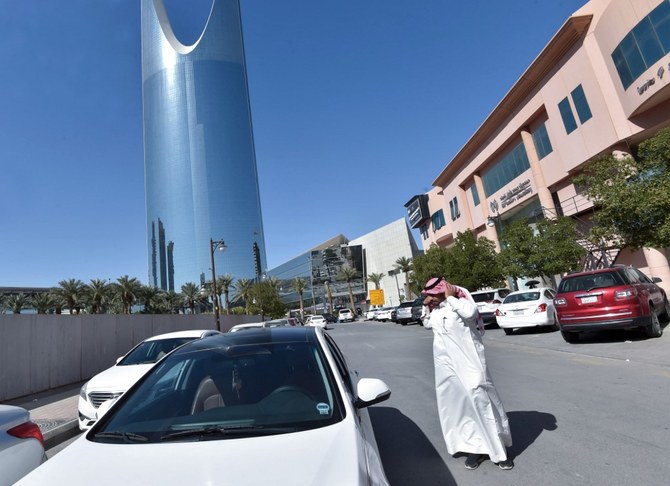
TThe Saudi economy still has ‘some way to go to fully recover,’ an economist at IHS Markit says. (AFP)
Short Url
Updated 05 October 2020
Follow

Saudi non-oil private sector back to growth for first time since February

  • ‘Business activity in the Saudi Arabia non-oil private sector ticked up in September’

DUBAI: Saudi Arabia’s non-oil private sector returned to growth in September for the first time in seven months, a survey showed on Monday, amid stronger demand after a loosening of lockdown measures imposed to stem the spread of the coronavirus.

The seasonally adjusted IHS Markit Saudi Arabia Purchasing Managers’ Index (PMI) rose to 50.7 from 48.8 in August, going above the 50 mark that separates growth from contraction for the first time since February, prior to the pandemic.

“Business activity in the Saudi Arabia non-oil private sector ticked up in September, supported by a return to sales growth as the economy started to find its footing after the COVID-19 lockdown,” said David Owen, economist at IHS Markit.

“In addition, the impact of a rise in VAT notably softened, after a sharp rise in prices and a dip in sales were seen in August. Cost inflation eased to just a marginal pace.”

Saudi Arabia, the world’s largest oil exporter, tripled VAT in July to 15 percent to boost state coffers badly hit by low oil prices and crude production cuts, in a move that economists said will likely slow economic recovery from the coronavirus downturn.

Business conditions had deteriorated in August, partly because of the impact of VAT on consumer spending and on input costs for businesses.

In September the rise in input costs was much weaker as the tax impact eased considerably, said the survey. Job markets, however, remained subdued, with employment decreasing for the eighth consecutive month.

Saudi Arabia said last week that unemployment among Saudi citizens rose to a record-high of 15.4 percent in the second quarter, while the economy shrank by 7 percent.

The Saudi economy still has “some way to go to fully recover,” said Owen.

“Output growth remains well below normal, and jobs are still falling, albeit at a slower rate. Firms will require consistent rises in sales to support a strong end to the year.”


Closing Bell: Saudi main index extends gains as market opens wider to foreign investment

Updated 02 February 2026
Follow

Closing Bell: Saudi main index extends gains as market opens wider to foreign investment

RIYADH: Saudi Arabia’s Tadawul All Share Index rose on Monday, gaining 153.61 points, or 1.38 percent, to close at 11,321.09.

The total trading turnover of the benchmark index was SR5.85 billion ($1.56 billion), as 207 of the listed stocks advanced, while 55 retreated.

The MSCI Tadawul Index increased, up 21.20 points or 1.41 percent, to close at 1,524.18.

The Kingdom’s parallel market Nomu gained 278.13 points, or 1.17 percent, to close at 24,013.03. This comes as 43 of the listed stocks advanced, while 29 retreated.

The best-performing stock was Saudi Pharmaceutical Industries and Medical Appliances Corp., with its share price surging by 7.26 percent to SR28.94.

Other top performers included Rasan Information Technology Co., which saw its share price rise by 6.51 percent to SR144, and Knowledge Economic City, which saw a 6.25 percent increase to SR13.09.

On the downside, the worst performer of the day was Najran Cement Co., whose share price fell by 2.11 percent to SR6.49.

Almasane Alkobra Mining Co. and Saudi Cable Co. also saw declines, with their shares dropping by 2 percent and 1.88 percent to SR103.10 and SR166.80, respectively.

On the announcement front, Riyad Bank has announced its annual financial results for 2025, with the total income from special commission of financing reaching SR24.1 billion, while net income from special commission of financing amounted to SR12 billion.

In a statement on Tadawul, the bank said: “Net income increased by 11.7 percent mainly due to an increase in total operating income and a decrease in total operating expenses.”

The bank further noted that the rise in total operating income was primarily driven by increased revenue from fees and commissions, trading activities, special commissions, gains on non-trading investments, and other operating sources. This growth was partially tempered by declines in exchange and dividend income.

“Net provision of expected credit losses and other losses decreased by 15.8 percent due to a decrease in impairment charge of credit losses and impairment charge for other financial assets, partially offset by an increase in impairment charge for investments,” it added.

RIBL’s share price closed at SR18.18 on the main market, marking a 1.43 percent increase.