


Arab world mourns death of Kuwait’s emir

Sheikh Sabah Al-Ahmad Al-Sabah. (AP)
Short Url
Updated 30 September 2020
Follow

Arab world mourns death of Kuwait’s emir

  • Kuwait says goodbye to “Emir of Humanity”
  • Sheikh Sabah has been succeeded as emir by his brother

RIYADH: The Gulf states and the wider Middle East mourned the death on Tuesday of the emir of Kuwait, Sheikh Sabah Al-Ahmad Al-Sabah.
Sheikh Sabah, who was 91, had ruled Kuwait since 2006, and steered its foreign policy for more than 50 years. He died in the US, where he had been in hospital since July following surgery in Kuwait.
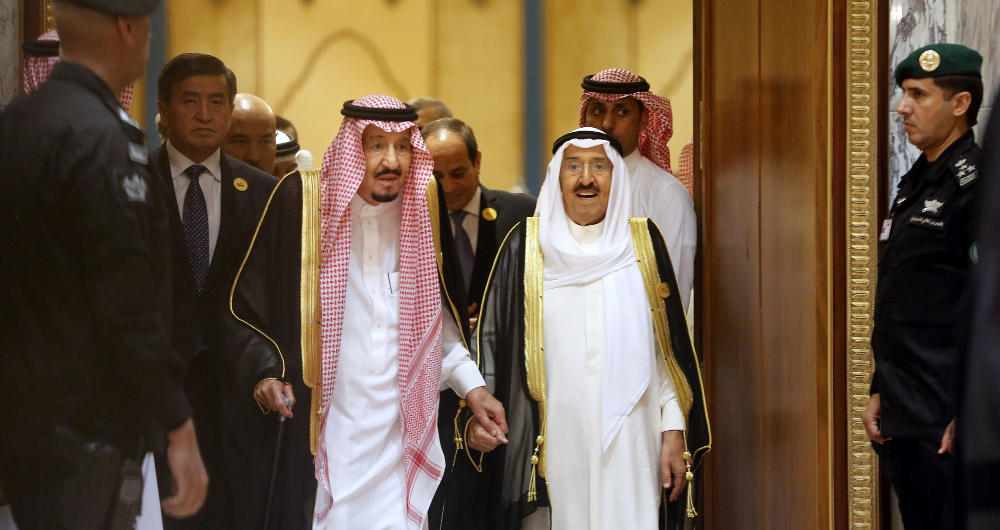


Saudi Arabia’s King Salman and Crown Prince Mohammed bin Salman sent their condolences to the people of Kuwait and the Al-Sabah family. (AP)

Flags flew at half staff in Kuwait, which began 40 days of mourning. “Goodbye, Emir of Humanity,” read a large banner on a street near the Kuwait stock exchange.
Saudi Arabia’s King Salman and Crown Prince Mohammed bin Salman sent their condolences to the people of Kuwait and the Al-Sabah family.
“With the departure of Sheikh Sabah, we lose a wise leader who devoted his life to the service of his country and the Islamic and Arab nations,” said the Saudi Foreign Minister, Prince Faisal bin Farhan. “We console ourselves and our brothers in Kuwait for this great loss.”

Opinion

This section contains relevant reference points, placed in (Opinion field)

GCC Secretary-General Dr. Nayef Falah Al-Hajraf said the world had “lost the pioneer of development, always striving for good, love and peace, aiming to strengthen harmony, cooperation and solidarity among the peoples of the world, and who spared no effort for the good of all humanity.”
Dr. Yousef bin Ahmed Al-Othaimeen, secretary-general of the Organization of Islamic Cooperation, said Sheikh Sabah was a voice of wisdom and moderation. “He was one of the leaders of Kuwait who worked on its prosperity and supported its stability,” he said.
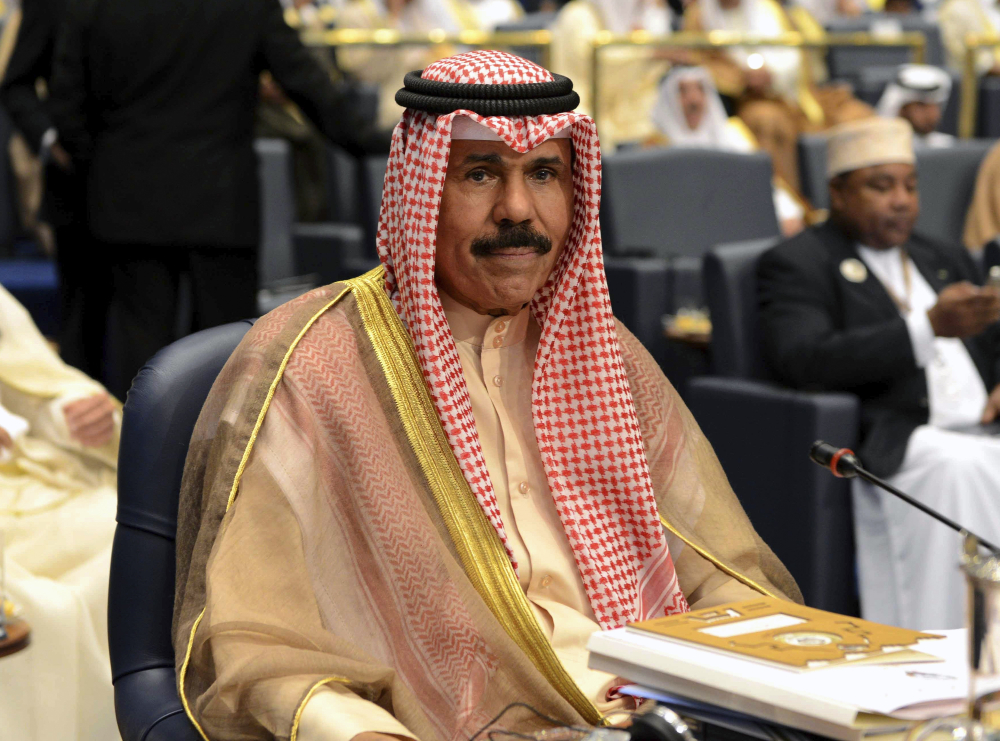


Crown Prince Nawaf Al-Ahmad Al-Sabah succeeds Sheikh Sabah. (AP)

Sheikh Sabah has been succeeded as emir by his brother, Crown Prince Nawaf Al-Ahmad Al-Sabah, 83, who will be sworn in on Wednesday.
Dahim Alqahtani, a Kuwaiti politics expert, said the emirate’s policies were unlikely to change under the new emir. “I believe Kuwait will follow Sheikh Sabah’s policies, which are based on balance and bridging differences,” he told Arab News.


US embassies across the Middle East close as Iran war escalates

Updated 8 sec ago
Follow

US embassies across the Middle East close as Iran war escalates

  • US citizens have been issued with safety alerts, advising them to leave where possible

As the conflict between the US, Israel and Iran intensifies, US embassies across the Middle East have shifted into emergency footing, issuing security alerts, suspending services and urging Americans to take immediate precautions.

In Saudi Arabia, the US Embassy in Riyadh closed after Iranian drones struck the compound, causing minor damage and a small fire. The mission cancelled both routine and emergency consular appointments and advised Americans in Riyadh, Jeddah and Dhahran to shelter in place. Citizens were also told to avoid the embassy grounds until further notice as a precaution.

In Kuwait, the US Embassy in Kuwait City instructed personnel and Americans in the country to shelter indoors amid the continued threat of missile and drone activity. The embassy warned people not to approach the compound and advised residents to remain inside, avoid windows and monitor official alerts.

The US Embassy in Bahrain has also suspended normal operations. Security notices there urged individuals to seek shelter indoors and remain alert, warning that civilian locations could be at risk as regional tensions escalate.

In Qatar, home to the major American military installation at Al Udeid, the US Embassy issued similar guidance, telling Americans to shelter in place and prepare for potential disruptions. The alert emphasized staying in secure indoor locations and keeping essential supplies on hand.

In Jordan, the US Embassy warned that missiles, rockets or drones could enter Jordanian airspace as the conflict unfolds. Americans were encouraged to remain vigilant and be prepared to seek shelter if sirens or official warnings were issued.

In Israel, where hostilities are directly linked to the broader confrontation with Iran, the US Embassy advised Americans to review their personal security plans. It indicated that its ability to assist with departures could be limited under current conditions and urged citizens to closely follow official guidance.

Beyond individual country alerts, the US State Department has expanded its regional advisories, urging Americans in multiple Middle Eastern countries to consider departing due to the deteriorating security environment.