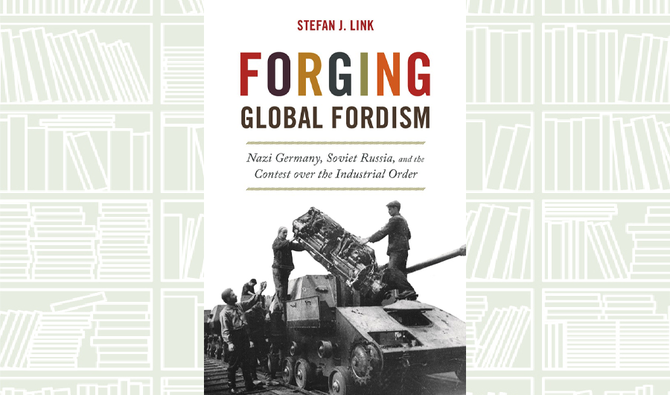

As the US rose to ascendancy in the first decades of the 20th century, observers abroad associated American economic power most directly with its burgeoning automobile industry. In the 1930s, in a bid to emulate and challenge America, engineers from across the world flocked to Detroit. Chief among them were Nazi and Soviet specialists who sought to study, copy, and sometimes steal the techniques of American automotive mass production, or Fordism. Forging Global Fordism traces how Germany and the Soviet Union embraced Fordism amid widespread economic crisis and ideological turmoil.
This incisive book recovers the crucial role of activist states in global industrial transformations and reconceives the global thirties as an era of intense competitive development, providing a new genealogy of the postwar industrial order.
Stefan Link uncovers the forgotten origins of Fordism in Midwestern populism, and shows how Henry Ford’s antiliberal vision of society appealed to both the Soviet and Nazi regimes.
He explores how they positioned themselves as America’s antagonists in reaction to growing American hegemony and seismic shifts in the global economy during the interwar years, and shows how Detroit visitors like William Werner, Ferdinand Porsche, and Stepan Dybets helped spread versions of Fordism abroad and mobilize them in total war.
Forging Global Fordism challenges the notion that global mass production was a product of post–World War II liberal internationalism, demonstrating how it first began in the global thirties, and how the spread of Fordism had a distinctly illiberal trajectory.