

Drug authorities in Pakistan take four months to clear raw material from India — pharma companies

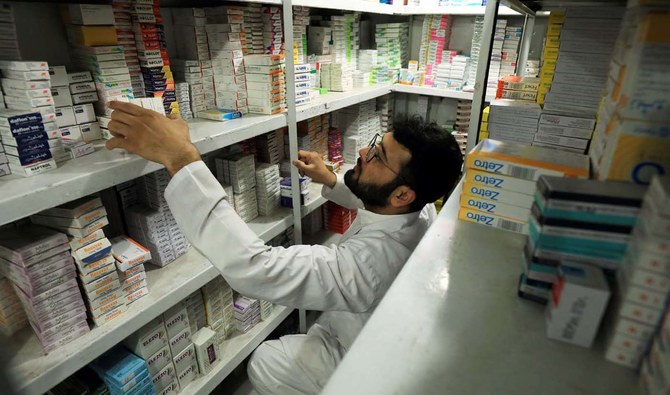
A man sorts and arranges medicine packs at a pharmacy store in Peshawar on March 28, 2019. (REUTERS/File)
Short Url
Updated 25 September 2020
Follow

Drug authorities in Pakistan take four months to clear raw material from India — pharma companies

  • Bureaucratic hurdles causing huge financial and quality losses to drug manufacturers in Pakistan, says top Pharma Bureau official
  • Importing medicines and raw material from other markets can make finished products too pricey, says Ayesha Tammy Haq

KARACHI: Pakistan’s pharmaceutical companies complained on Thursday they found it difficult to import “restricted raw materials” from neighboring India since such consignments remained stuck at the country’s ports for three to four months, awaiting clearance from drug control authorities. 

“At present, 50 percent of the raw material comes from India while the remaining is imported from China. Pharma companies face three to four months of delay in clearance of the raw material that arrives from India due to the pace of drug regulatory authorities in Pakistan,” Ayesha Tammy Haq, executive director of Pharma Bureau, a representative body of multinational pharmaceuticals in the country, said while addressing to a news conference in Karachi. 

Pakistan banned all imports from India, including the raw material used in the pharmaceutical industry, in August 2019, only a few days after New Delhi annexed the disputed Jammu and Kashmir region with the rest of the Indian union by abrogating Article 370. 

In September 2019, however, the government allowed import of essential lifesaving products used in the manufacturing of medicines.

Haq asked the government to look into the issue, saying that long delays were “not only causing financial losses to local companies but also compromising the quality and shelf life of the material.” 

Pakistan imports anti-cancer products, vaccines to treat rabies, typhoid, measles, hepatitis B along with products for solid organ transplants and general anesthesia, among other lifesaving items, from India and China. 

“India is the only supplier of tuberculosis and snakebite drugs in the world,” she said. “Besides, it is also a cheap source of raw material for us and people must realize that there are things we have to get from that country.” 

Pakistani drug makers say the import of raw material and finished products from other countries would significantly increase prices of medicines in the local market, making them almost unaffordable for government and people. 

“If we import from the United States, Europe or any other destination, the prices of these products will be 100 times more,” Haq said. “If we have to make cheap medicines — whether you like it or not — we will have to import from India or China.” 

“The situation is tense at our borders,” she continued. “In spite of that, let me say that somethings must not be viewed from a conflictual framework. Medicines are definitely among them.”


Babar Azam dropped for scoring too slowly, says Pakistan coach Hesson

Updated 20 February 2026
Follow

Babar Azam dropped for scoring too slowly, says Pakistan coach Hesson

  • Shaheen Shah Afridi was left out after conceding 101 runs in three matches
  • Pakistan will now face New Zealand in the opening match of the second phase

COLOMBO: Batting great Babar Azam was dropped for Pakistan’s final T20 World Cup group game against Namibia for scoring too slowly, said head coach Mike Hesson on Friday.

Azam, who is the highest run-scorer in T20 international history with 4,571 runs, was left out for the must-win game against Namibia as Pakistan racked up 199-3 and secured a place in the Super Eights by 102 runs.

The 2009 champions face New Zealand in Colombo on Saturday in the opening match of the second phase.

“I think Babar is well aware that his strike rate in the power play in the World Cup is less than 100 and that’s clearly not the role we think we need,” Hesson told reporters after Pakistan’s final practice session on Friday was washed out by rain.

Pakistan left out Azam for the same reason at last year’s Asia Cup and even after dismal showing in the Big Bash League, he was still selected for the T20 World Cup.

“We brought Babar back in for a specific role post the Asia Cup,” said Hesson.

“We’ve got plenty of other options who can come in and perform that role toward the end.

“Babar is actually the first to acknowledge that.

“He knows that he’s got a certain set of skills that the team requires and there are certain times where other players can perform that role more efficiently.”

Hesson also defended dropping pace spearhead Shaheen Shah Afridi after he conceded 101 runs in three matches, including 31 in two overs against India.

“We made a call that Salman Mirza was coming in for Shaheen, and he bowled incredibly well,” said Hesson.

“To be fair, he was probably really unlucky to not be playing the second and third games.”

Hesson was wary of Pakistan’s opponents on Saturday.

“New Zealand have played a huge amount in the subcontinent in recent times so we have to play at our best.”