1,200 kids, including ages 6-12, start smoking in Pakistan every day — parliamentary secretary health

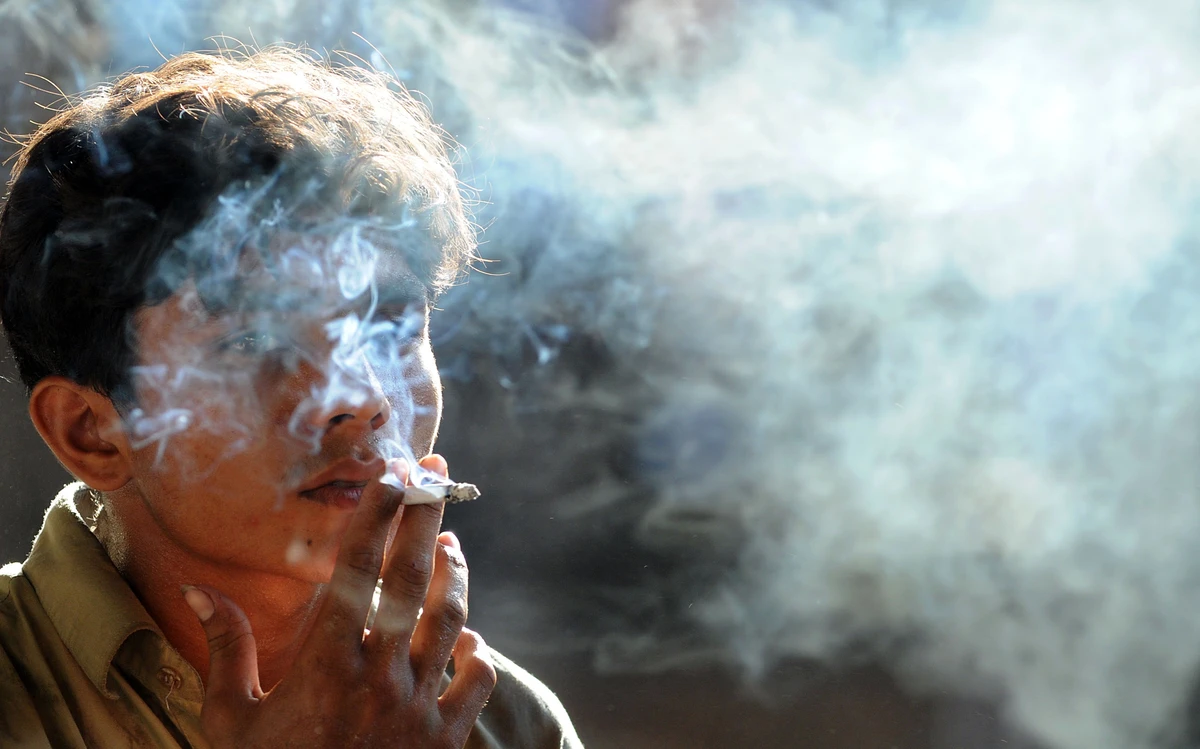
A Pakistani man smokes a cigarette in Lahore on May 31, 2011, on "World No Tobacco Day". Pakistan accounts for a large proportion of the cigarettes consumed in South Asia where about 100,000 people die annually from diseases caused by the use of tobacco, reports the Coaltion of Tobacco Control in Pakistan. (AFP)
Short Url
Updated 24 September 2020
Follow

1,200 kids, including ages 6-12, start smoking in Pakistan every day — parliamentary secretary health

  • Dr Nausheen Hamid says more than 160,000 people die every year in Pakistan because of tobacco use
  • Most smokers take up the habit in their teens, with roughly 11 percent of youth aged 13 to 15 around the world using cigarettes and cigars

ISLAMABAD: Around 1,200 children start smoking every day in Pakistan, Parliamentary Secretary for the Ministry of National Health Services, Dr Nausheen Hamid, said on Thursday.

Tobacco use is the world’s leading cause of preventable death and serious illness, killing an estimated 6 million people each year, according to a youth tobacco report from the US Centers for Disease Control and Prevention (CDC). Most smokers take up the habit in their teens, with roughly 11 percent of youth aged 13 to 15 around the world using tobacco products like cigarettes and cigars.

“The data we have has shown that children between ages of 6 and 12 are also among those children who start smoking every day,” Hamid, who is a member of the national assembly from the ruling Pakistan Tehreek-i-Insaf party, said, adding that more than 160,000 people died every year in Pakistan because of tobacco use.

“The tobacco industry tries to attract young generations [to become users],” she said.

In recent years, Pakistan has introduced several measures to control tobacco use, including banning smoking in all places of public work or use, and on all public transport.

Laws in Pakistan also prohibit the sale of smoked tobacco products within 50 meters of any school, university, or educational institution, as well as the sale of single cigarettes and small packets of cigarettes. The sale of tobacco products is not allowed to persons under the age of 18.

Many forms of tobacco advertising and promotion are also banned, including advertising on domestic TV, radio and print media.

According to data available on the Pakistani health ministry’s tobacco control cell, there are 23.9 million tobacco users in the country, of whom 15.6 million are smokers.

“5,000 Pakistanis are admitted to hospitals every day because of tobacco,” the cell said, “and 39 percent of households are exposed daily to secondhand tobacco smoke.”
Pakistan, ADB sign $730 loan agreements to boost SOE reforms, energy infrastructure

Updated 25 December 2025
Follow

Pakistan, ADB sign $730 loan agreements to boost SOE reforms, energy infrastructure

  • Both sign $330 million Power Transmission Strengthening Project and $400 million SOE Transformation Program loan agreements
  • Economic Affairs Division official says Transmission Project will secure Pakistan’s energy future by strengthening national grid’s backbone

KARACHI: Pakistan and the Asian Development Bank (ADB) on Thursday signed two loan agreements totaling $730 million to boost reforms in state-owned enterprises (SOEs) and energy infrastructure in the country, the bank said.

The first of the two agreements pertains to the SOE Transformation Program worth $400 million while the second loan, worth $330 million, is for a Power Transmission Strengthening Project, the lender said. 

The agreements were signed by ADB Country Director for Pakistan Emma Fan and Pakistan’s Secretary of Economic Affairs Division Humair Karim. 

“The agreements demonstrate ADB’s enduring commitment to supporting sustainable and inclusive economic growth in Pakistan,” the ADB said. 

Pakistan’s SOEs have incurred losses worth billions of dollars over the years due to financial mismanagement and corruption. These entities, including the country’s national airline Pakistan International Airlines, which was sold to a private group this week, have relied on subsequent government bailouts over the years to operate.

The ADB approved the $400 million loan for SOE reforms on Dec. 12. It said the program seeks to improve governance and optimize the performance of Pakistan’s commercial SOEs. 

Karim highlighted that the Power Transmission Strengthening Project will enable reliable evacuation of 2,300 MW from Pakistan’s upcoming hydropower projects, relieve overloading of existing transmission lines and enhance resilience under contingency conditions, the Press Information Department (PID) said. 

“The Secretary emphasized that both initiatives are transformative in nature as the Transmission Project will secure Pakistan’s energy future by strengthening the backbone of the national grid whereas the SOE Program will enhance transparency, efficiency and sustainability of state-owned enterprises nationwide,” the PID said. 

The ADB has supported reforms by Pakistan to strengthen its public finance and social protection systems. It has also undertaken programs in the country to help with post-flood reconstruction, improve food security and social and human capital. 

To date, ADB says it has committed 764 public sector loans, grants and technical assistance totaling $43.4 billion to Pakistan.