


DUBAI: “It’s all about the spirit of Ubuntu — you take care of me, I take care of you.”
My safari guide Titus and I are perched on the towering Oloololo Escarpment in southernmost Kenya, sweeping the Maasai Mara below us with binoculars.
I’ve just voiced again how surprised I am to see the plains below devoid of people, despite how safe I feel travelling the country during the COVID-19 pandemic.
This, Titus is explaining, boils down to the Swahili concept of Ubuntu —togetherness — a word that now extends to Kenya’s collective fight against the pandemic.

In Kenya, 130 countries are exempt from the country’s 14-day quarantine upon entry — including each of the GCC countries. (Shutterstock)
At the time of writing, Kenya’s confirmed number of COVID-19 cases is 36,205, with 624 deaths, in a population of around 50 million. Many in the country have already declared victory over the virus. But that’s not to say they’re complacent — in Nairobi, it’s rare to find anyone not wearing a mask, and even in the market town of Narok, en route to the Mara, people are wearing masks and sanitizing common areas.
Kenya’s international borders reopened on August 1, and 130 countries are exempt from the country’s 14-day quarantine upon entry — including each of the GCC countries.
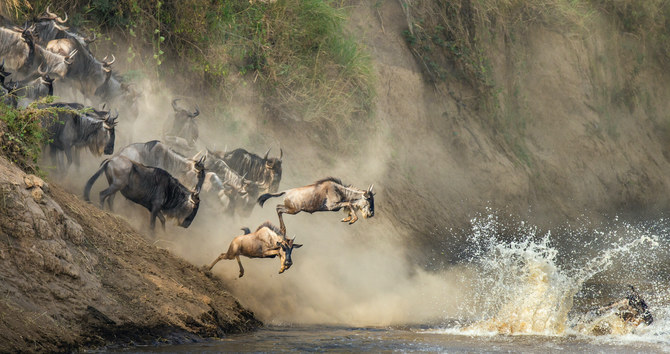
But when I arrive at Angama Mara, the country’s premier safari camp, I am one of only three groups on site, despite the fact that I am here in peak season — during the Great Migration, when millions of wildebeest pour through the Mara in search of more plentiful grazing.

The domestic tourism market has thrived on the back of national park fees being slashed by 50 percent, and hotels cutting their nightly rates. (Shutterstock)
The Mara is one of the most renowned and important wildlife conservation areas in the world, with bountiful populations of lions, African leopards, cheetahs and elephants. The animals have only grown more confident in the past few months, when most game camps closed. Angama had elephants and zebra wandering through the property and during my stay I watched an opportunistic baboon help himself to the open bar in the dining room.
The spectacular owner-run lodge with sweeping views over the Mara Triangle, is a destination in itself. The 1985 epic “Out of Africa” was filmed on this spot. From your tent perched on the side of the escarpment, you can watch elephants wander the plains below.
The surrounding bushland provides the perfect backdrop for a run with a Kenyan staff member, or a walking safari with a local Maasai. My walking guide, Daniel, points out local fauna with expertise, taking particular care to show me the ajuga remota, usually consumed as a cure for malaria, but now being taken by the Maasai to ward off COVID-19.

Angama Mara is the country’s premier safari camp. (Shutterstock)
When I ask him about the efficacy of the treatment, he says with a smile: “Well, no Maasai have corona yet.”
The lack of tourism presents a unique experience for the intrepid traveler: a front-row, unimpeded seat to the excitement of migration season.
The famed river crossings — in which the wildebeest attempt to evade crocodiles and the swift currents of the Mara River in their hundreds, are usually crowded with camera-wielding tourists. In previous years, Titus says, there would have been “more cars than wildebeest.” Now, there are just seven jeeps in sight.
Over the next two days I see a pair of lionesses being chased away from chowing down on a water buffalo by a pack of cackling hyenas, two leopards (the most elusive of all big game) in just a few hours, too many lions to count, two servals and one cub, huge numbers of zebra, buffalo, giraffe and hippo. And hardly any people.
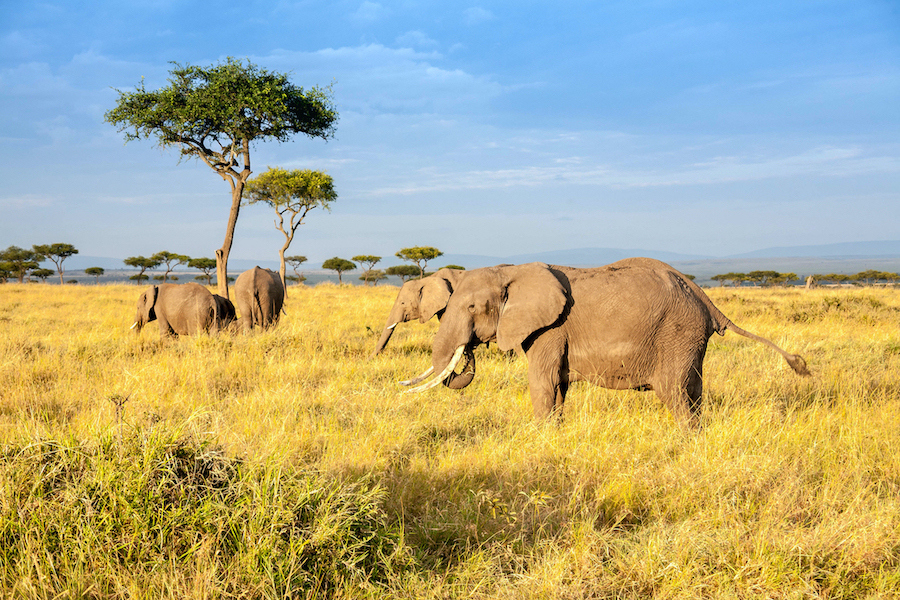
Angama had elephants and zebra wandering through the property. (Shutterstock)
When we do see other jeeps, most of my fellow wildlife-observers are Kenyans.
The domestic tourism market has thrived on the back of national park fees being slashed by 50 percent, and hotels cutting their nightly rates.
Nairobi’s Villa Rosa Kempinksi put its prices down by 40 percent and has experienced a surge in local staycationers. A hotel staff member says the volume of domestic tourists has helped cushion the blow of a lack of foreigners.
But nowhere is the lack of international tourism more obvious than the Mara.
I ask Titus if he misses the tourists. His answer is carefully considered: it’s nice having the Mara quiet, he says. But tourists allow him to do what he loves — spending days out on the vast, undulating plains.
“This is like medicine to me, it takes me to a different state,” he says. “I love doing what I do. So I really hope tourists come back.”


