Pakistan International Airlines to expand flight operations to Saudi Arabia

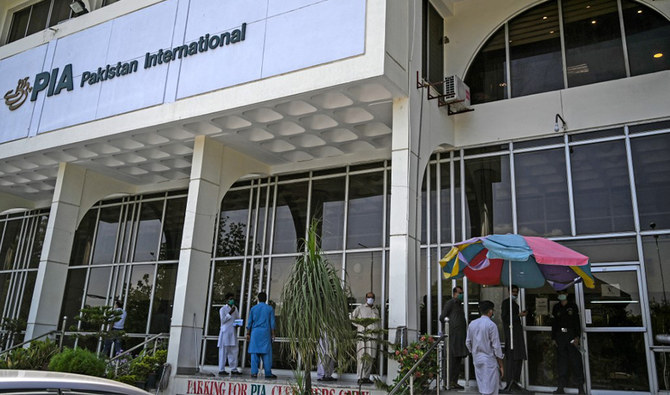
People stand in queue as they wait to buy flight tickets outside Pakistan International Airlines (PIA) office in Islamabad on July 1, 2020. (AFP)
Short Url
Updated 19 September 2020
Follow

Pakistan International Airlines to expand flight operations to Saudi Arabia

  • Currently limited to 23 weekly flights to Saudi Arabia due to coronavirus, PIA spokesman says
  • Pakistan has sought permission from Saudi Arabia to add another 28 flights 

ISLAMABAD: A spokesperson for Pakistan International Airlines has said flight operations to Saudi Arabia would be expanded soon due to high demand.
Pakistan allowed outbound international flights to resume in May after largely closing its airspace to commercial flights to curb the spread of the coronavirus pandemic in March. Domestic flights also resumed in May.
“PIA was limited to 23 weekly flights due to Covid,” PIA said, adding that it had sought permission from Saudi Arabia to add another 28 flights “due to the huge rush of bookings.”
“Permits are expected in a day or two, after which flight operations will be expanded,” the airline said. “In this regard, the PIA administration is in constant touch with the Saudi authorities.”


China’s mediation eases fighting between Pakistan, Afghanistan — sources

Updated 4 sec ago
Follow

China’s mediation eases fighting between Pakistan, Afghanistan — sources

  • China’s envoy shuttles between Pakistan and Afghanistan to mediate in conflict
  • Gulf countries that mediated in the past embroiled in Middle East conflict

ISLAMABAD/BEIJING: Chinese mediation efforts, including a message from ​President Xi Jinping, have helped ease the worst fighting between Pakistan and Afghanistan since the Taliban returned to power in 2021, three Pakistani government officials said.

The officials said a meeting between the Chinese ambassador to Pakistan, Jiang Zaidong, and Prime Minister Shehbaz Sharif late last month included a message from Xi to cease hostilities.

Neither side has reported any Pakistani air strikes on Afghanistan in recent days and ground fighting along the 2,600-km (1,600-mile) border has tapered off, although daily clashes continue to be reported.

China has said it is ‌in contact ‌with both countries about ending hostilities but Mosharraf Zaidi, a ​spokesman ‌for ⁠Sharif who ​has previously ⁠said there would not be any talks with the Taliban, did not respond to questions about Beijing’s efforts.

Pakistani security officials have said the military campaign will continue until desired goals were achieved, which was to prevent militant attacks in Pakistan launched from Afghan soil.

Pakistan’s foreign ministry and military did not respond to Reuters requests for comment.

Islamabad launched air strikes on Afghanistan on February 26, saying the Taliban were providing a safe haven to ⁠militants carrying out attacks in Pakistan. Kabul denies the charge ‌and says militancy in Pakistan is an internal problem.

The ‌Chinese efforts came as Qatar, Saudi Arabia and ​Turkiye, who hosted talks between Pakistan and ‌Afghanistan during previous clashes in October, have been embroiled in the war in the Middle ‌East following the US and Israeli strikes on Iran.

“China’s Special Envoy for Afghanistan Affairs is currently shuttling between the two countries to mediate, while Chinese embassies in both nations maintain close communication with the respective parties,” the Chinese foreign ministry told Reuters in an email.

“The most urgent task ‌is to prevent the fighting from expanding and for the two countries to return to the negotiating table as soon as possible.”

The ⁠foreign ministry added ⁠that Foreign Minister Wang Yi held telephone talks with Pakistan’s Deputy Prime Minister and Foreign Minister Ishaq Dar on Tuesday to discuss the conflict.

China’s ambassador to Kabul, Zhao Xing, and the special envoy Yue Xiaoyong met Afghanistan’s acting Foreign Minister Amir Khan Muttaqi this week, the Afghan foreign ministry said in a statement.

Afghanistan and Pakistan have said they inflicted heavy damage on the other in the conflict and killed hundreds of opposition troops, without providing evidence. Reuters has not been able to verify the reports.

Beijing, a longtime Pakistani ally, has invested heavily in mines and minerals in both nations.

The investments include over $65 billion in road, rail and other development projects in Pakistan, part ​of Beijing’s Belt and Road Initiative to ​expand land and sea trade routes to Europe and Africa.