

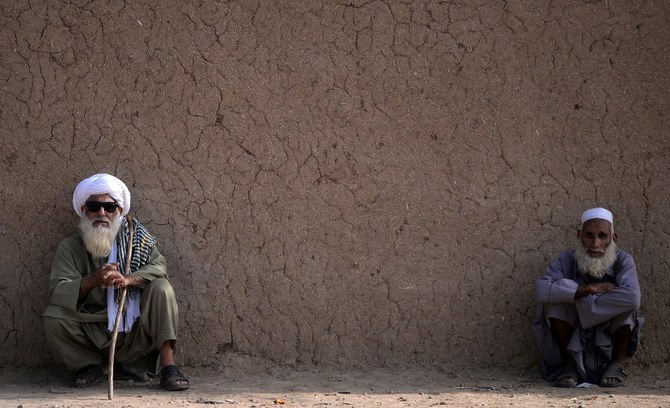

KARACHI: Residents at the New Saranan refugee camp in Pakistan’s Balochistan province gathered on Sunday to discuss the prospects of displaced Afghan families returning to their homeland as peace talks between Taliban insurgents and the Kabul government are ongoing to end decades of war in Afghanistan.
About 2.5 million Afghans, many of whom fled their homeland after it was invaded by the Soviet Union in 1979, live in neighboring Pakistan, home to the world’s second-largest refugee population.
Born in Pakistan to Afghan parents, many of the refugees have no Pakistani citizenship and dream of going “home” once a peace deal is signed between Taliban insurgents and the Kabul government who began key talks on Saturday.
“If the talks are successful, we will not care if it’s day or night, we will just embark on our journey,” Muhammad Agha Ishaqzai, an Afghan elder who left his home in Sar Pul province in northern Afghanistan over three decades ago, told Arab News on Sunday. “We are thirsty for our homeland like a person who has fasted during hot summer days, and is waiting for a glass of water.”
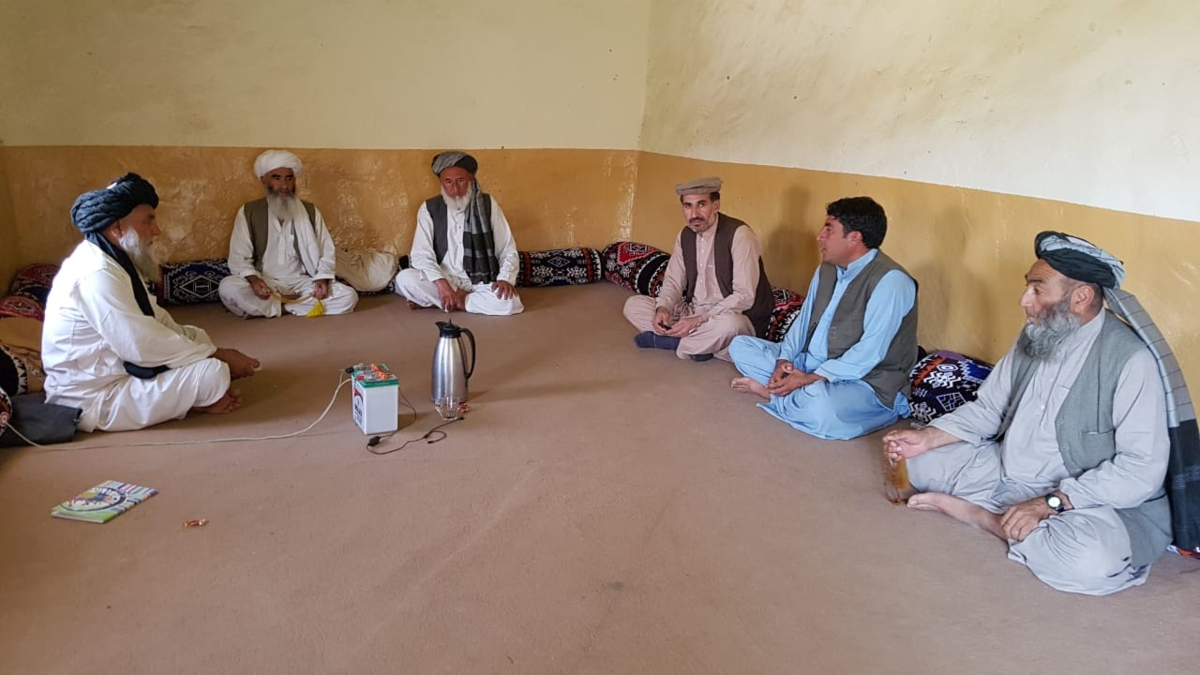
Muhammad Agha Ishaqzai, right, and Afghan elders gather at the New Saranan refugee camp in Balochistan, 40 kilometers northwest of the provincial capital of Quetta, Pakistan, on September 13, 2020 (AN photo)
“We are watching the news and hope that Afghans will see peace after 40 years,” said Zahir Pashtun, a youth activist who attended the Sunday meeting. He said though the Afghans had seen various rounds of unsuccessful talks in the past, they were hopeful the latest dialogue would pave the way for them to restart their lives.
An inclusive Afghan government with representation of all ethnicities and sects, and the return of lands and properties that refugees had left behind, were key to the successful repatriation of refugees, Pashtun said.
The UN refugee agency UNHCR is alarmed that at a time of increasing fatigue among global donors, rising insular policies by governments and a possible formal end to war, millions of refugees risk falling through the cracks either in their host nations or in Afghanistan.
And indeed, for many Afghans, worries linger about the conditions in their home country, where the economic and social framework has been devastated by more than 40 years of war.
Some refugees say they worry about being forced to go to Afghanistan if a deal is struck with the Taliban, who still control large swathes of the country, without that translating to peace and respect for human rights.
“When I ask people if they will return, the majority say they have no reason to go back, even if the talks succeed,” said Syed Mustafa, a teacher and a community elder in the refugee-dominated Al-Asif area of Karachi in the southern Sindh province.
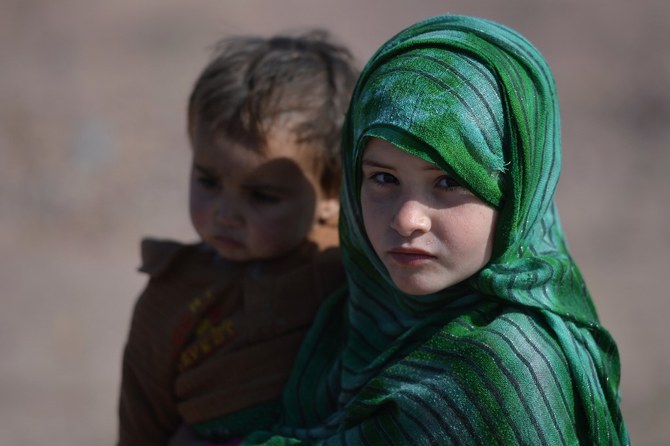
An Afghan refugee girl carries her brother at a refugee camp on the outskirts of Islamabad, Pakistan on February 1, 2018. (AFP/File)
“A majority of over 60,000 refugees living in Sindh province were born and raised here,” Mustafa added. “When they go back to the land of their parents, they would feel like they are in a strangers’ land. Those who had gone there in the recent past, have come back.”
Naemullah Rahimi, a shopkeeper in Al-Asif, said he was Afghan but his wife and children were born in Pakistan and considered it home.
Muneeba Hayatullah, an Afghan widow living in Karachi’s Metroville area, said she wanted to see a peaceful Afghanistan: “But I don’t know if I will go back.”


