



DUBAI: The race to buy one of the hottest social media apps in the market is intensifying as its current owner girds for a court battle with the US government.
Some of the world’s biggest firms are huddled in talks to acquire the Chinese video-sharing platform TikTok after President Donald Trump’s executive order last month that would ban the app in the US over national security concerns unless another company purchases it by mid-September.
On Aug. 24, TikTok and a company employee filed separate lawsuits in California against the Aug. 6 executive order.
Users in the Middle East are concerned about the regional ramifications of a potential US ban.
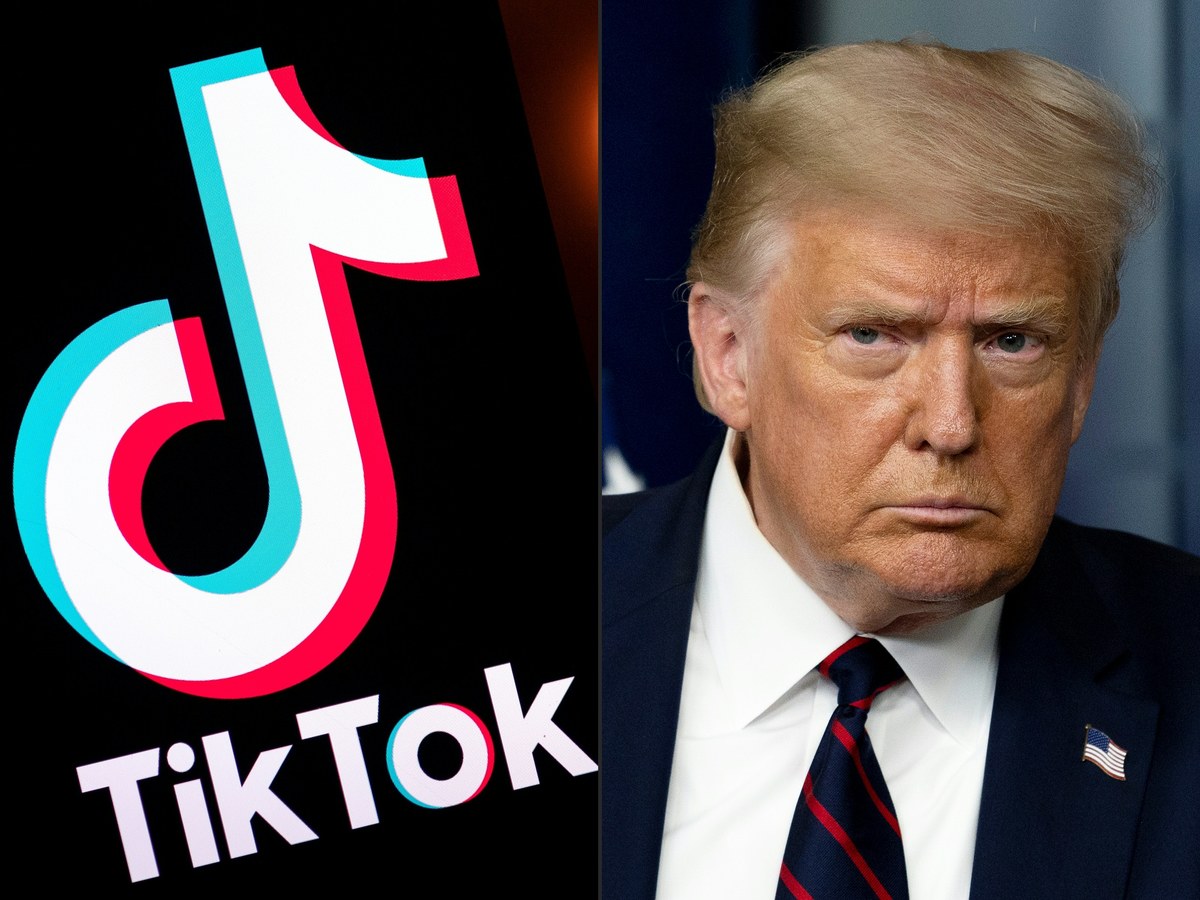
Video app TikTok said on August 22 it will challenge in court a Trump administration crackdown on the popular Chinese-owned service, which Washington accuses of being a national security threat. (AFP/File Photo)
With over 800 million active global users, according to DataReportal, and more than 2 billion downloads as of April 2020, the app ranks among the world’s 10 most popular social media platforms.
In the Middle East, social media influencers and content creators welcomed the app with open arms.
As of 2019, Saudi Arabia ranked as the eighth-largest country in terms of users, according to Route Note.
With the UAE taking second spot among Gulf Cooperation Council member states, TikTok set up its regional office in Dubai in 2018, servicing the Middle East and North Africa.
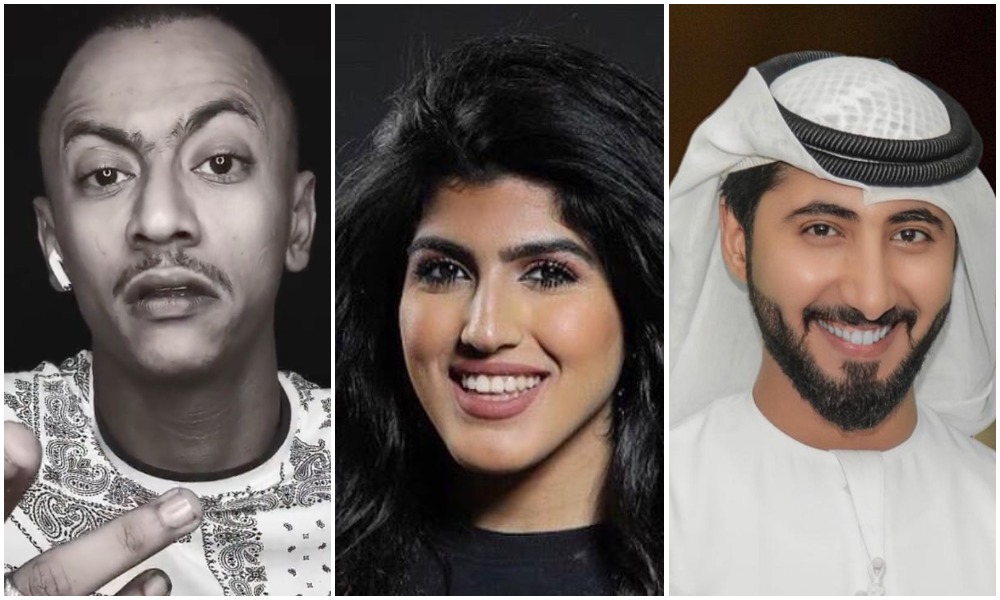
In the Middle East, social media influencers and content creators - such as Abbas, Sarah Miladd and Saad Abdullah - welcomed the app with open arms. (Supplied)
The UAE ranks 11th globally in number of TikTok influencers, with an average of 380 videos uploaded each onto their feeds.
“TikTok has grown rapidly this year, and across the Middle East in particular it has been really well received,” Rami Zeidan, head of video and creative at TikTok’s Dubai office, told Arab News.
“We’ve seen content emerge across multiple segments in the region, especially through the participation of our content creators in some hyper-local challenges, and we’ve recently seen an uptick in fitness, tech and gaming content.”
INNUMBERS
UAE TIKTOK
* 2.16% Percentage of influencers with over 100k followers.
* 380 Total videos uploaded on average to influencers’ feeds.
* 22.3% Accounts with more than 500 media entries.
* 58.54% 18-34-aged males’ share of app audience.
* 20.04% Engagement rate of app influencers.
Zeidan said one of the app’s main commitments in the region is to cultivate the TikTok community through different on-platform challenges and other initiatives tailored to Arabic audiences.
“We work closely with our TikTok community and encourage them to express their creativity across a variety of verticals from music to food, education, travel, fitness, fashion and comedy, as there isn’t one area that we prioritize over the other,” he added.
Growing with this popularity is uncertainty over the app’s future following Trump’s executive order and the legal challenges.
The executive order bars any US transactions with TikTok’s Chinese parent company ByteDance.
The order states that the data TikTok collects “threatens to allow the Chinese Communist Party access to Americans’ personal and proprietary information,” and could allow China to track the location of federal employees and contractors.
Under the order, TikTok would be indefinitely blocked from millions of users in the US unless another company acquires the app by Sept. 20.
In its suit, TikTok argues that it was deprived the opportunity to respond, and said the national security concerns surrounding the app are without merit.
“The executive order is not rooted in bona fide national security concerns,” reads the complaint posted on the company’s website. “Independent national security and information security experts have criticized the political nature of this executive order, and expressed doubt as to whether its stated national security objective is genuine.”
A separate lawsuit filed by a TikTok employee calls the order “sweepingly broad,” and questions whether employee wages and salaries will be covered by a section of the executive order that bans transactions with the company.
Many social media experts believe that the controversy has more to do with US-China tensions.
“Data is definitely something that’s part of a big conversation when it comes to apps, but every single app we use has so much data, which a lot of governments already have access to” Alexandra Maia, social media creative strategist and CEO of House of Social, a Dubai-based consultancy business, told Arab News.
“Since TikTok is a Chinese-owned app — and we know there are tensions between China and the US — it’s a recipe for disaster, and we just have to sit and see what unfolds.”
Maia said a potential ban in the US may create a temporary sense of uncertainty among regular users in the Arab world, but will not impact “pure content creators” who are building a brand.
In this file photo taken on August 11, 2020, the logo of Chinese video app TikTok is seen on the side of the company's new office space at the C3 campus in Culver City, in the westside of Los Angeles. (AFP/File Photo)
“The majority of people might be a little hesitant to continue creating content frequently, but a small group of hardcore creators will continue doing so because they understand the game,” she added.
“We see that (with TikTok) in the Middle East, just like (we saw) with Snapchat in Saudi Arabia. The younger generations go in first because they’re the savviest, the ones who have more of the early taste and thirst for it. The older generation then starts to catch up.”
In practical terms, TikTok initially attracted predominantly teenagers due to its unique and easy-to-use editing tools, but it quickly became popular among those in their 30s, with the hashtag #over30’sclub going viral in recent times. Despite the controversy, Maia, like many other analysts, believes TikTok is “here to stay.”
The buzz over potential buyers, including Twitter, Microsoft and most recently Oracle, is creating anticipation over the future of TikTok, now worth an estimated $75 billion, according to Pitchbook.
The man behind the app, which has millions posting short-form mobile videos, is Chinese billionaire Zhang Yiming, whose net worth stands at $16.2 billion.
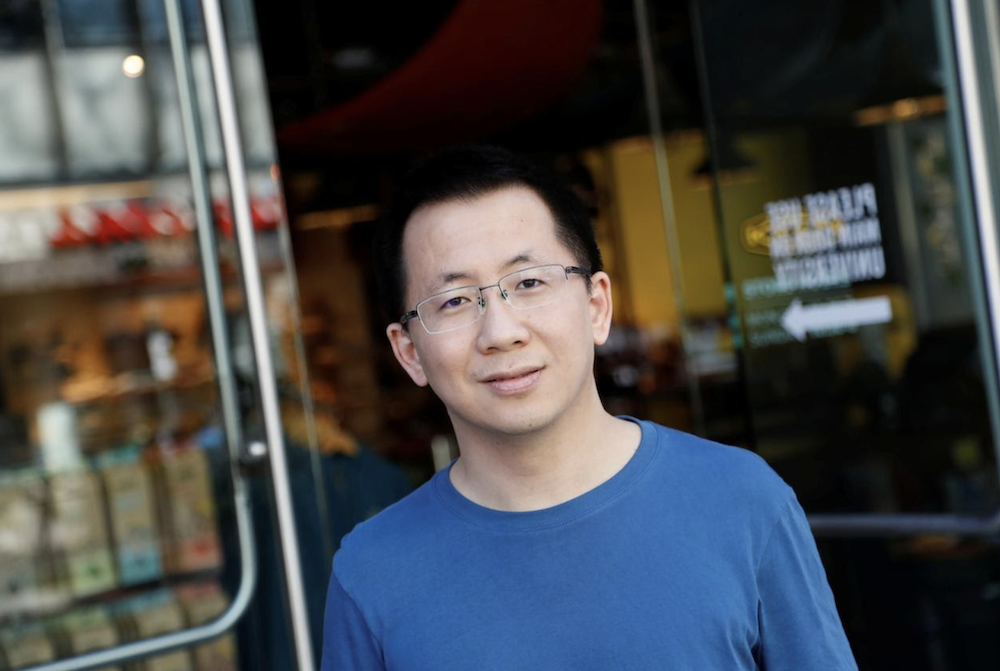
The man behind the app is Chinese billionaire Zhang Yiming. (Reuters)
Known to be extremely private about his personal life, Zhang called Trump’s demand to sell the app “unreasonable.”
A TikTok spokesperson told Arab News: “Since publicly announcing two weeks ago that we are evaluating changes to the corporate structure of the TikTok business, there have been numerous suggestions made by external people not involved in the company’s internal discussions. We do not comment on rumors or speculation. We are very confident in the long-term success of TikTok and will make our plans public when we have something to announce.”
TikTok has launched a news portal called “The Last Sunny Corner of the Internet” to address comments around the Trump administration’s executive order, its approach to combating misinformation, and the app’s security roadmap.
For concerned content creators in the Arab world, Maia has a few words of advice: “As marketers and businesspeople, we just have to focus on creating content, building our brand, being transparent with our followers, and just start preparing a little bit on that exit strategy in case it does happen. But until then, create your content, and your community will follow you where you want them to follow.”
--------------------------
Twitter: @jumana_khamis


