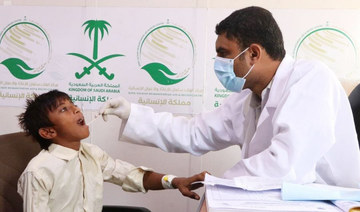
JEDDAH: A total of 335 Yemenis received treatment at the King Salman Humanitarian Aid and Relief Center (KSRelief) prosthetics center in Aden during August.
A large number of Yemenis have been affected by the land mines planted by the Houthi militias. In addition to helping Yemenis who lost their limbs to these mines, the center’s Project for Landmine Clearance (Masam) is also working relentlessly to clear all the land mines.
A total of 183,581 mines have been extracted since the beginning of the project. More than 1.1 million mines have been planted by Iran-backed Houthi militias in Yemen during the conflict, claiming hundreds of civilian lives.
Houthis are developing anti-vehicle mines and turning them into antipersonnel explosives to intimidate and terrorize civilians.
KSRelief is operating another prosthetic center in the Marib governorate. Amputees who are referred to one of the centers are first evaluated both physically and psychologically to determine the suitability of their overall condition to the use of
artificial limbs.
Then the devices are custom-made for each amputee by the center’s technicians. Once the prosthetic devices have been completed and fitted, specialized rehabilitation teams help patients adjust to the use of their new limbs. Once they have mastered the use of their prostheses, amputees return home with new confidence and improved mobility.
In order to ensure the sustainability of the provision of comprehensive services to amputees in the future, one of the program’s most important components is the training of
Yemeni cadres.
Since it was founded in May 2015, KSRelief has implemented 1,329 projects in 53 countries, worth more than $4.42 billion, the Saudi Press Agency reported.
The countries that have benefited most from its work are Yemen ($3 billion), Palestine ($360 million),
Syria ($296 million), and Somalia ($192 million).


![]()

335 Yemenis receive treatment at KSRelief prosthetic center in Aden

Short Url
https://arab.news/znby7
335 Yemenis receive treatment at KSRelief prosthetic center in Aden
- A total of 183,581 mines have been extracted since the beginning of the project

Latest updates


Recommended


© 2026 SAUDI RESEARCH & PUBLISHING COMPANY, All Rights Reserved And subject to Terms of Use Agreement.