

Another 9/11 attack ‘around the corner’ if Biden wins, warns bin Laden’s niece

Noor bin Ladin (R) says Trump needs to be re-elected in November election. (FILE/AFP/Supplied)
Short Url
Updated 06 September 2020
Follow

Another 9/11 attack ‘around the corner’ if Biden wins, warns bin Laden’s niece

  • Bin Laden niece says only Trump can prevent another 9/11 from happening
  • Noor bin Ladin says Daesh thrived under Obama/Biden administration

DUBAI: The niece of Osama bin Laden says another 9/11-style attack could be imminent if Joe Biden wins the presidential election later this year.

Noor bin Ladin told US daily, the New York Post, that she believed Daesh thrived under the Obama/Biden administration and said she would be voting for Trump to remain in the Oval office.

“ISIS proliferated under the Obama/Biden administration, leading to them coming to Europe. Trump has shown he protects America and us by extension from foreign threats by obliterating terrorists at the root and before they get a chance to strike,” she said.

Describing herself as “an American at heart,” the 33-year-old, who lives in Switzerland, said she had been a Trump supporter since he announced he was running for office in 2015, adding “I admire this man’s resolve.”

“He must be re-elected … It’s vital for the future of not only America, but western civilization as a whole,” she said.

“You look at all the terrorist attacks that have happened in Europe over the past 19 years. They have completely shaken us to the core … [Radical Islam] has completely infiltrated our society,” she said

“In the US it’s very worrying that the left has aligned itself completely with the people who share that ideology.”

She is the daughter of Osama bin Laden’s older half-brother Yeslam Bin Ladin, and Swiss author, Carmen Dufour – who separated in 1988.
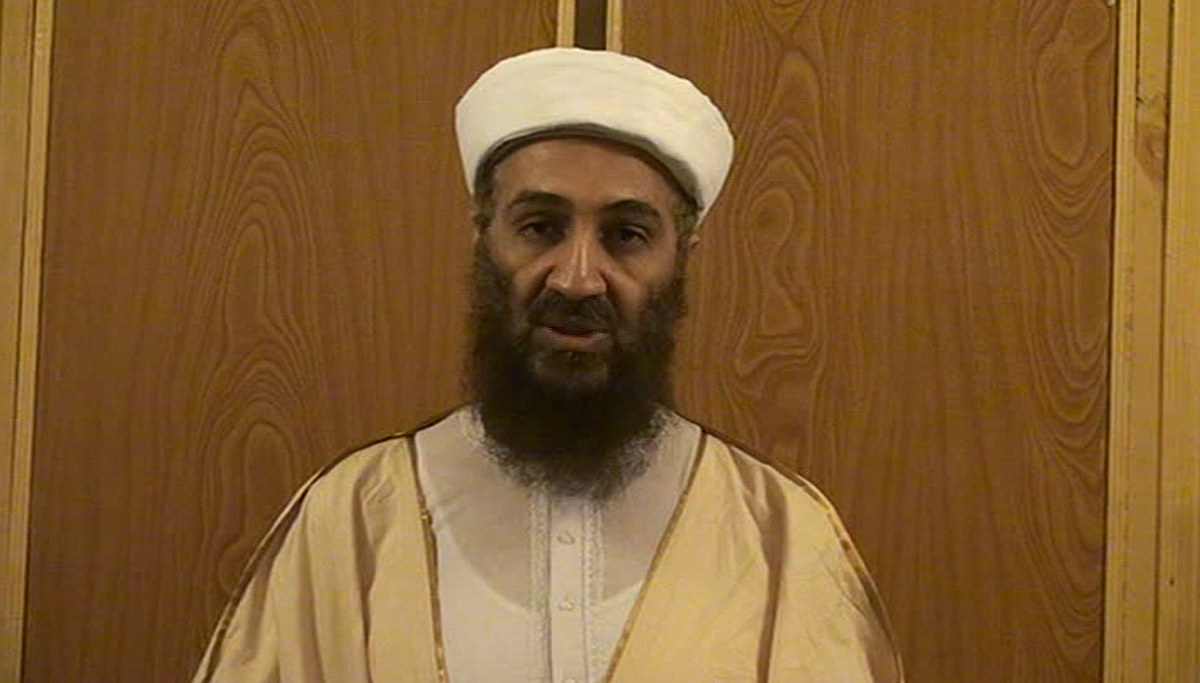


Her father was the older half-brother of terror mastermind Osama bin Laden. (FILE/AFP)

She, along with her two sisters, international pop star Wafah and Najia, were raised in Switzerland – adding that her father had played “no role in her life.”

She was 14 when her uncle ordered the deadly 9/11 attacks.

“I was so devastated,” she told the newspaper. “I had been going to the states with my mum several times a year from the age of three onwards. I considered the US my second home.”

In what has been described as her “first ever interview,” she said she was a consumer of American conservative media, her favorite TV showing being “Tucker Carlson Tonight” on Fox News.

The newspaper said she was “chummy with rising GOP star Laura Loomer, who is running for congress in Florida as a “ferocious opponent of radical Islam.”

“Laura has been very vocal about this and I commend her for being brave enough and speaking out,” bin Ladin, whose family spell their differently from her terrorist uncle, said.

And she said she regularly wore the trademark “Make America Great Again” cap of Trump supporters – something she said she was recently attacked for in Switzerland.

“I am minding my own business and this woman in her late 50s charges toward me and starts speaking very loudly and aggressively to me,” she explained.

“She’s yelling at me and saying how can I be wearing this and Trump is the worst president ever and she’s basically dumping on my beloved president … She told me three times, ‘You’re stupid.’ I kept my cool, and needless to say I kept my hat!”


94 million need cataract surgery, but access lacking: WHO

A Somali patient undergoes free cataract surgery at Al Nuur eye Hospital in Mogadishu, on February 16, 2015. (AFP)
Updated 11 February 2026
Follow

94 million need cataract surgery, but access lacking: WHO

  • Of the 94 million affected, fewer than 20 percent are blind, while the rest suffer from impaired vision

GENEVA: More than 94 million people suffer from cataracts, but half of them do not have access to the surgery needed to fix it, the World Health Organization said Wednesday.
Cataracts — the clouding of the eye’s lens that causes blurred vision and can lead to blindness — are on the rise as populations get older, with age being the main risk factor.
“Cataract surgery — a simple, 15-minute procedure — is one of the most cost-effective medical procedures, providing immediate and lasting restoration of sight,” the WHO said.
It is one of the most frequently performed surgeries undertaken in high-income countries.
However, “half of the world’s population in need of cataract surgery don’t have access to it,” said Stuart Keel, the UN health agency’s technical lead for eye care.
The situation is worst in the WHO’s Africa region, where three in four people needing cataract surgery remain untreated.
In Kenya, at the current rate, 77 percent of people needing cataract surgery are likely to die with their cataract blindness or vision impairment, said Keel.
Across all regions, women consistently experience lower access to care than men.
Of the 94 million affected, fewer than 20 percent are blind, while the rest suffer from impaired vision.

- 2030 vision -

The WHO said that over the past two decades, global cataract surgery coverage had increased by 15 percent.

In 2021, WHO member states set a target of a 30-percent increase by 2030.
However, current modelling predicts that cataract surgery coverage will rise by only about 8.4 percent this decade.
To close the gap, the WHO urged countries to integrate eye examinations into primary health care and invest in the required surgical equipment.
States should also expand the eye-care workforce, training surgeons in a standardised manner and then distributing them throughout the country, notably outside major cities.
The WHO was on Wednesday launching new guidance for countries on how to provide quality cataract surgery services.
It will also issue guidance to help support workforce development.
Keel said the main issue was capacity and financing.
“We do need money invested to get rid of this backlog, which is nearly 100 million people,” he told a press conference.
While age is the primary risk factor for cataracts, others include prolonged UV-B light exposure, tobacco use, prolonged corticosteroid use and diabetes.
Keel urged people to keep up regular eye checks as they get older, with most problems able to be either prevented or diagnosed and treated.
The cost of the new lens that goes inside the eye can be under $100.
However, out-of-pocket costs can be higher when not covered by health insurance.
“Cataract surgery is one of the most powerful tools we have to restore vision and transform lives,” said Devora Kestel, head of the WHO’s noncommunicable diseases and mental health department.
“When people regain their sight, they regain independence, dignity, and opportunity.”