Hope not out: Cricketer Shahid Afridi arrives in small Pakistani town to save its sole library

Cricket star Shahid Afridi arrives in Tank, Khyber Pakhtunkhwa on Saturday, Sept. 5, 2020, to inaugurate the renovation project of the district's sole public library. (Photo courtesy: Shahid Afridi Foundation)
Short Url
Updated 06 September 2020
Follow

Hope not out: Cricketer Shahid Afridi arrives in small Pakistani town to save its sole library

  • In the 1970s, the now dilapidated public library was the educational center of Tank district, providing the newest books and press
  • Shahid Afridi Foundation will also work on a strategy to solve the region’s chronic problems with access to drinking water

PESHAWAR: Less than two weeks after he promised to rebuild the sole public library of Tank district, cricket star Shahid Afridi arrived in the northwestern Pakistani region on Saturday to inaugurate the renovation project.
When images showing the demolished library made the rounds on social media in late August, Afridi told Arab News that he would restore, furnish and supply with books the institution which once was a bustling cultural center of the impoverished region in Khyber Paktunkhwa province.

“Libraries are important for girls and boys to study,” the superstar all-rounder said during the inauguration ceremony of the library renovation project.
“Education is essential for the development of any state. If we look into the literacy rate in Pakistan, almost 30 million children are out of school.”
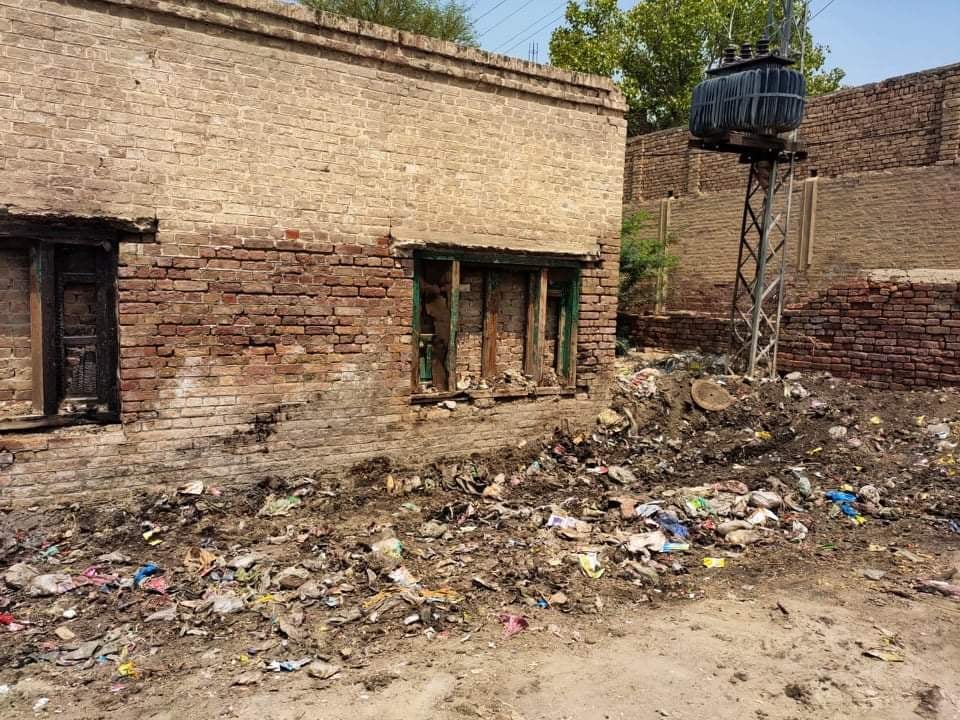


In this photo shared by journalist Ayub Bhittani, the sole library of Tank district in Khyber Pakhtunkhwa is seen in dilapidated condition on Aug. 17, 2020. (Photo courtesy of Ayub Bhittani via AN)

The library was established in Tank city, the district’s main town, in the early 1970s. In severely dilapidated condition, it has been closed for the past 15 years as the local administration said it had no means to maintain it.
With a population of nearly 400,000, Tank district is one of the poorest regions of Pakistan. It is part of Dera Ismail Khan division and a gateway to South Waziristan tribal district. The region’s development was affected by years of army operations against militants and an influx of internally displaced persons neighboring areas.
The district is facing numerous development problems, including ones as critical as a lack of potable water.
Afridi said his Shahid Afridi Foundation apart from supporting the district’s long-neglected education sector will also work on an inclusive strategy to solve the clean water issue.
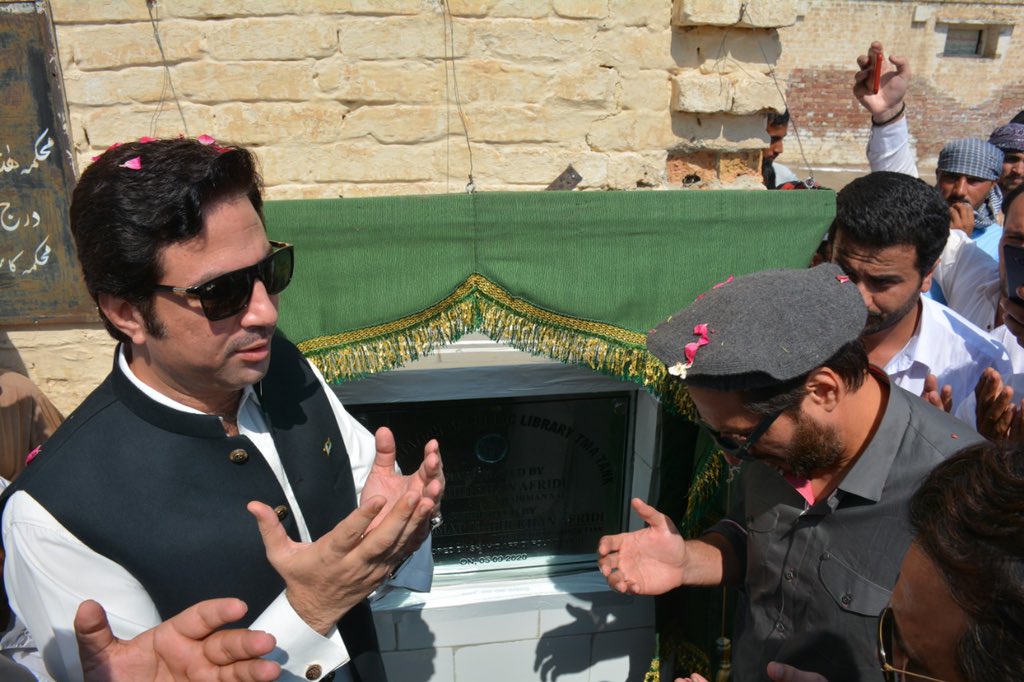


Cricket star Shahid Afridi inaugurates the renovation project of Tank district's public library in Tank, Khyber Pakhtunkhwa on Saturday, Sept. 5, 2020. (Photo courtesy: Shahid Afridi Foundation)

He added that he is also planning to establish a cricket academy in Tank, as the region has matchless talent but no facilities to help its youth flourish.
Dr. Tahir Javed, former district health officer of Tank, who during his college years in the 1970s would come to the library with other students for the best books and press, told Arab News that people of the will be indebted to Afridi for rebuilding the once vibrant study center.
“Thousands of students and newspapers readers will benefit from the library. We’re really grateful to Afridi for this initiative.”


Pakistan reviews austerity measures amid Middle East crisis, urges strict nationwide implementation

Updated 11 March 2026
Follow

Pakistan reviews austerity measures amid Middle East crisis, urges strict nationwide implementation

  • Deputy Prime Minister Ishaq Dar chairs review meeting of austerity steps
  • Officials briefed on salary cuts, school closures, four‑day week, petrol conservation

ISLAMABAD: Pakistan’s government on Wednesday assessed progress on a sweeping set of austerity measures introduced to mitigate the country’s economic strain from sharply rising global oil prices and supply disruptions linked to the ongoing war in the Middle East.

Prime Minister Shehbaz Sharif this week announced a series of austerity steps, including a four‑day work week for government offices, requiring 50  percent of staff to work from home, cutting fuel allowances for official vehicles by half, grounding up to 60  percent of the government fleet and closing all schools for two weeks to conserve fuel amid the global oil crisis.

The measures were unveiled in response to global oil market volatility triggered by the conflict involving the United States, Israel and Iran, which has disrupted supply routes such as the Strait of Hormuz and pushed crude prices sharply higher, straining Pakistan’s heavily import‑dependent energy sector.

“The meeting stressed the importance of strict and transparent adherence to the austerity measures, promoting fiscal responsibility and prudent use of public resources,” Deputy Prime Minister and Foreign Minister Senator Mohammad Ishaq Dar said in a statement.

He was chairing a meeting of the Committee for Monitoring and Implementation of Conservation and Additional Austerity Measures, constituted under the directions of the PM, bringing together federal and provincial officials to review execution of the broad cost‑cutting plan. 

Dar emphasized the government’s commitment to enforcing the PM’s austerity steps nationwide. The committee’s review also covered reductions in departmental expenditure, deductions from salaries of senior officials earning over Rs. 300,000 ($1,120), and coordination with provincial administrations to ensure uniform implementation of the plan.

Participants at the meeting reiterated that all ministries and divisions must continue strict monitoring and reporting, with transparent oversight mechanisms, as Pakistan navigates the economic pressures from the prolonged Middle East crisis and its fallout on global energy and trade markets.