Hospital built by UAE at forefront of Pakistan’s fight against COVID-19

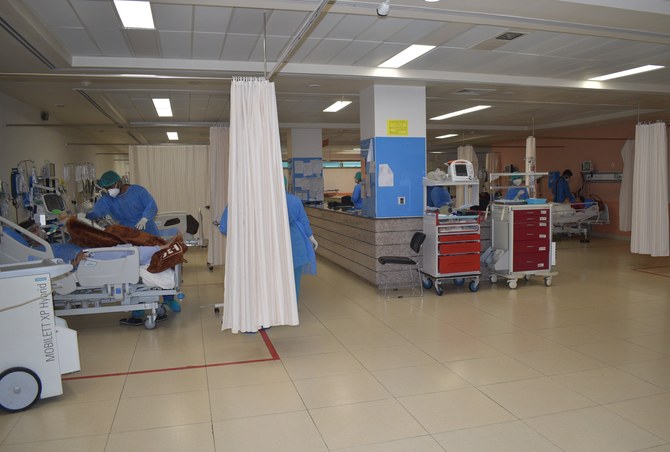
Hospital staff are seen at Pakistan-Emirates Military Hospital (PEMH) in Rawalpindi on Aug. 29, 2020. (AN photo)
Short Url
Updated 30 August 2020
Follow

Hospital built by UAE at forefront of Pakistan’s fight against COVID-19

  • Has treated more than 10,000 coronavirus patients since March
  • Built at a cost of $108mln, the Pakistan-Emirates Military Hospital was launched three years ago

ISLAMABAD: More than 10,000 people have been treated for COVID-19 at the Pakistan-Emirates Military Hospital (PEMH) in Rawalpindi since March, a senior hospital official told Arab News on Saturday.
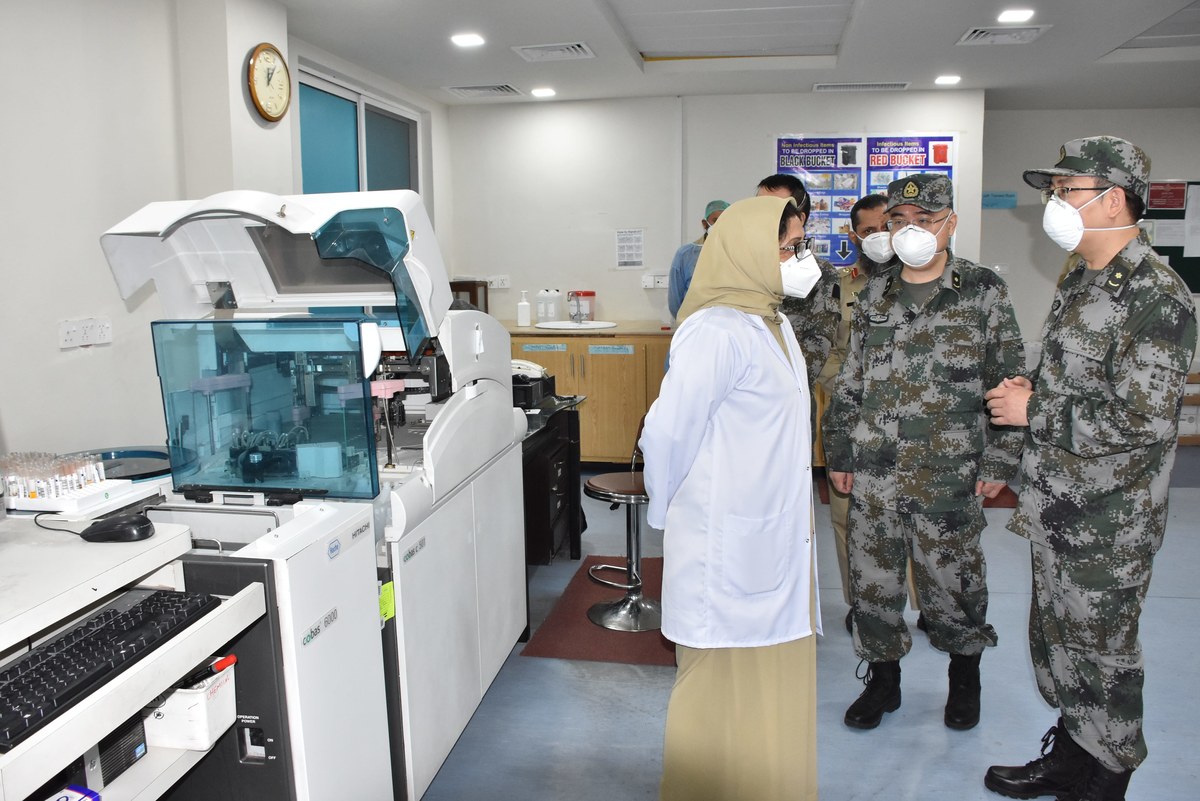


A staff member of Pakistan-Emirates Military Hospital (PEMH) talks to military officials on Aug. 29, 2020. (AN photo)

“During the COVID-19 pandemic, the hospital served as a dedicated treatment and research center for coronavirus patients and treated over 10,000 patients of varying severity by offering a full spectrum of treatment ranging from ventilatory support to stem cell therapy and generating valuable research during the course of crisis,” Major General Mahmood Sultan, Commandant PEMH, added.

Launched in May 2017, under the UAE-Pakistan Assistance Program (UAEPAP), the PEMH was built at the cost of $108 million and is one of several facilities tasked with fighting the coronavirus outbreak in the country.
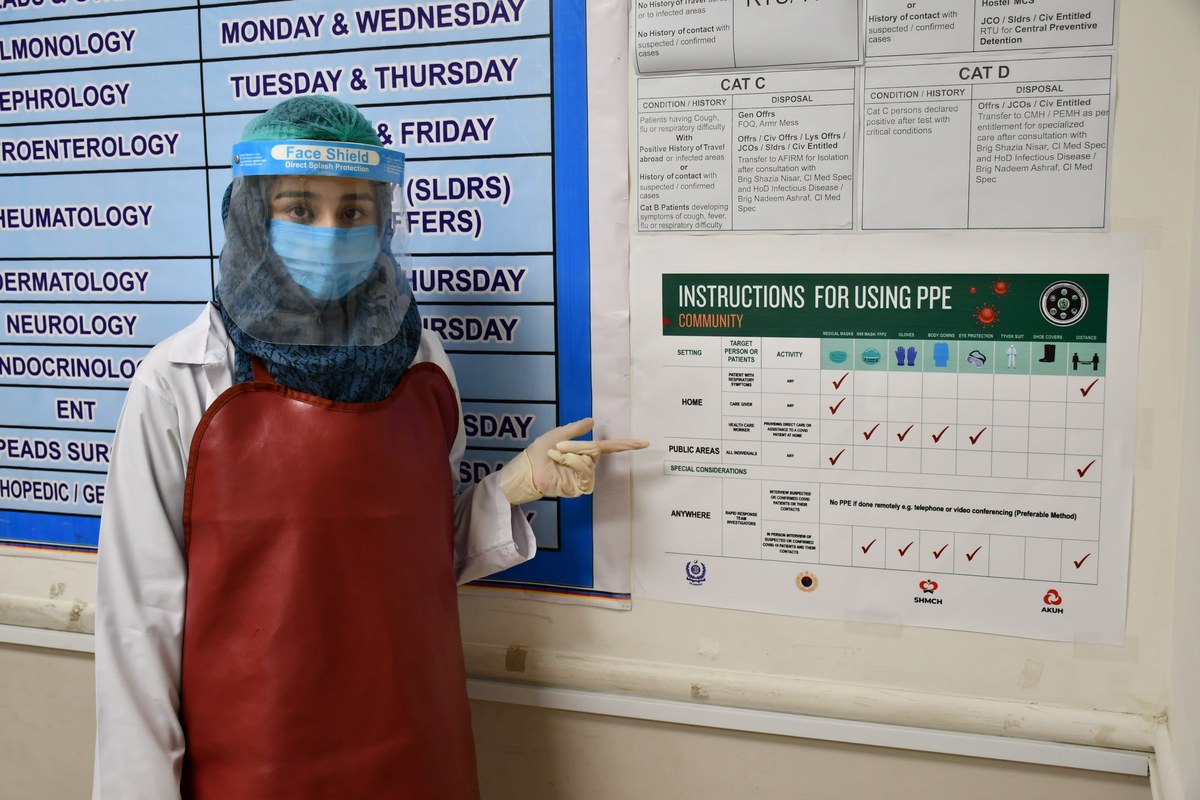


A staff member of Pakistan-Emirates Military Hospital (PEMH) in Rawalpindi is wearing protective gear on Aug. 29, 2020. The hospital is a dedicated treatment and research center for coronavirus patients. (AN photo)

“The PEMH is the largest ISO-9001-2015 certified hospital of Pakistan Armed Forces which offers state of the art indoor and outdoor multidisciplinary care to its patients,” Sultan said, adding that it can “expand its bed capacity from 1,000 to 1,500 beds” and draws its “strength from its academic credentials.”

“It is an affiliated teaching hospital for undergraduate medical students of the Army Medical College and is also recognized in 24 disciplines for postgraduate training of doctors,” Sultan said.


Pakistan-Emirates Military Hospital (PEMH) staff member talks to Arab News in Rawalpindi on Aug. 29, 2020. (AN photo)

In addition to facilitating Pakistan in its anti-coronavirus fight, the UAE has also sent three shipments containing 18.3 tons of medical aid and food supplies and 20,000 coronavirus testing kits, in the past three months.

Other development measures include the reconstruction of seven health facilities in Swat, Bajaur, and Dir districts after they were destroyed by floods in 2010, while work is underway for the provision of four more hospitals in South Waziristan, at a total cost of $125 million.
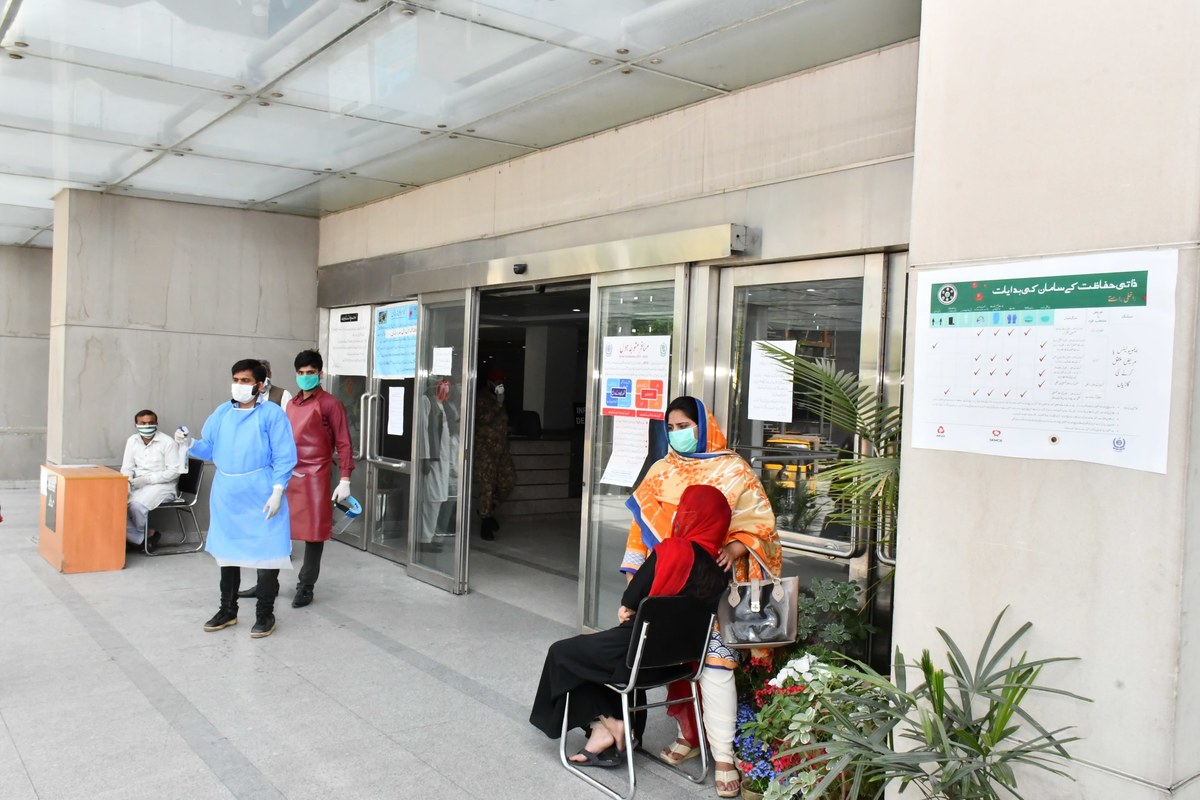


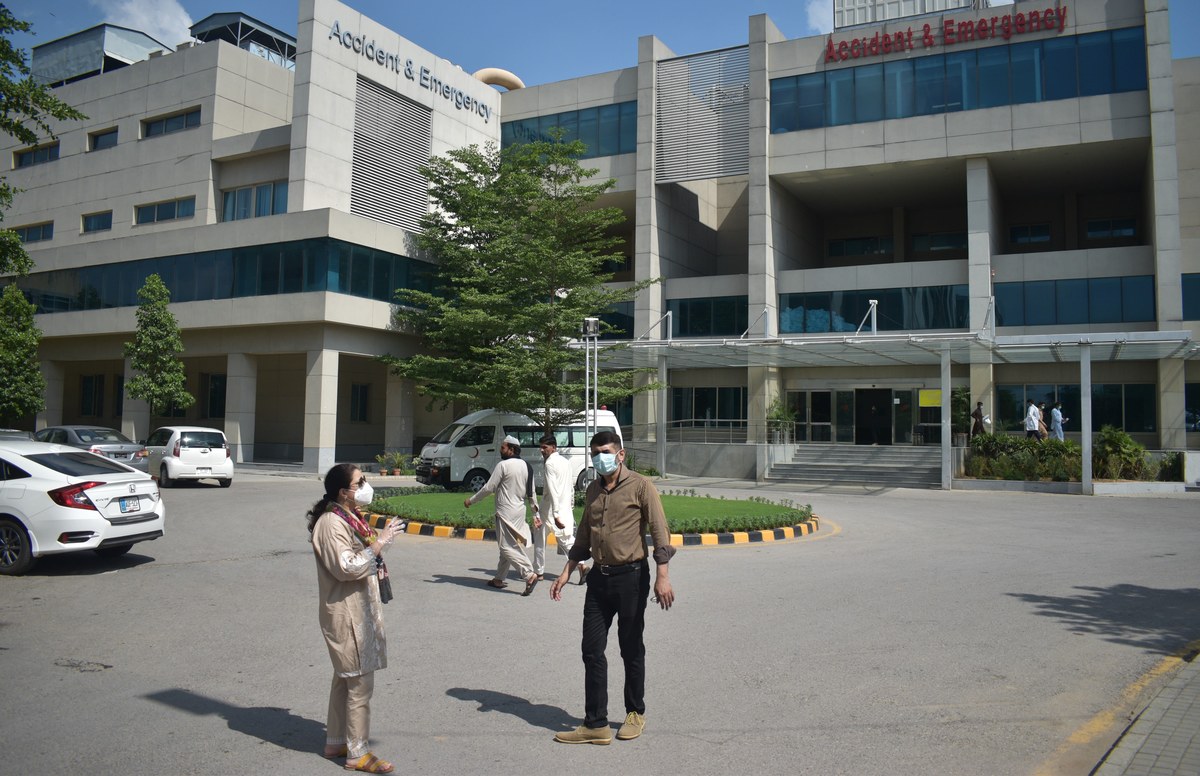
People stand in front of the Pakistan-Emirates Military Hospital (PEMH) building in Rawalpindi on Aug. 29, 2020. The hospital has treated more than 10,000 coronavirus patients. (AN photo)

According to the UAEPAP website, the reconstruction of these hospitals will “accelerate the provision of medical services to the local population.”

The UAEPAP was established in 2010 and has overseen several development and humanitarian projects in Pakistan, particularly in the education, infrastructure, and health care sectors.


Pakistan says responding to Afghan ‘offensive operations’ after border fire as tensions escalate

Updated 26 February 2026
Follow

Pakistan says responding to Afghan ‘offensive operations’ after border fire as tensions escalate

  • Afghan Taliban spokesperson says “large-scale offensive operations” launched against Pakistani military bases
  • Pakistan says Afghan forces opened “unprovoked” fire across multiple sectors along shared border

ISLAMABAD: Afghanistan’s Taliban authorities said on Thursday they had launched “large-scale offensive operations” against Pakistani military bases and installations, prompting Pakistan to say its forces were responding to what it described as unprovoked fire along the shared border.

The escalation follows Islamabad’s weekend airstrikes targeting what it said were Tehreek-e-Taliban Pakistan (TTP) and Daesh militant camps inside Afghanistan in response to a wave of recent bombings and attacks in Pakistan. Islamabad said the strikes killed over 100 militants, while Kabul said dozens of civilians were killed and condemned the attacks as a violation of its sovereignty.

In a post on social media platform X, Afghan government spokesperson Zabihullah Mujahid said Afghanistan had launched “large-scale offensive operations” in response to repeated violations by the Pakistani military.


Pakistan’s Ministry of Information said Afghan forces had initiated hostilities along multiple points of the frontier.

“Afghan Taliban regime unprovoked action along the Pakistan–Afghanistan border given an immediate, and effective response,” the ministry said in a statement.

The statement said Pakistani forces were targeting Taliban positions in the Chitral, Khyber, Mohmand, Kurram and Bajaur sectors, claiming heavy Afghan casualties and the destruction of multiple posts and equipment. It added that Pakistan would take all necessary measures to safeguard its territorial integrity and the security of its citizens.


Separately, security officials said Pakistani forces had carried out counterattacks in several border sectors.

“Pakistan’s security forces are giving a befitting reply to the unprovoked Afghan aggression with full force,” a security official said, declining to be named. 

“The Pakistani security forces’ counter-attack destroyed Taliban’s hideouts and the Khawarij fled,” they added, referring to TTP militants. 

The claims from both sides could not be independently verified.

Cross-border violence has intensified in recent weeks, with Pakistan blaming a surge in suicide bombings and militant attacks on militants it says are based in Afghanistan. Kabul denies providing safe havens to anti-Pakistan militant groups.

The clashes mark the third major escalation between the neighbors in less than a year. Similar Pakistani strikes last year triggered weeklong clashes before Qatar, Türkiye and other regional actors mediated a ceasefire in October.

The 2,600-kilometer (1,600-mile) frontier, a key trade and transit corridor linking Pakistan to landlocked Afghanistan and onward to Central Asia, has faced repeated closures amid tensions, disrupting commerce and humanitarian movement. Trade between the two nations has remained closed since October 2025.