

Knowledge a 'source of youth' for 76-year-old, Pakistan’s oldest university student

Said Muhammad Khan, 76, is showing his English course book during an interview with Arab News in Ghawar village in Skhakot, Malakand district of Khyber Pakhtunkhwa on Aug. 20, 2020. (AN photo)
Short Url
Updated 23 August 2020
Follow

Knowledge a 'source of youth' for 76-year-old, Pakistan’s oldest university student

  • Mental activity gives him ‘air to breathe’ and makes him younger than his peers, says 76-year-old University of Malakand freshman
  • University administration is going to draft a policy for tuition-free education for both male and female students over 70 years old

SAKHAKOT, Khyber Pakhtunkhwa: Said Muhammad Khan devoted his life to teaching others. Upon retirement, when he finally had time for himself after half a century of service, he enrolled in university and at 76 became Pakistan’s oldest student.
Khan became a student of the University of Malakand in Khyber Pakhtunkhwa on Aug. 17, as he got admitted to its bachelor of arts program.
“My thirst for knowledge education remains fresh within me,” he told Arab News at his home in Ghawar village in Skhakot, Malakand district. “For many years I was busy in teaching and couldn’t get a higher education. Now it is high time. I am energetic and active enough. I can do it,” he said partly in English, as he is also planning to master the foreign language.
Khan completed his 10th grade in 1962 and became a schoolteacher at a government-run high school in Dargai. As he retired in 2004, he continued to learn and a few years ago passed 12th grade exams to pursue university studies.
He is the oldest student in Pakistan. “In the country’s records, we don’t any student older than him,” Fidullah Khan, spokesman of the University of Malakand, told Arab News.
He added that the university’s vice chancellor decided to waive Khan’s tuition fees and that everyone is honored by the 76-year-old’s decision to choose the university to pursue his passion for knowledge.
“Our staff and students are happy that Said Muhammad Khan got enrolled in this university,” he said, “Our administration is now going to draft a policy for tuition-free education for both male and female students who are over 70 years old.”Highly respected in his village,
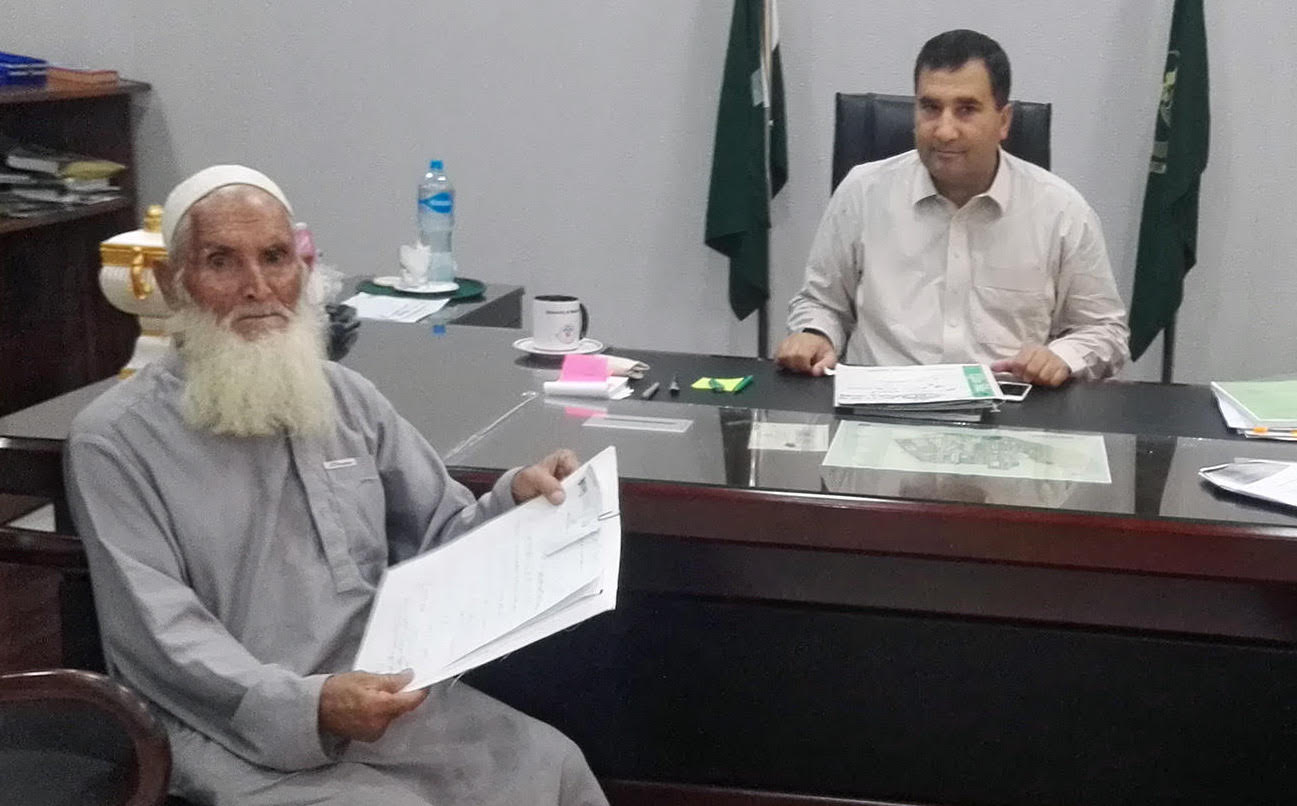


Said Muhammad Khan meets the vice chancellor of the University of Malakand, Prof. Gul Zaman, at Zaman's university office on Aug. 18. 2020. The vice chancellor decided to waive Khan's tuition fees. (AN photo)

Khan, affectionately referred to as Ustad Ji, is a paragon of educational success in Ghawar. He has four daughters. Two of them are graduates and two have completed high school before marriage.
Village shopkeeper Ahmad Ilyas, who often engages in conversations with Khan, says he is a role model for the whole community and his university admission will further motivate others to educate their children.
“When he passed high school exams, he became an example for other parents,” Ilyas said, “We don’t have any schools here, but this year I am sure most parents will send their children to school to another village.”
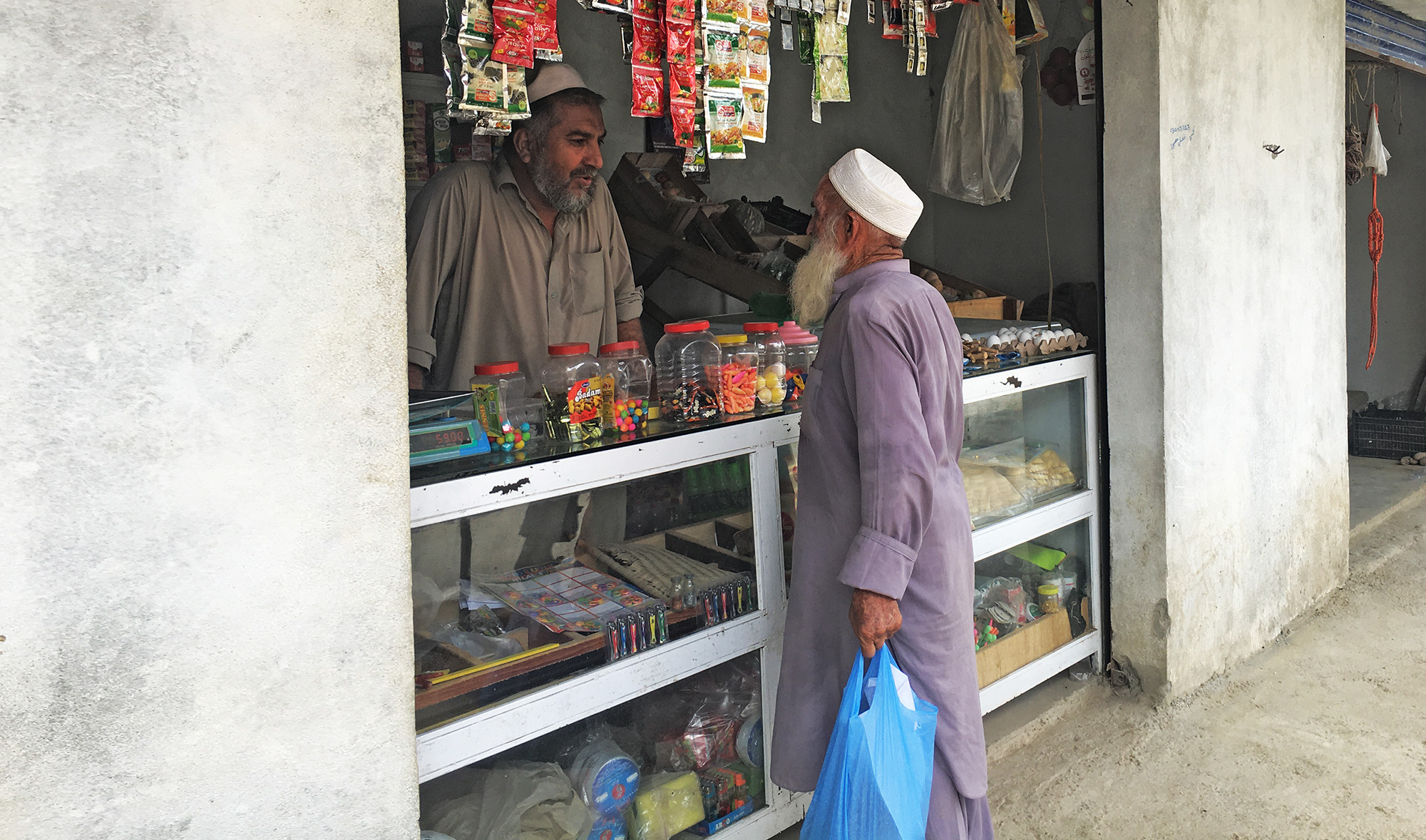


Said Muhammad Khan engages in a conversation with his friend, village shopkeeper Ahmad Ilyas, on Aug. 20, 2020. Ilyas says the 76-year-old is a role model for the whole community of Ghawar village in Skhakot, Malakand district of Khyber Pakhtunkhwa. (AN photo)

Khan spends most of his time reading. He says those who do not try to learn are not able to have enriching lives.
“I use my brain and that’s why my memory is fresh. I remember English words, mathematics, history, and religious quotes,” he said, “Education makes me younger than my peers, it gives me air to breathe.”


Pakistan high court pauses tree-cutting in Islamabad until Feb. 2

Updated 10 sec ago
Follow

Pakistan high court pauses tree-cutting in Islamabad until Feb. 2

  • Islamabad High Court asks CDA to ‘explain and justify’ tree-cutting at next hearing
  • CDA officials say 29,000 trees were cut due to allergies, deny felling in green belts

ISLAMABAD: The Islamabad High Court has ordered an immediate halt to tree-cutting in the federal capital until Feb. 2, seeking justification from civic authorities over the legality of a large-scale felling drive that has seen thousands of trees removed in recent months.

The interim order, issued by a single-judge bench led by Justice Khadim Hussain Soomro, came during proceedings on a petition challenging the Capital Development Authority’s (CDA) tree-cutting operations in Islamabad’s Shakarparian area and H-8 sector.

At the outset of the hearing, the petitioner’s counsel argued that trees were being felled in violation of the Pakistan Environmental Protection Act 1997, the Islamabad Wildlife Ordinance 1979 and the city’s master plan.

“Respondents shall not cut trees till the next date of hearing,” Justice Soomro said in the court order released on Friday while referring to CDA officials.

“Respondents are directed to come fully prepared and to file paragraph-wise comments before the next date of hearing, along with a comprehensive report explaining the justification and legal basis for the cutting of trees,” he added.

According to the court order, the petitioner maintained that the CDA had not made any public disclosure regarding the legal basis for the operation and that the felling was causing environmental harm.

The petition sought access to the official record of tree-cutting activities and called for the penalization of CDA officials responsible for the act under relevant criminal and environmental laws.

It also urged the court to impose a moratorium on infrastructure projects in Islamabad, order large-scale replanting as compensation and constitute a judicial commission headed by a retired Supreme Court judge to probe the alleged violations.

CDA officials acknowledge around 29,000 paper mulberry trees have been cut in the capital in recent months, arguing that the species triggers seasonal allergies such as sneezing, itchy eyes and nasal congestion.

They also maintain that no trees have been removed from designated green belts and that the number of replacement trees planted exceeds those felled.

Designed in the 1960s by Greek architect Constantinos Doxiadis, Islamabad was conceived as a low-density city with green belts and protected natural zones at its core.

Critics, however, say the recent felling has extended beyond paper mulberry trees and question whether authorities are adhering to the city’s master plan and the legal protections governing forested and green areas.

The court has adjourned its hearing until Feb. 2, 2026.