KARACHI: Pakistan has imposed financial sanctions on the Afghan Taliban and leaders of the Haqqani network, in a move which experts see as an attempt to avoid the country’s blacklisting by the Financial Action Task Force (FATF), which monitors money laundering and tracks activities of terrorist groups.
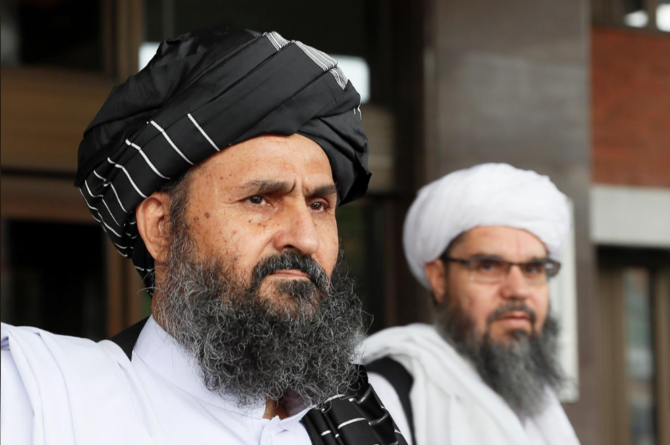
According to Pakistani officials, however, the sanction order issued on Aug. 18 and made public on Friday evening is not a new development, as it is in line with much earlier decisions. It lists the names of Taliban chief peace negotiator Mullah Abdul Ghani Baradar, his deputy Sher Muhammad Abbas Stanikzai, head of the Haqqani network Sirajuddin Haqqani and other members of the Haqqani family.
“The SRO (statutory notification) issued by Pakistan on Aug. 18, 2020 only consolidates and documents the previously announced SROs as a procedural measure and does not reflect any change in the sanctions list or sanction measures,” Foreign Office spokesman Zahid Hafeez Chaudhri told Arab News on Saturday.
The order published by the Foreign Office says the decision was in line with the relevant resolutions of the UN Security Council’s Taliban Sanctions Committee, which direct member countries “to apply travel restrictions, arms embargo and to freeze the funds and other financial resources of certain individuals and entities.”
“The Taliban Sanctions Committee has not announced any changes in its sanctions list recently,” Chaudhri added, suggesting that the government’s move was only in line with previous decisions and not a new development.
Some Taliban leaders, including those from the Haqqani network, are believed to own property in Pakistan. The Foreign Office’s list also includes the name the slain Taliban chief Mullah Akhtar Mansoor whose assets in Karachi were seized by court order in May this year. While Taliban deny their chief had any property in Pakistan, a report by the Federal Investigation Agency (FIA) revealed had been doing real estate business in the Pakistani metropolis.
According to Rahimullah Yousufzai, a Peshawar-based journalist and security expert, FIA’s report has made quite a case and prompted the government to issue the asset freezing order to avoid being blacklisted by the FATF after it put Pakistan on its grey list last year.
“The announcement is part of many measures that Pakistan has been taking to avoid being blacklisted by the global financial task force, which has demanded of it to take measures to prohibit the monetary activities by groups and individuals proscribed by the UN,” Yousufzai, told Arab News.
He added that it was a “tough call” as the peace process in Afghanistan has entered an important stage, following a US-Taliban agreement in February that paved the way for imminent negotiations between the militants and the Kabul government, the intra-Afghan talks aimed at deciding the future political set-up of the war-torn country.
“It’s a tough decision,” Yousafzai said, “Any move annoying Taliban may be detrimental to the ongoing peace talks.”


![]()
Pakistan freezes assets of Taliban leaders to avoid global finance blacklist

Short Url
https://arab.news/pdfwk
Pakistan freezes assets of Taliban leaders to avoid global finance blacklist
- Sanctions seen as an attempt to avoid blacklisting by the Financial Action Task Force (FATF) which put Pakistan on its grey list last year
- The sanction list includes the name of Taliban chief peace negotiator Mullah Abdul Ghani Baradar
Latest updates


Recommended


© 2026 SAUDI RESEARCH & PUBLISHING COMPANY, All Rights Reserved And subject to Terms of Use Agreement.