DUBAI: The verdict comes at a difficult moment even by Lebanon’s standards, barely two weeks after a blast left nearly half of the capital Beirut destroyed or damaged. Public outrage forced the government to step down, leaving the country rudderless amid a deepening economic and financial crisis compounded by the coronavirus pandemic.
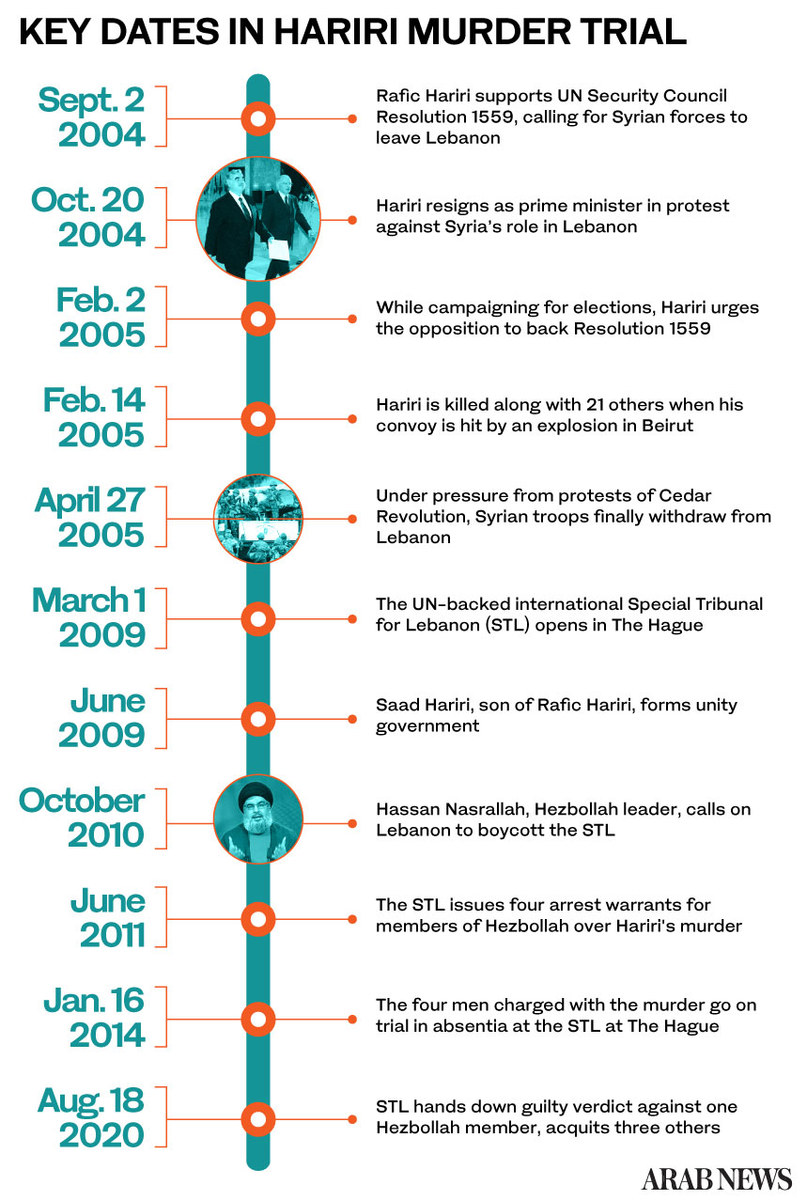
Nevertheless, more than 15 years after the killing of former Prime Minister Rafic Hariri on Valentine’s Day in 2005, justice has finally prevailed with a UN-backed court declaring a member of Lebanon’s Iran-aligned Hezbollah guilty as a co-conspirator of five charges linked to his involvement in the deadly truck bombing.
All four suspects — Hezbollah members Salim Jamil Ayyash, 56; Assad Hassan Sabra, 43; Hussein Hassan Onaisi, 46; and Hassan Habib Merhi, 54 — had gone on trial on Jan. 16, 2014, at the Special Tribunal for Lebanon First Instance Court. Tried in absentia, Ayyash was convicted by the STL on Tuesday while the other three were acquitted. Sentencing will be carried out later.
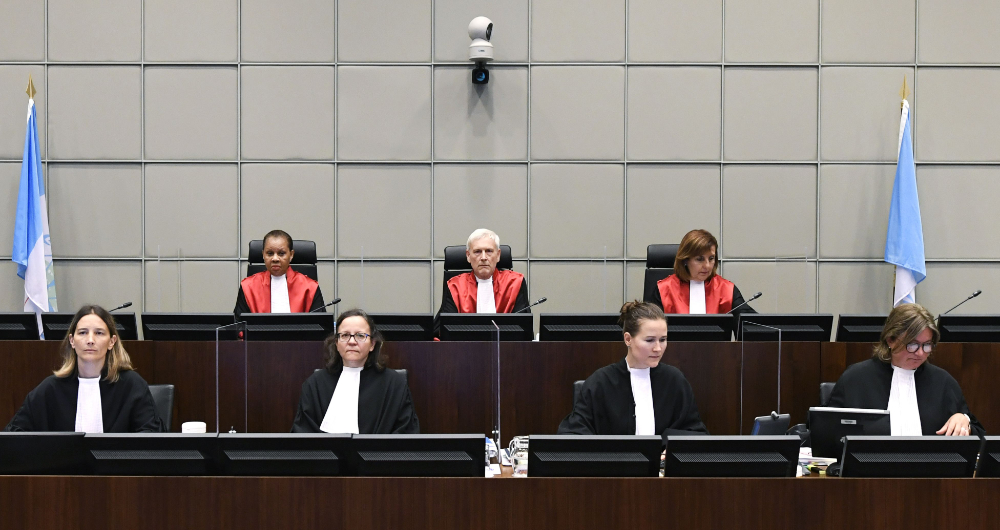
A UN-backed court decalred a member of Lebanon’s Iran-aligned Hezbollah guilty as a co-conspirator of five charges linked to his involvement in the deadly truck bombing.
The attack took place five months after the UN Security Council adopted Resolution 1559 in 2004, calling for the withdrawal of Syrian forces from Lebanon and the disarmament of Hezbollah.
The killing of Hariri, who had close ties with the West and Arab Gulf states, was a seismic event in the region’s history, and suspicions fell immediately on Syria, which at that time dominated Lebanon, and Hezbollah.
Only time will tell whether the 2,600-page ruling has closed the chapter on one of the most painful periods in recent Lebanese history. Many admirers of Hariri will be disappointed by the STL’s failure to provide answers to key questions, including the motives behind the assassination and the identity of the person who was in the explosives-filled truck that was detonated to strike Hariri’s motorcade.
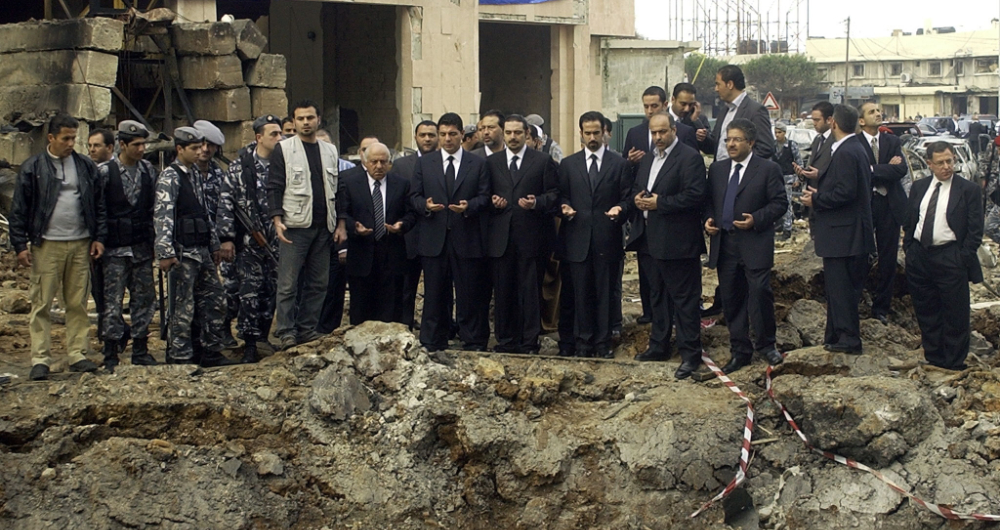
The attack took place five months after the UN Security Council adopted Resolution 1559 in 2004, calling for the withdrawal of Syrian forces from Lebanon and the disarmament of Hezbollah.
A fifth man, Mustafa Amin Badr Al-Din, was dropped from the indictment after he was killed in Syria in 2016. Prosecutors had described Badr Al-Din, the commander of Hezbollah's military wing, as "overall controller of the operation" to assassinate Hariri.
“Unfortunately, the STL has let the Lebanese people down for 15 years now. Many people were killed and there was a lot of occasions for the tribunal to step up and prevent further killings, but it didn’t do what it was required to do,” Chibli Mallat, an international lawyer and law professor, told Arab News from Beirut.
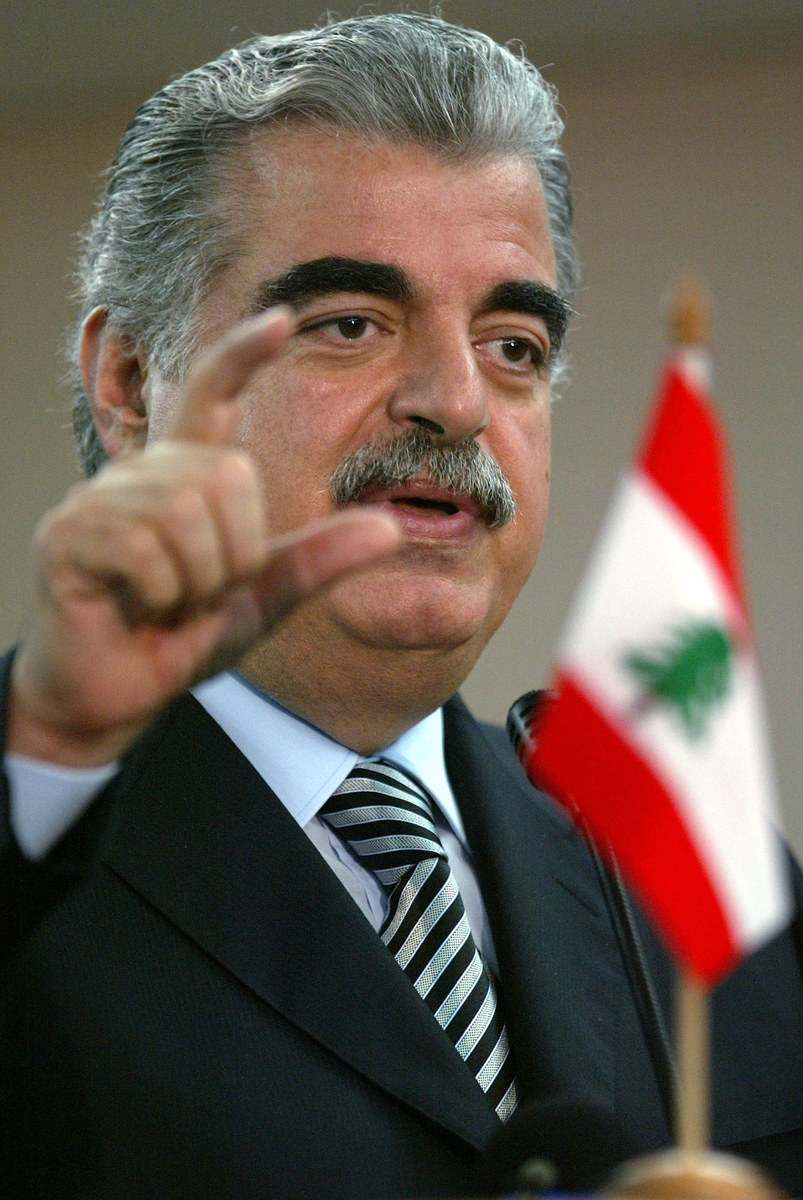
Former Lebanese Prime Minister Rafic Hariri was killed on Valentine’s Day in 2005.
“As a criminal lawyer and a friend of so many of the victims’ families, I am calling for the immediate handover by Hezbollah of Mr. Ayyash,” he said. “If that does not happen, I am urging the judicial apparatus in Lebanon to search and arrest Mr. Ayyash and deliver him to the tribunal.
“Second, because of the insufficiency of the tribunal and in doing what it was expected to do, I am calling on the families of the victims to appeal in particular on the point of the grave error in law, in what we heard in the tribunal.”
Presiding Judge David Re said that while the leadership of Hezbollah or the Syrian government may have had motives to eliminate Hariri and his political allies, the STL found no evidence of their involvement in the 2005 attack. But Mallat argues that there is no such separation in criminal law “anywhere in the world.”
Opinion
This section contains relevant reference points, placed in (Opinion field)
“Mr. Re and the tribunal are using a wrong argument to explain why the leadership of Hezbollah and the Syrian government may not have played a part in the assassination,” he told Arab News.
“So the actual verdict now serves both camps,” Heiko Wimmen, Project Director for Iraq, Syria and Lebanon at the International Crisis Group, told Arab News in a written reaction.
Those who are against Hezbollah “may point to the fact that the person who was sentenced still is a Hezbollah operative who could not possibly have acted on his own, even if the evidence was not sufficient to convict others,” he said.
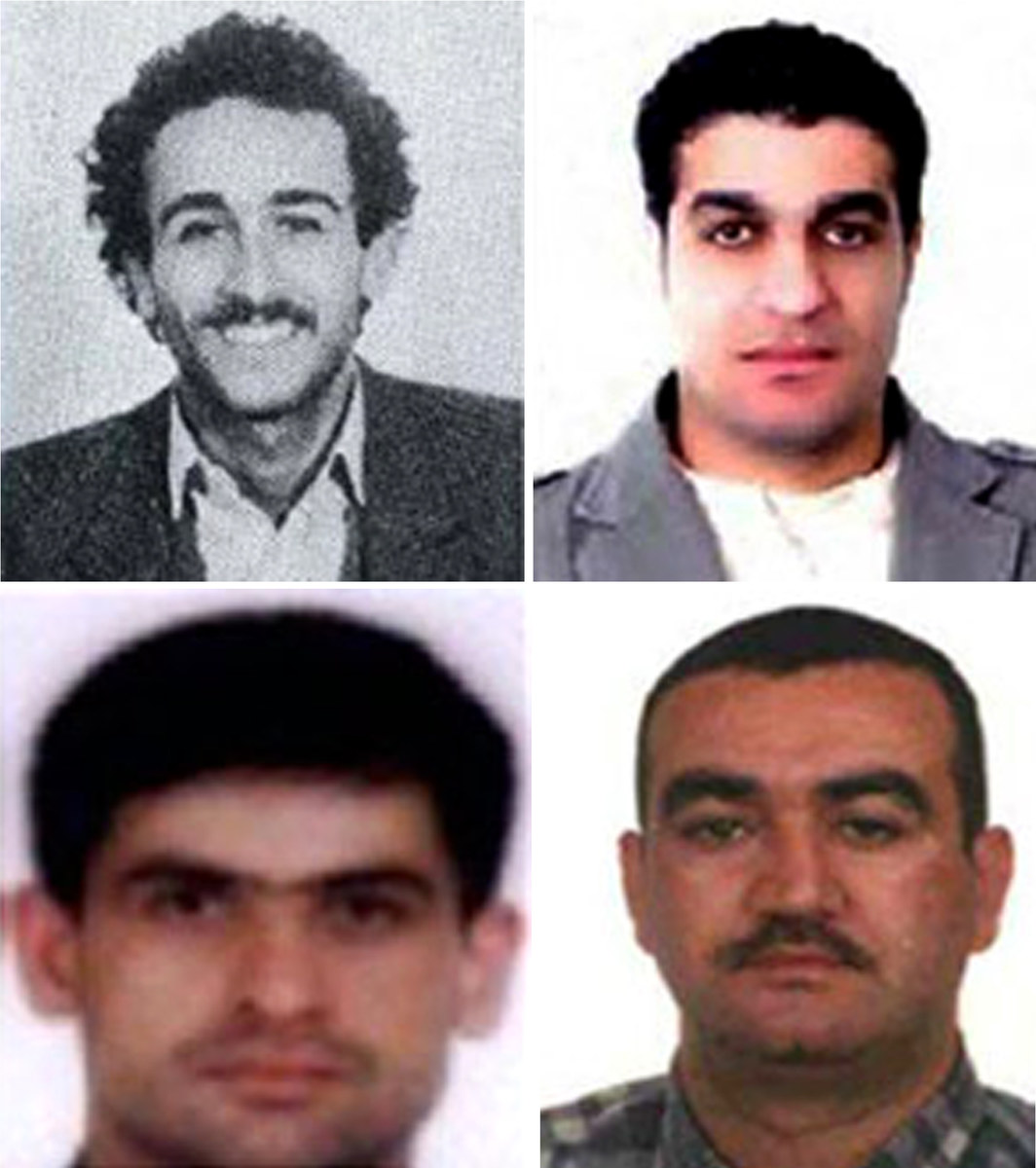
Hezbollah members Salim Jamil Ayyash, 56; Assad Hassan Sabra, 43; Hussein Hassan Onaisi, 46; and Hassan Habib Merhi, 54
On the other hand, “Hezbollah supporters can say that after 10-plus years and despite endless efforts by Western and Israeli intelligence efforts, this tribunal was barely able to concoct enough flawed evidence to sentence one of its members, which suggests that really the whole story was created out of thin air.”
Looking to the future, Wimmen said: “I would not expect Hezbollah to view the acquittal of the other three accused as evidence of a fair trial, or the verdict to change for the better its disposition towards an international investigation into the August 4 Beirut explosions.”
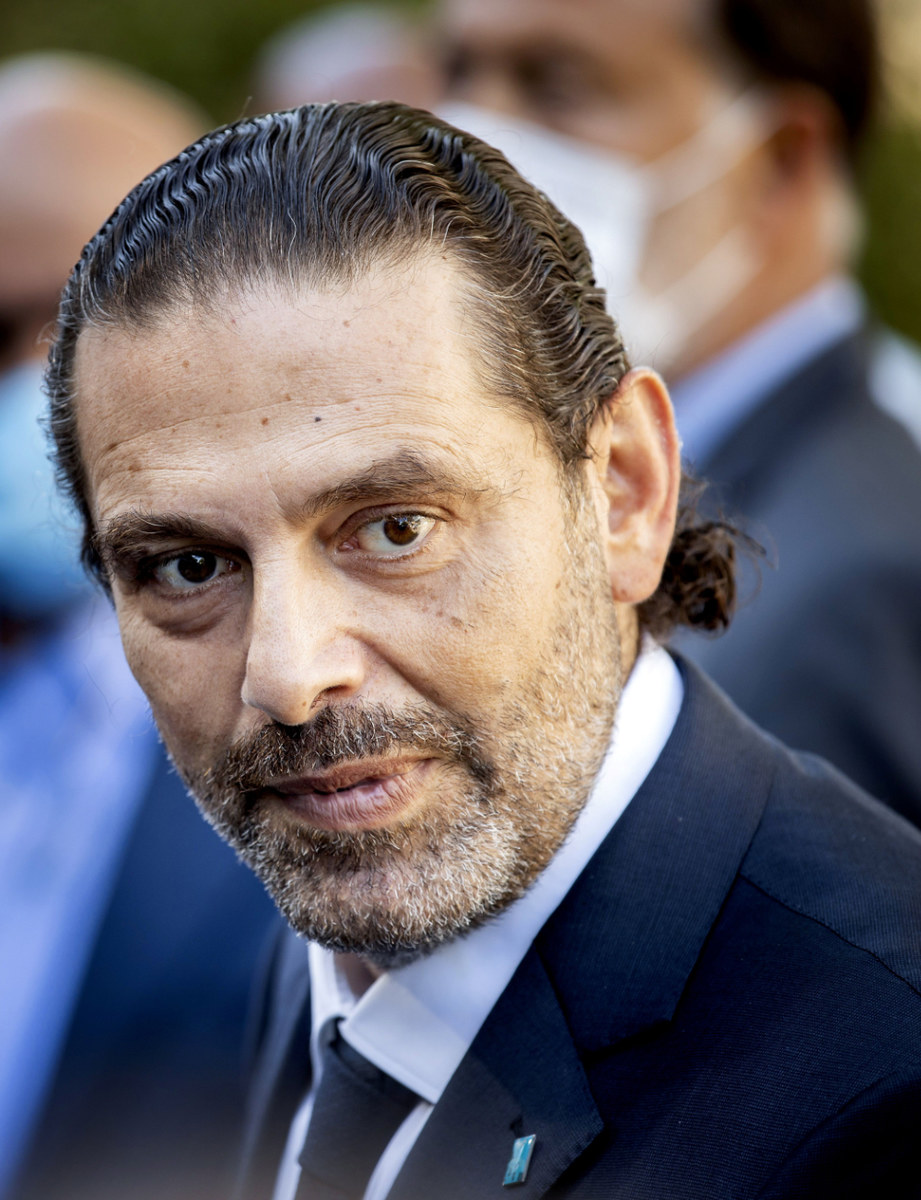
We will not rest until the punishment is carried out, said Rafic Hariri’s son Saad.
Rafic Hariri’s son Saad, who after his father’s assassination also served as Lebanon’s prime minister, said he accepted the STL’s verdict, adding that it showed that Hezbollah was responsible.
“Today, the party that should make sacrifices is Hezbollah,” he said, after attending the STL session. “It is clear that the network responsible is from its ranks. We will not rest until the punishment is carried out.”
Saad said he had expected more information to emerge from the trial. "I think everybody's expectation was much higher than what came out, but I believe that the tribunal came out with a result that is satisfying," he said.
Another son, Bahaa, said the decision confirmed that the assassination was a “political act undertaken by those whose activities my father was threatening, after he had decided that Syria must leave our country.”
Bahaa said: “The court was clear about the political background of those involved and other players with motive, local operational capability and experience of this kind of action.”
----------------------------
Twitter: @jumanaaltamimi