In a first, government and opposition meet to save Karachi from drowning

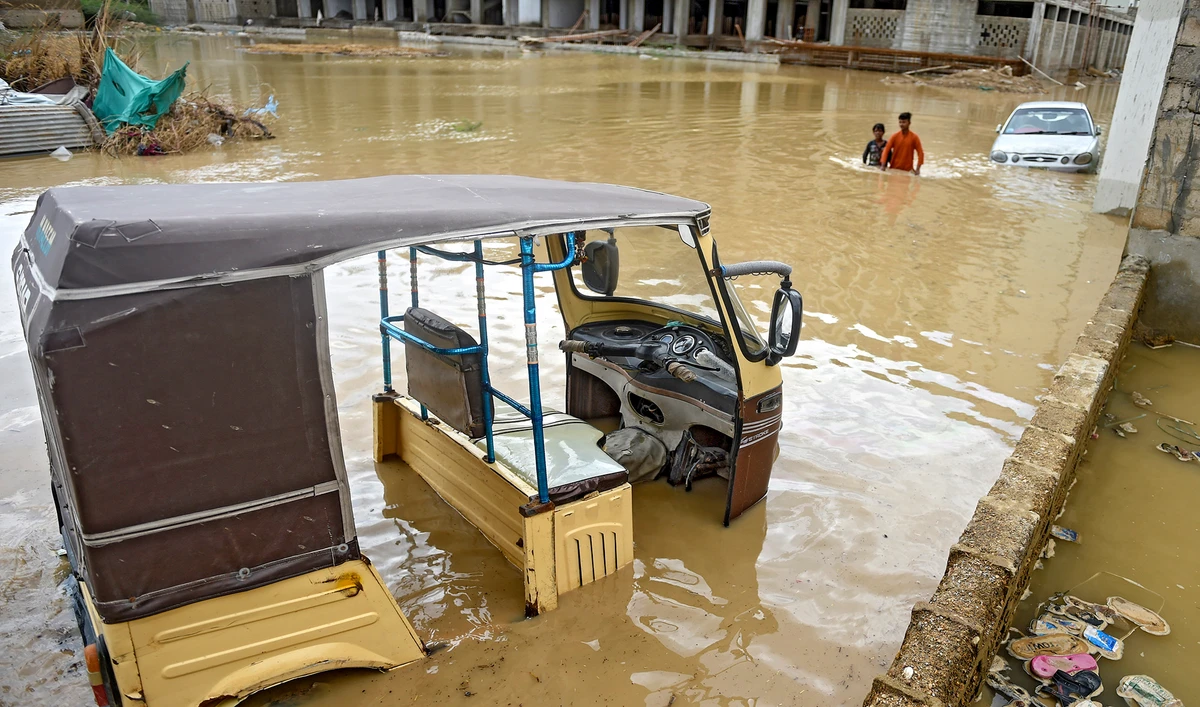
An auto-rickshaw is submerged by floodwaters during heavy monsoon rains in Karachi on July 31, 2019. (AFP/File)
Short Url
Updated 17 August 2020
Follow

In a first, government and opposition meet to save Karachi from drowning

  • Pakistan Tehreek-e-Insaf (PTI), Pakistan People’s Party (PPP) and Muttahida Qaumi Movement-Pakistan (MQM-P) are the main stakeholders in Karachi
  • City of over 15 million people has for years been facing various municipal problems, which experts say have roots in its complex governance system

KARACHI: Representatives of the ruling Pakistan Tehreek-e-Insaf (PTI) and the opposition Pakistan People’s Party (PPP) and Muttahida Qaumi Movement-Pakistan (MQM-P) have met to resolve some of the issues marring governance in Karachi, a minister confirmed to Arab News on Sunday, as the country's megapolis is struggling to cope with heavy monsoon rains which have overwhelmed its infrastructure and killed dozens of people since July.
The three parties are the main stakeholders in the capital of Sindh province. In Karachi's complex division of power, the PTI has a majority from its constituencies in the provincial assembly. The assembly itself, however, is dominated by PPP, which also rules the province. MQM-P, meanwhile, runs the Karachi city government. The city of over 15 million people has for years been facing various municipal problems, which experts say have roots in its complicated governance system.
"A meeting of the three parties was held in Islamabad on Wednesday and a follow up huddle almost with similar participation was held in Karachi on Saturday," Syed Aminul Haque, the federal minister for information technology and telecommunication, told Arab News.
"The issues like K-IV water project, lifting of trash, cleanliness of the drains, roads and local governments are expected to be resolved,” the MQM-P politician said. "We are hopeful that this initiative will help resolve the issues of Karachi."
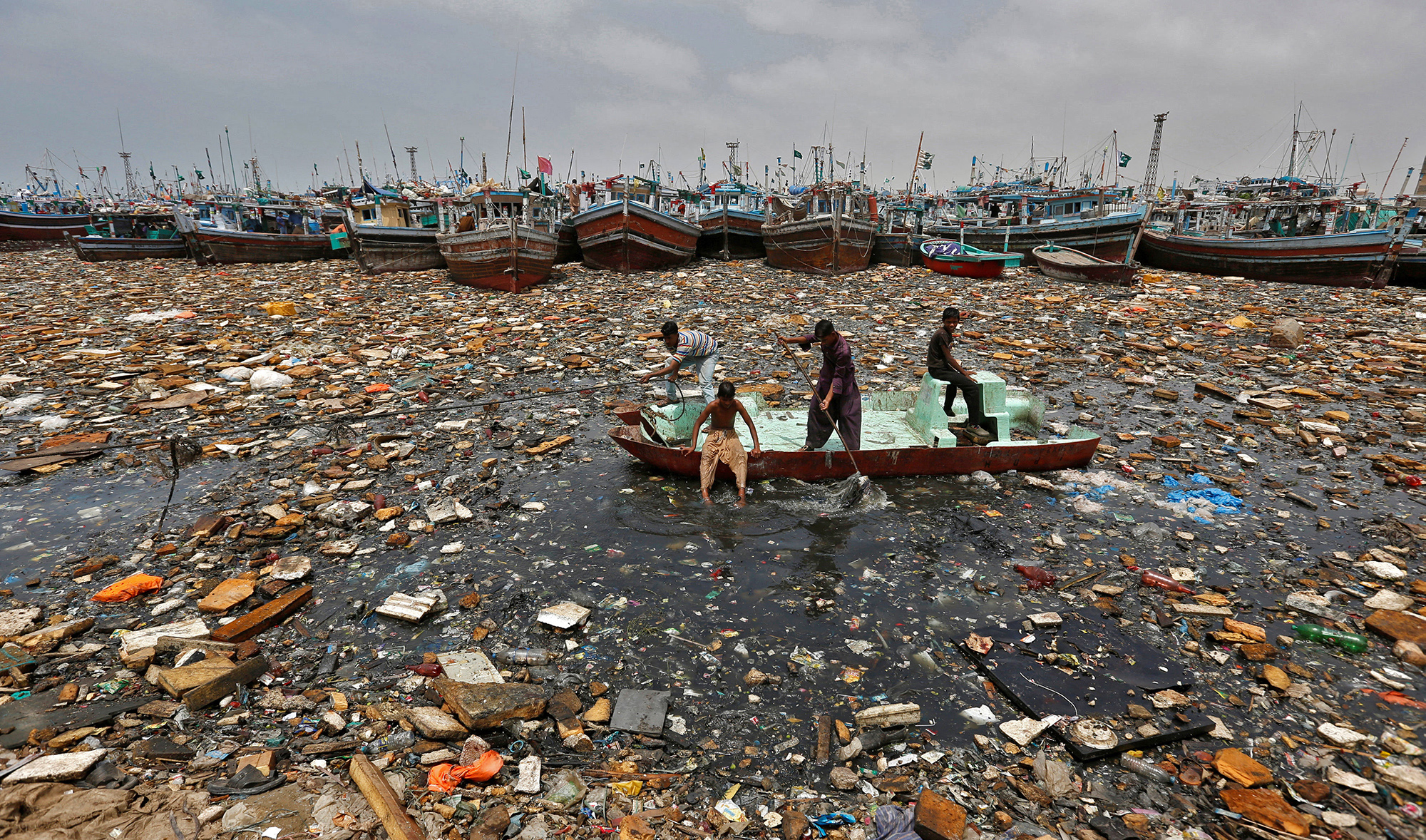


Boys aboard an abandoned boat collect recyclable items through polluted waters in front of fishing boats at Fish Harbor in Karachi on Aug. 17, 2016. (REUTERS/File)

The K-IV project he referred to is a mega canal project to supply the city with clean water. Initiated almost two decades ago, it still remains far from completion.
After last month's havoc, with main roads submerged, sewage spewing into homes, and power cuts lasting for hours, Karachi authorities have been facing increased criticism for maladministration.
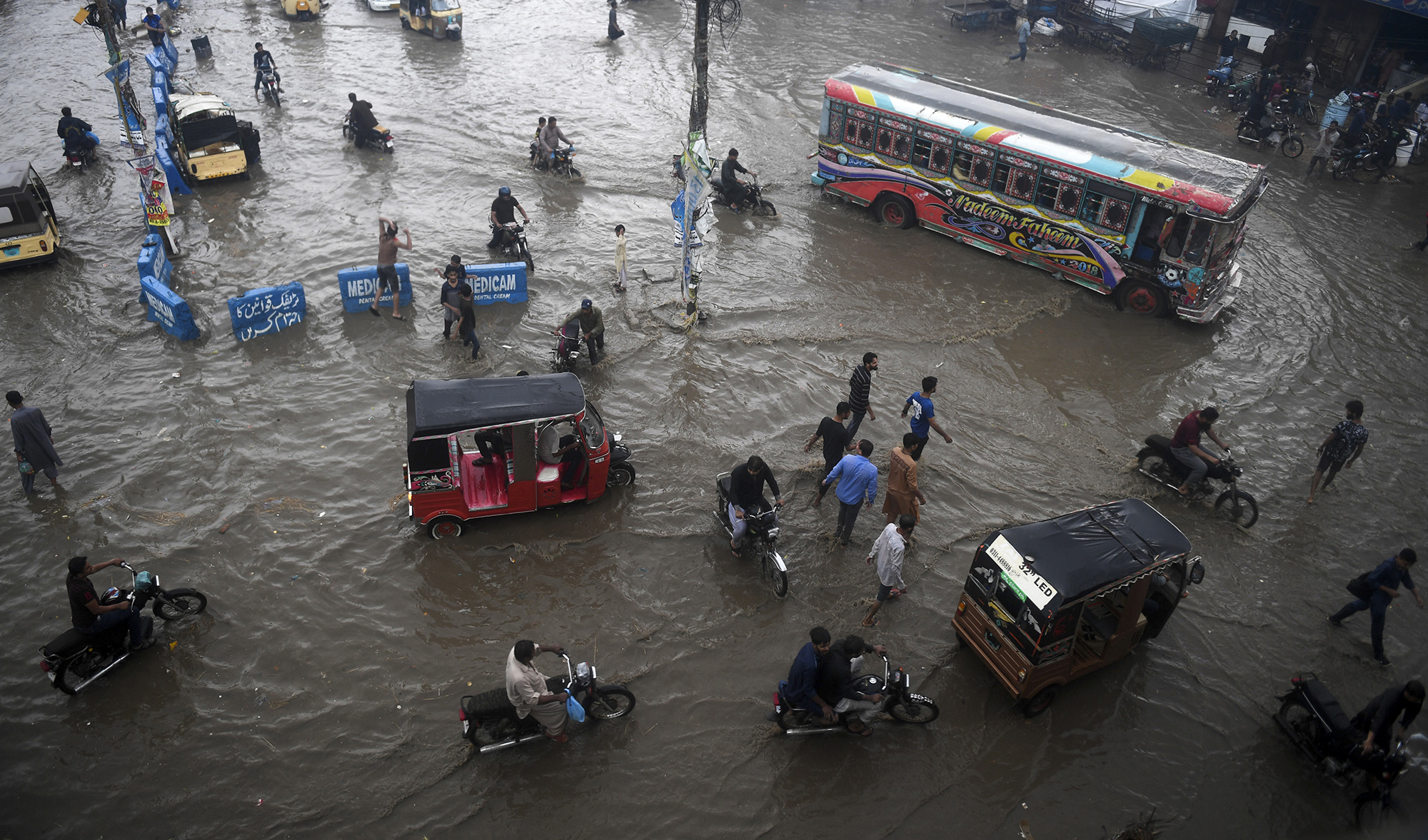


Commuters make their way along a flooded street after heavy monsoon rains in Pakistan's port city of Karachi on Aug. 7, 2020. (AFP/File)

While the recent meetings were a first for the three feuding parties, political analysts are skeptical about their outcome, as no governance improvement is likely to happen until they reach a broader agreement on local governance.
"There is no agreement on local governments," Mazhar Abbas, a senior political analyst, told Arab News. "This arrangement with the stakeholders can resolve the civic issues for time being, but for it to be on a permanent basis, the governance problem needs to be addressed."
Pakistan says $50 million meat export deal with Tajikistan nearing finalization

Updated 09 December 2025
Follow

Pakistan says $50 million meat export deal with Tajikistan nearing finalization

  • Islamabad expects to finalize agreement soon after Dushanbe signals demand for 100,000 tons
  • Pakistan is seeking to expand agricultural trade beyond rice, citrus and mango exports

ISLAMABAD: Tajikistan has expressed interest in importing 100,000 tons of Pakistani meat worth more than $50 million, with both governments expected to finalize a supply agreement soon, Pakistan’s food security ministry said on Tuesday.

Pakistan is trying to grow agriculture-based exports as it seeks regional markets for livestock and food commodities, while Tajikistan, a landlocked Central Asian state, has been expanding food imports to support domestic demand. Pakistan currently exports rice, citrus and mangoes to Dushanbe, though volumes remain small compared to national production, according to official figures.

The development came during a meeting in Islamabad between Pakistan’s Federal Minister for National Food Security and Research Rana Tanveer Hussain and Ambassador of Tajikistan Yusuf Sharifzoda, where agricultural trade, livestock supply and food-security cooperation were discussed.

“Tajikistan intends to purchase 100,000 tons of meat from Pakistan, an import valued at over USD 50 million,” the ambassador said, according to the ministry’s statement, assuring full facilitation and that Islamabad was prepared to meet the demand.

The statement said the two sides agreed to expand cooperation in meat and livestock, fresh fruit, vegetables, staple crops, agricultural research, pest management and standards compliance. Pakistan also proposed strengthening coordination on phytosanitary rules and establishing pest-free production zones to support long-term exports.

Pakistan and Tajikistan have long maintained political ties but bilateral food trade remains below potential: Pakistan produces 1.8 million tons of mangoes annually but exported just 0.7 metric tons to Tajikistan in 2024, while rice exports amounted to only 240 metric tons in 2022 out of national output of 9.3 million tons. Pakistan imports mainly ginned cotton from Tajikistan.