


DUBAI: It was 2012, and Lina Attar Ajami was spending the summer in Canada when a bomb went off near her neighborhood of Rawda in Damascus.
Her father called her immediately and told her not to return to Syria. “You must go to Beirut and find a house and make your life there,” Ajami recalled being told.
She followed his instructions and moved to an apartment in Saifi Village, an upscale neighborhood within walking distance of Gemmayze, the beating heart of Beirut.
“You escape a country for security. You escape a war of nine years in order to give your children security and not let them be exposed to the atrocities of war. But this — the Aug. 4 blast in Beirut — is worse than anything my family went through during the Syrian civil war,” Ajami told Arab News by phone from Beirut.
Even before the blast, Lebanon was in a state of free fall following months of economic and political turmoil marked by mass unemployment, hyperinflation and social unrest.
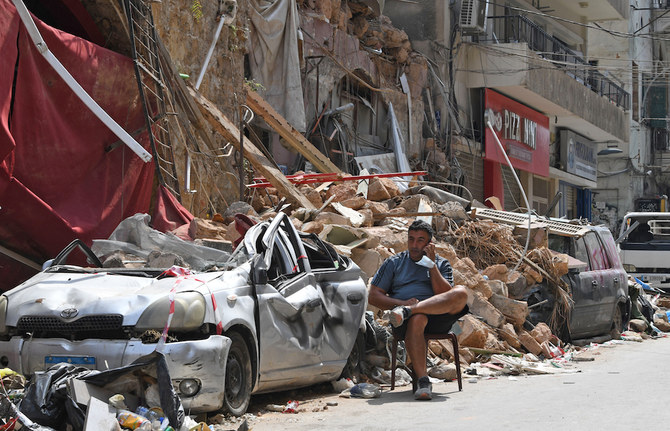
But the devastation caused by the blast has wreaked unprecedented havoc on the Lebanese capital, leaving an estimated 300,000 homeless and an even larger number of people in need of assistance of some kind.
Of the 177 deaths confirmed so far, 43 were Syrians working at the Port of Beirut, according to a statement from the Syrian Embassy in the Lebanese capital. The UN refugee agency has put the Syrian toll at 34, of which eight bodies are still missing.
The workers were refugees, earning daily as little as 50,000 Lebanese pounds ($33 at official rate, $6.6 at market rate).
Their bodies, like their existence up until Aug. 4, are unlikely to be accounted for.
Each of their families, living in the blast-devastated capital of a crisis-torn country, has likely lost not only its breadwinner but also its livelihood.
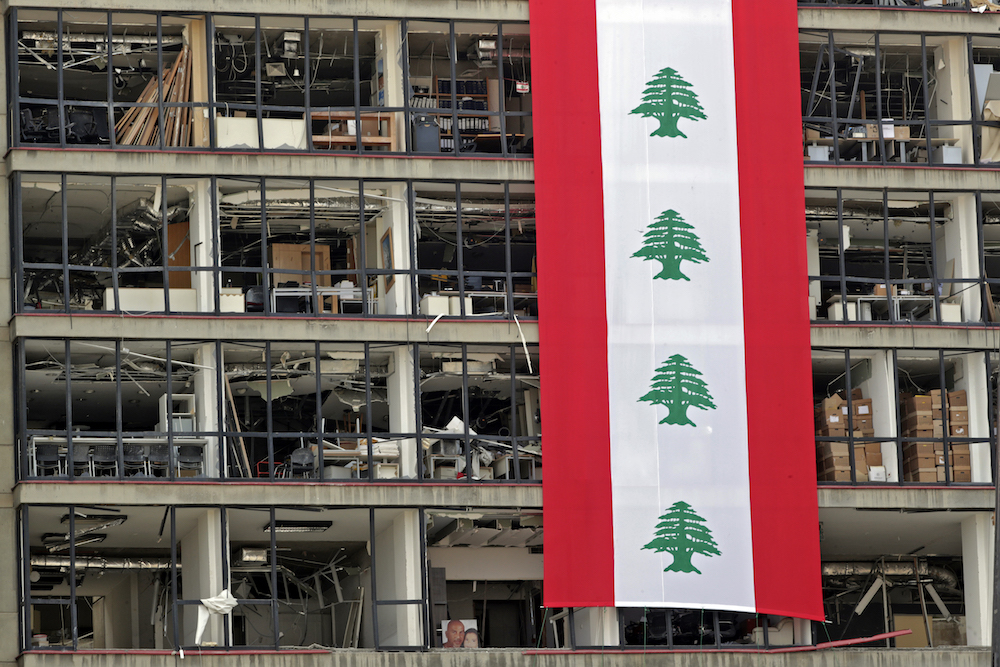
A picture of victims is displayed inside their damaged apartment facing the port of Beirut following the cataclysmic explosion. (AFP)
Ajami’s 12-year-old daughter was severely wounded in the blast. “We live on the 11th floor, so I could see the port. I heard my daughter screaming in the salon. I ran there and found her covered in blood. Blood was all over the walls,” she said.
Ajami’s husband carried his daughter downstairs and dashed off in search of a hospital, but they were full beyond capacity. “People were getting into fights just to get their loved ones admitted,” she said. “It was hell.”
The couple decided to take their daughter to south Beirut, where they found a hospital willing to admit her. She has since undergone two surgeries and is currently recovering.
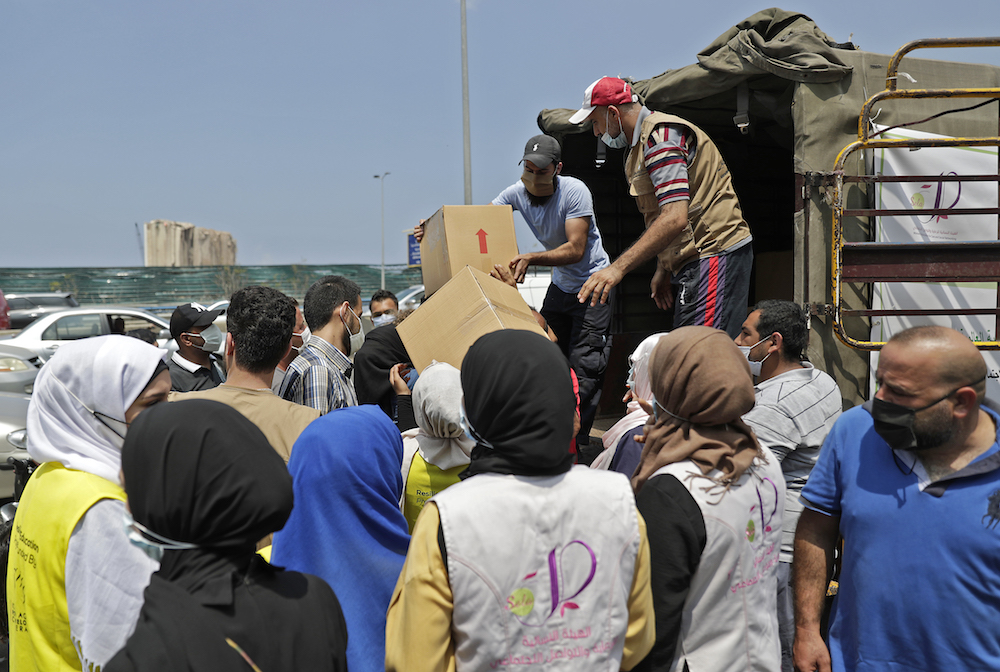
Volunteers distribute aid supplies to those affected by the cataclysmic explosion in Beirut's port area, on August 12, 2020. (AFP/File Photo)
“There’s nothing more disturbing than thinking you’re in the safety of your home and a sudden blast takes away all the security you thought you had in your adopted country,” Ajami said. “As Syrians, this is our second loss. It’s beyond description.”
The Syrians currently in Lebanon, estimated at 910,000, are a mixture of registered and unregistered refugees, as well as migrant workers and others.
Those who fled Syria because of the civil war kept most, if not all, of their life savings in banks in Lebanon.
The value of their deposits has eroded drastically since the start of the economic and financial crisis.
FASTFACT
Syrians in Lebanon
* At least 34 Beirut blast victims were Syrian workers.
* Lebanon hosts 890,000 Syrian refugees.
* Two-thirds of the refugees live below poverty line.
* Lebanon’s estimated population is 6 million.
“Syrians relocated to Lebanon and placed all their wealth in Lebanese banks, knowing that no other country would agree to open bank accounts for Syrians,” said Ajami. “Their savings have dwindled in real terms as a result of the stringent capital controls.”
According to Asharq Al-Awsat newspaper, the Syrian government estimated in January the total amount belonging to Syrians in Lebanese banks at about $45 billion — roughly a quarter of deposits held by Lebanese banks.
That said, many Syrians are content with having survived the blast that shattered Beirut. “I was sure by the time someone asked about me I’d be dead,” said Haidara M., a kickboxing instructor who left Syria in 2016 in search of a better life in the Lebanese capital.
At the time of the blast, caused by a long-neglected stock of ammonium nitrate, Haidara was in the bathroom of his apartment.
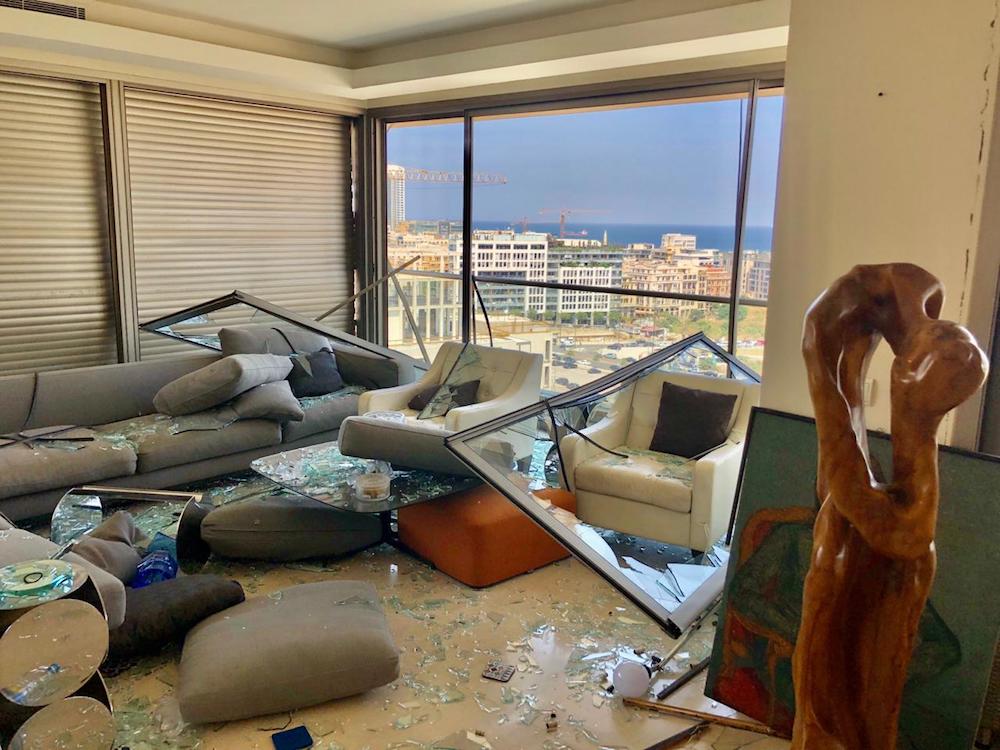
Lina Attar Ajami’s apartment, where her 12-year-old daughter was severely wounded in the blast. (Supplied: Lina Attar Ajami)
Freeing himself of the debris that fell on him, he ran out into the middle of a street in the hope that someone would help him. “I’m afraid of dying in a country without any family to bury me,” he told Arab News.
A Syrian who lives in the Lebanese capital and works with an international NGO said: “Syrians living in Beirut have been affected on an emotional level. They fled Syria to Lebanon to live in a safer place, but are now trying to leave Lebanon for the same reason.”
He added: “We still don’t have clear information regarding Syrians living in Lebanon who’ve been affected by the blast. No one knows the names of the 43 Syrians who died at the port.”
One Syrian national who has returned to Damascus following the explosion is Rana Tamimi, who specializes in marketing and communications.
She was allowed to cross the border into Syria after she took a COVID-19 test (for which she paid 150,000 Lebanese pounds) in Beirut and got a negative result.
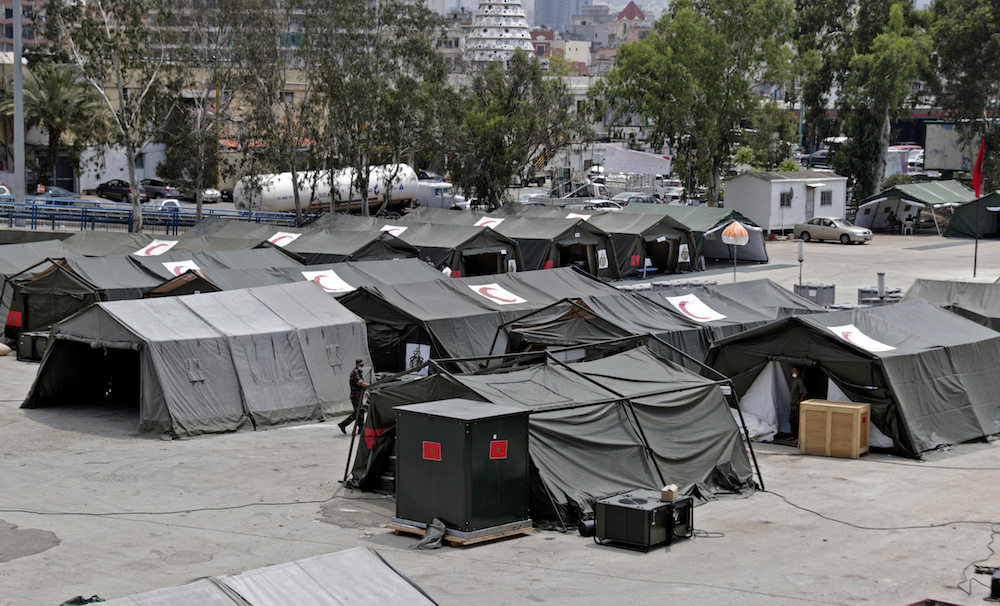
A general view shows the Moroccan field hospital in Karantina neighbourhood near the port of Beirut, on August 12, 2020. (AFP)
“I moved to Beirut from Damascus eight years ago after a big explosion behind my house in Damascus,” she told Arab News.
“There was a lot of fear in the streets then and I had to leave. The effect of the explosion that happened in Beirut was equal to the sum of the horrors of eight years of war.”
Nimat Bizri, a half Algerian, half Syrian woman married to a Lebanese man who has lived in Lebanon for 24 years, said: “Since the blast, I feel helpless and depressed … The border to Syria has remained closed for three months now due to COVID-19. There’s no light at the end of the tunnel.”
Bizri runs the Social Support Society, an NGO founded in 2006 that provides quality programs and opportunities to Syrian refugees residing in Lebanon’s Bekaa Valley. It caters to 2,500 students spread over five centers located in different villages.
But Syrians face an altogether new challenge in the wake of the destruction in Beirut. Cases have come to light of discrimination against migrants and refugees trying to access emergency aid.
“No support is being given to Palestinian and Syrian refugees who’ve been working and living in Beirut,” said Bizri. “The Lebanese people haven’t been giving them support since the explosion.”
Dalia Al-Ogaily, a Syrian-Iraqi resident of Beirut who previously lived in Syria, recently joined a group of friends who had volunteered to do social work in different parts of the city.
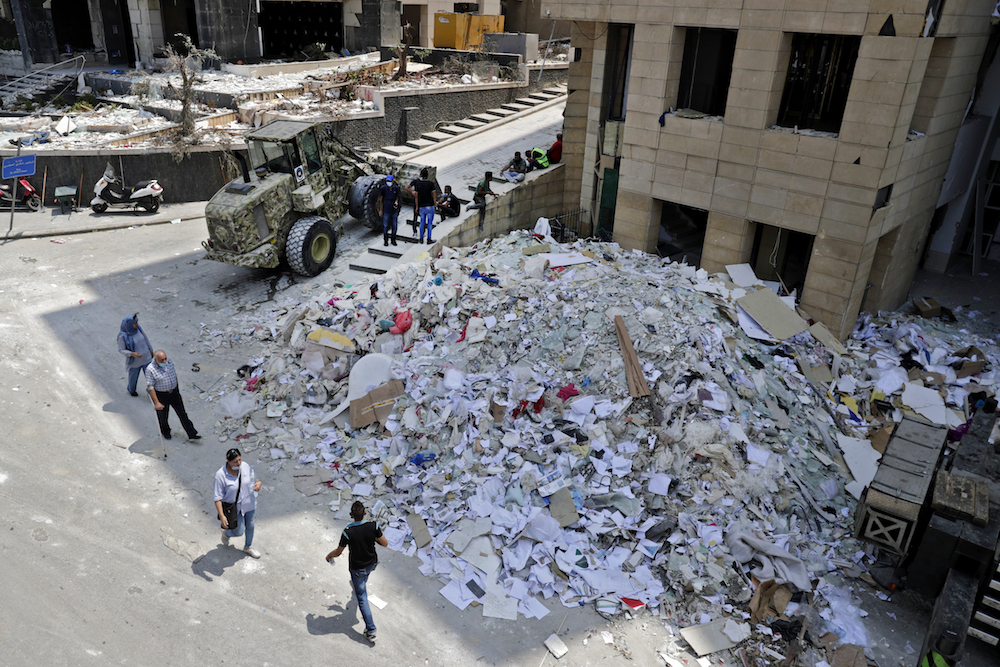
Survivors of Beirut's August 4 blast are still in shock over a disaster that disfigured their city. The earth-shaking explosion killed 171 people and wounded more than 6,000, a sickening blow to a country already in crisis. (AFP)
“On our way to downtown Beirut, we spotted the Banin Charity Association in action so we offered to help,” she told Arab News.
“Initially they allowed us to help people in the neighborhood by interviewing them and assessing their needs. However, after a few hours, when we ran into a Syrian woman in need, the coordinator of the charity told us not to help her because, according to its policy, it’s meant to help only Lebanese.”
The incident sparked controversy on social media that culminated in the resignation of Fadi Al-Khateeb, a renowned Lebanese basketball player, from his position as the Banin Charity Association’s goodwill ambassador.
Complaints of discrimination against non-Lebanese in aid distribution also prompted Alexandra Tarzikhan, a Syrian human rights lawyer based in Chicago, to comment: “The blast didn’t discriminate when it chose whose lives to take and which houses to destroy.”
In recent years, Gulf Cooperation Council member countries have become the home of many Arab families fed up with their home countries’ poverty, corruption, sectarian politics and conflict.
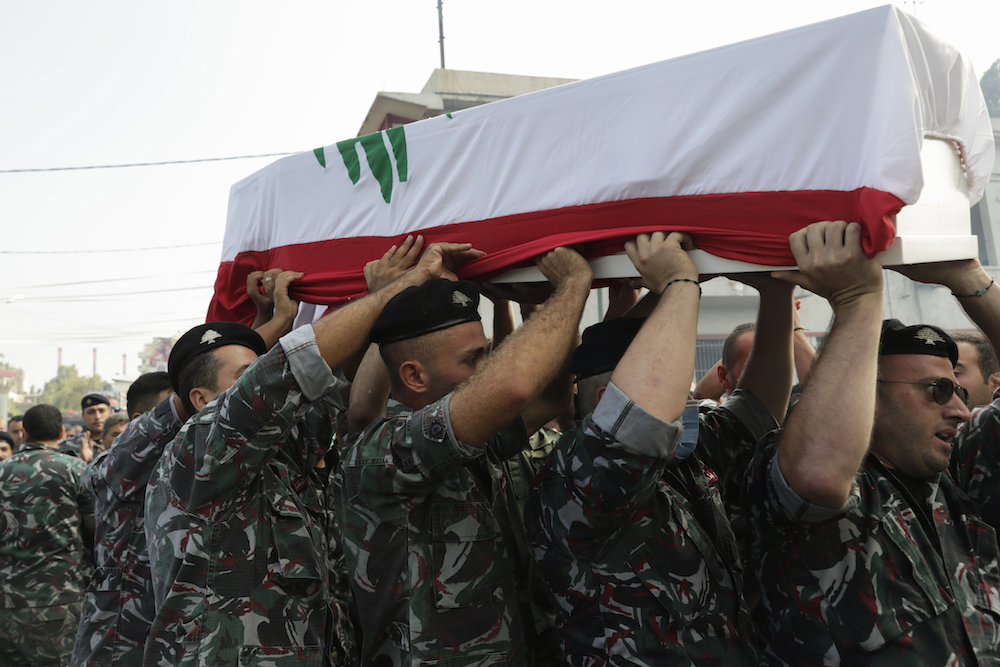
Firefighters carry the coffin of their colleague Joe Noun, who was killed in Beirut's massive blast, during his funeral at the fire station in Karantina neighbourhood near the port on August 12, 2020. (AFP/File Photo)
Syrians and Lebanese are among the tens of thousands who have chosen to start a new life in the UAE, drawn by the lure of peace and financial security.
Leaving his home in Damascus in 2012 to escape the war, Alaa Krimed lived for two years in Beirut before moving to Dubai.
Now the Syrian-Palestinian is the artistic director of the Sima Dance Co. in Dubai’s Alserkal Avenue.
“I loved Beirut, but I also hated Beirut because I struggled a lot there,” he told Arab News, recalling the need to reapply for residency papers every three months. “The people are wonderful but the government is corrupt, and this is why I moved from Beirut to Dubai.”
--------------------
Twitter: @rebeccaaproctor


