

Saudi Arabia's Maraya hall in historic AlUlawins major architecture prize

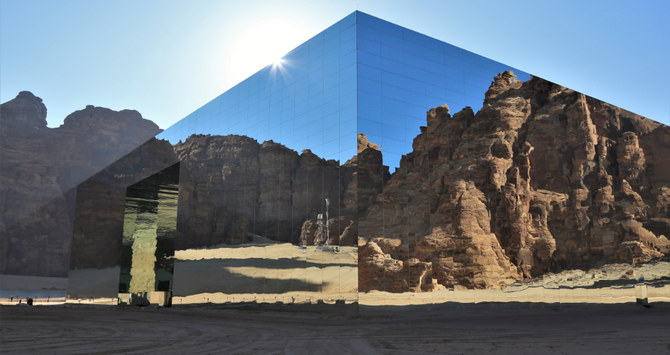
The cube-shaped structure is covered in 9,740 square meters of mirrors that reflect the breathtaking surrounding landscape. (Supplied)
Short Url
Updated 05 August 2020
Follow

Saudi Arabia's Maraya hall in historic AlUlawins major architecture prize

  • Maraya achieved the most public votes in its category and was named the 2020 popular choice winner.
RIYADH: Maraya, a concert and entertainment venue in AIUIa, northwest Saudi Arabia, has won one of the world’s biggest architecture awards.

The Architizer A+ Awards — hosted by New York-based community Architizer.com, a 7-million-plus online group of leading architects — consists of five peer-judged finalists, with one jury winner and one popular choice winner in each category. The awards promote and celebrate the year’s best architecture.

A finalist in the Architecture + Glass category, Maraya was selected by distinguished figures from industries including design, technology, real estate and fashion. Finalists were selected for excellence in architecture with criteria based on form, function, and impact.

Maraya achieved the most public votes in its category and was named the 2020 popular choice winner.

Philip Jones, chief destination management and marketing officer at the Royal Commission for AIUIa (RCU), welcomed the announcement, saying that although Maraya is closed for renovation, the venue will be have a key role when AIUIa reopens to visitors as a year-round destination in late 2020.

“It’s particularly gratifying to win the popular vote. Visitors are mesmerized by Maraya’s impact and the way it blends in so perfectly with its surroundings.

“Maraya has been conceived and designed in line with the RCU’s core values to develop AIUIa using a sensitive and responsible approach. AIUIa is a significant archaeological wonder and we look forward to welcoming the world when we reopen the sites,” he added.

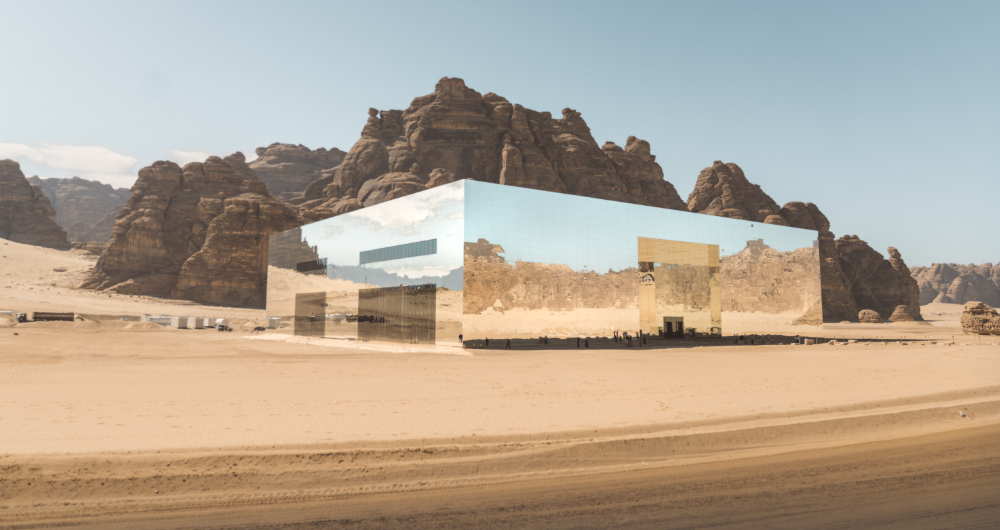
The cube-shaped structure is covered in 9,740 square meters of mirrors that reflect the breathtaking surrounding landscape.

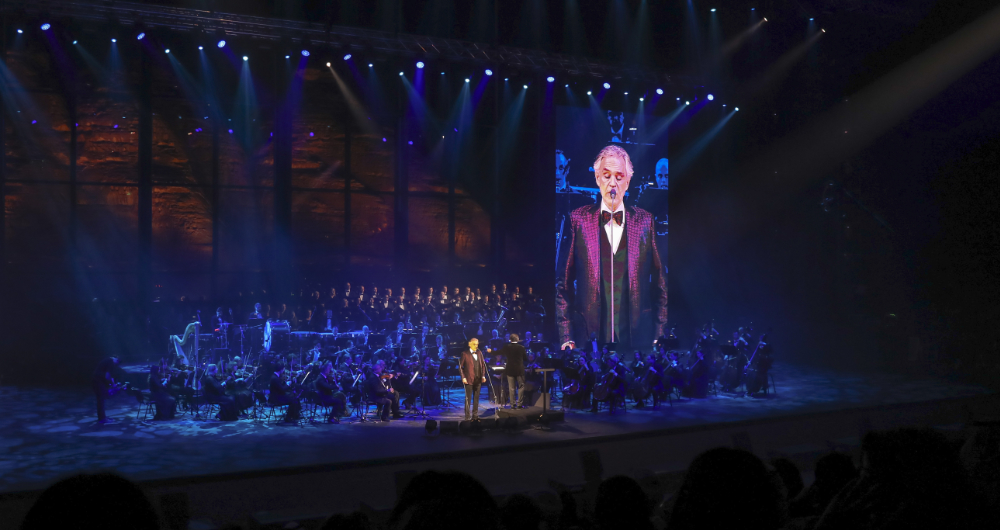
The building and its extraordinary facade were unveiled at a special ceremony staged by the Royal Commission for AlUla during the second season of the Winter at Tantora festival. The 500-seat venue has since hosted leading international artists, including Egyptian musician Omar Khairat and Italian opera singer Andrea Bocelli.

It achieved a Guinness World Record for being the largest mirrored building in the world in 2019 with its 26-meter-high theater.
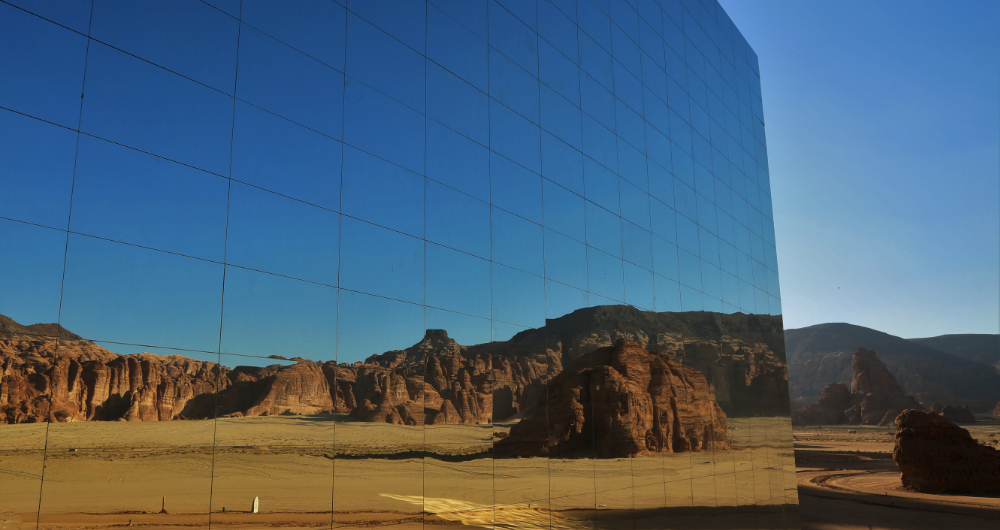
Maraya’s giant retractable window of more than 800 square meters can open to offer an experience blending nature and entertainment.

Maraya means mirrors in Arabic. The building, designed by Florian Bole and architect Massimo Fogliati, of Gio Forma, Milan, was inspired by the surrounding landscape.

The site was recently used a location for commercial film shoots by luxury brands including Cartier, Rolls-Royce and Monot.

Maraya is located 12 km from Saudi Arabia’s first UNESCO World Heritage site, Hegra.

The venue is undergoing further renovations, including increased capacity, a dedicated conference floor, a ground-floor restaurant and a stunning rooftop terrace overlooking the Ashar valley, oasis and desert surroundings.

Maraya will be well-positioned to host regional and international business events, conferences, weddings and other special events when it reopens for business in late 2020.


National program identifies 165 native plants for afforestation efforts in Asir

Updated 29 December 2025
Follow

National program identifies 165 native plants for afforestation efforts in Asir

  • The survey is part of broader plans focused on restoring degraded land, using native vegetation 

JEDDAH: Saudi Arabia’s National Afforestation Program has identified more than 165 species of native plants suitable for afforestation in the Asir region, highlighting the ecological diversity of one of the Kingdom’s most environmentally varied areas, the Saudi Press Agency reported.

The findings form part of broader national efforts to expand vegetation cover, address land degradation, and support sustainability goals linked to the Saudi Green Initiative and Vision 2030.

According to the program, the identified species are distributed across a wide range of natural environments in Asir, including mountainous terrain, highlands, slopes, valleys, plains, rocky landscapes, and coastal areas stretching from the Red Sea to Tihama.

The species belong to numerous plant families, including Fabaceae, Anacardiaceae, Burseraceae, Capparaceae, Ebenaceae, Euphorbiaceae, Malvaceae, Myrtaceae, Oleaceae, and Primulaceae, among others.

Plants suitable for afforestation range from large and small trees to perennial and annual shrubs, herbs, succulents, bulbs, and climbing plants. 

Among the most notable species identified are the grey mangrove, mastic tree, mooring or ben tree, juniper, sycamore fig, wild olive, henna, wild jasmine, hawthorn, and arak.

The Saudi Arabian Botanical Society described the announcement as an important step in protecting plant diversity and strengthening the ecosystem conservation in the Kingdom. 

Munirah bin Hamad Al-Hazani, founder and president of the society, said that prioritizing native species is central to sustainable afforestation.

“Focusing on the cultivation of native plants adapted to diverse environments forms the cornerstone of sustainable afforestation projects, as it plays a pivotal role in enhancing vegetation cover, combating land degradation, and conserving natural and financial resources,” she told Arab News.

Al-Hazani added that long-term success depends on cooperation between government bodies and the nonprofit sector, alongside community involvement and environmental awareness programs.

The National Afforestation Program has increasingly emphasized community participation, working with government agencies, private companies, and nonprofit organizations to support planting initiatives and environmental education. Its approach includes promoting volunteerism and discouraging harmful environmental practices, while focusing on the use of native plants adapted to local conditions.

Parallel efforts are underway in other regions of the Kingdom to support vegetation restoration through research and infrastructure development. In Jouf, often referred to as the Kingdom’s food basket, the King Salman bin Abdulaziz Royal Reserve Development Authority has established a Central Nursery and a Wild Seeds Research and Production Station to address the growing demand for reliable sources of native seeds and seedlings.

The project was launched in 2023 under the directive of Prince Abdulaziz bin Saud bin Naif, the minister of interior and chairman of the authority’s board of directors. 

Since then, the facilities has become a key component of vegetation restoration efforts within the reserve.

The authority has focused on building operational capacity by recruiting and training specialists to manage cultivation and research activities. The research and production station includes 14 mother-seed production fields containing over 400,000 trees and shrubs. 

Planting began in late 2024, with more than 30 native plant species represented, selected for their role in the reserve’s natural ecosystem. 

The facility also includes two seed storage units with a combined capacity of 3,000 kilograms. Seeds are collected annually from multiple sites within the reserve and used for seedling production habitat rehabilitation.

The Central Nursery spans 6,000 square meters and includes 30 greenhouses spanning 1,500 square meters, as well as two shade houses used during summer months. A plant hardening facility, designed to prepare seedlings for natural environmental conditions, covers 10,000 square meters and is divided into seven sections. The nursery’s annual production capacity reaches 1.5 million seedlings, representing more than 15 native plant species. 

Together, these initiatives underscore the growing role of native plant research and propagation in Saudi Arabia’s afforestation strategy, particularly as the Kingdom works to balance environmental restoration with long-term sustainability goals.