


JEDDAH: Pilgrims who took part in this year’s Hajj must continue wearing electronic tags so authorities can track their 14-day quarantine once they return home.
The bracelet is designed to monitor pilgrims’ adherence to quarantine, as well as monitoring and recording their health status through the “Tatamman” app.
Pilgrims were required to quarantine before embarking on the Hajj and wore the bracelets to ensure they were obeying the self-isolation rules as part of strict measures to contain the spread of coronavirus.
The country continues to experience a decline in COVID-19 cases. Recorded infections remain below the 2,000 mark for the 10th day in a row. The Kingdom reported 1,258 new cases of COVID-19 on Monday, raising the number of those infected to 280,093 so far.
There are currently 35,091 active cases and six patients were admitted to critical care units, raising the number to 2,017. There were 32 new fatalities, raising the death toll to 2,949.
There were 1,972 new recoveries recorded, raising the total number of recoveries to 242,053.
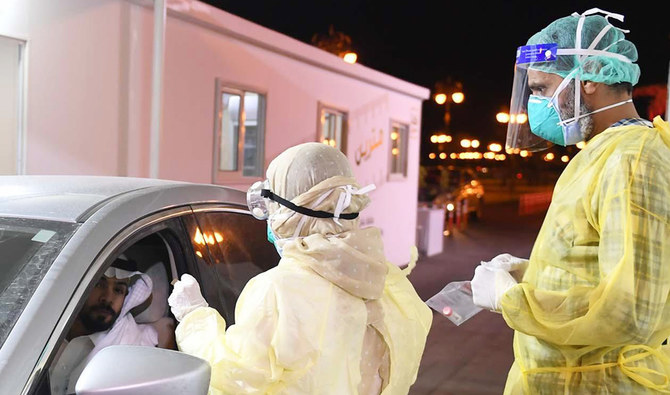
More than 41,361 polymerase chain reaction (PCR) tests have been conducted in the past 24 hours. The total number of PCR tests conducted to date exceeds 3.47 million.
INNUMBERS
280,093 COVID-19 cases
242,053 Recoveries
35,091 Active cases
2,949 Total deaths
3.47m PCR tests
The Ministry of Health has been carrying out daily visits to health institutions in order to assess their level of commitment to anti-coronavirus measures, such as ensuring that staff adhere to social distancing, wear masks, and adopt the health practices and crisis management mechanisms recommended by authorities to protect patients and staff.
Teams have been dispatched to supervise the compliance of health facilities’ quarantine centers across Saudi Arabia and stepped up their visits to government and private hospitals to ensure their compliance with health protocols, sample transfers and staff testing as well as ensuring that all routine surgeries are stopped.
More than 5,000 violations have been recorded and violators were referred to committees. More than 150 facilities were temporarily shut down by the ministry until the proper protocols were implemented and the violations were fixed. A number of institutions were able to resume operations after settling fines.


