


ABHA: Saudi Arabia’s southern Al-Souda mountains harbor one of the Kingdom’s most prized hidden treasures.
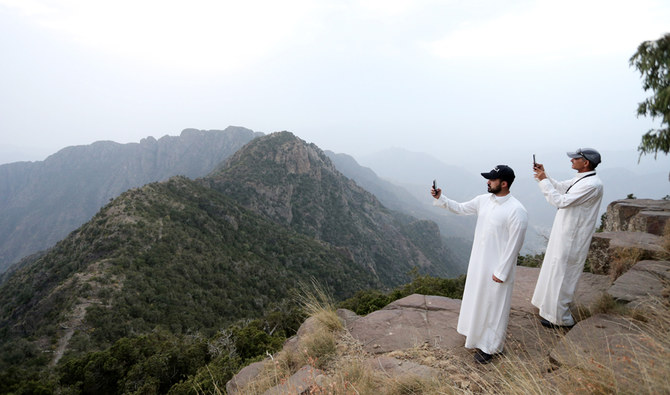
At 3,000 meters above sea level, a hidden village above the clouds gives spectacular views on the world below. The village of Al-Souda offers panoramic 360-degree views of the surrounding paradise on Earth consisting of mountains covered in sheets of greenery, dense forests, peaks and valleys.
Located 25 km from Abha city, the region has become a top tourist destination due to its rich heritage, history, culture and all-year-round good weather.
Al-Souda overlooks the Tihama mountains with their stunning valleys and quaint villages dotted along the plains and slopes with terraces hanging from the steep cliffs. The villages are less crowded than other sites but unique in its location.
In the summer, temperatures can drop below zero degrees and rain clouds provide awesome sights as the higher peaks break through them.
Ahlam Mash’hadi, a physiotherapist and artist, said the mountains provided an inspirational and perfect environment for her work.
“I felt completely energized and meditation helped me relax and enjoy the natural scenery. The sight of the clouds sparked my imagination and I’m sure it would do the same for any artist who loves to create unique works.
Some people will be impressed with the beautiful scenery while others will enjoy the cold weather on the top. Some will stand in awe because of the overwhelming feeling of the place.
Abdulrahman Al-Zahrani, Psychology consultant
“The memories of visiting Al-Souda are etched on my mind because of the pure beauty of the place — very inspiring.”
The serene thick vegetation and clean air of the mountains offer an experience to visitors and those looking for inspiration or “escape therapy” to rejuvenate.
Another visitor to the village, psychology consultant Abdulrahman Al-Zahrani, said: “Some people will be impressed with the beautiful scenery while others will enjoy the cold weather on the top. Some will stand in awe because of the overwhelming feeling of the place.”
The area is a photographer’s dream and Nasser Al-Shehri said he gained immense joy from taking shots of the clouds and valleys from the mountaintop. One of the best times was at sundown, he added, when visitors could stand with a blanket of clouds at their feet and watch the reflected moonlight change the look of the landscape.
Al-Soudah’s countryside and mountains offer a plethora of opportunities for trekkers as well who would like to wander and get lost in the beauty of the forests overlooking breathtaking views of the world below.


