WASHINGTON: The Boeing 747 is an iconic jumbo jet that revolutionized air travel and tourism, allowing affordable flights for millions of people eager to see the world.
But the fuel-guzzling, four-engine plane’s days are numbered now, as Boeing said Wednesday it will phase out production of it and stop in 2022. In the end, the 747 simply cannot compete with today’s more efficient, two-engine jetliners.
First flown commercially in 1969, in the same era as the supersonic Concorde, the 747 was an unprecedented success: a total of 1,571 were ordered and all but 15 were actually delivered.
More than anything, the plane democratized air travel by letting holidaymakers take cheaper flights, often in chartered 747s fitted with hundreds of economy-class seats — leg room be damned.
For 35 years the 747 ruled the skies — until Boeing’s big European rival Airbus came out with the Super Jumbo A380.
The 747 owes its existence to Juan Trippe, the visionary founder of the now defunct Pan American World Airways. As far back as the early 1960s, Trippe was convinced that air travel, in particular trans-oceanic flight, was due for a huge boom.
As the story goes, during a fishing trip in Alaska, Trippe persuaded his friend Bill Allen, who then ran Boeing, to build a plane twice as big as the Boeing 707.
Trippe allegedly said that, if Allen had the guts to build such an aircraft, Pan Am would buy it.
A few years later the first 747 took to the skies, with Pan Am as the launch customer.
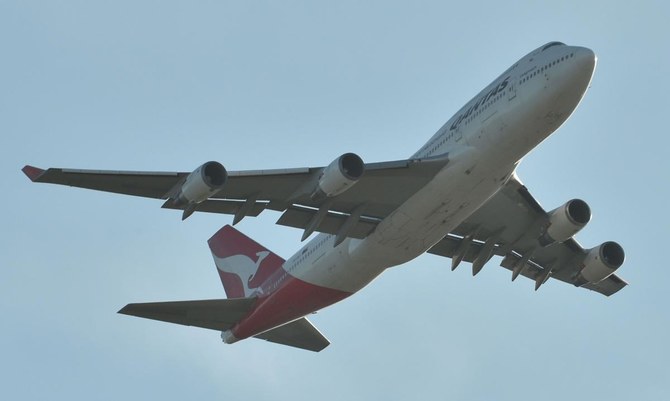
Recognizable for its cockpit hump atop the front end of the fuselage, some configurations of the 747 could hold up to 600 passengers.
It is double decker — the upstairs being for first-class travelers — and had four engines, which was its fatal flaw in terms of fuel cost and the environment.
“Given the current market dynamics and outlook, we will stop production of the iconic 747 in 2022,” general manager David Calhoun said Wednesday in a message to employees.
“50 years and eight versions. That is a beautiful record,” said Michel Merluzeau, an aviation expert at Air Insight Research.
“But its days were numbered, even before the COVID-19 crisis,” he said, adding that the 747 became a niche plane both for passenger and cargo markets.
More recently it faced competition from the Airbus A350.
And even within Boeing, the 747 had to vie with the longer range 777-300ER and the 777X, both of which were much more fuel efficient than the aging jumbo.
In recent years the 747 became a plane “from another era, with production methods that would not work, looking to the future,” said Merluzeau.
In the US, no airline has used the Boeing 747 since late 2017.
Like its rival the A380 — production of which will halt in 2021 — it became a victim of global money woes stemming from the 2008 financial crisis, and then airlines started to prefer the Boeing 787 or AirBus A350.
These latter two-engine planes burn less fuel and can fly further thanks to a new generation of engines. This made obsolete the four-engine jumbo jet, which also requires twice as much maintenance work as a two-engine aircraft.
The decline of the 747 deepened with the coronavirus pandemic, which led to a stunning fall in air travel and prompted some airlines to announce they will retire the 747 from their fleets.
From now to 2022, Boeing will keep building 747s but just for cargo and military transport purposes.
The 747 can also count on support from the White House and the presidential plane called Air Force One.
The government is awaiting delivery of two 747-8s, which are bigger, more modern, faster and less fuel-consuming than the current 747-200s that carry the president and his entourage.


After a historic run, it’s game over for pioneering Boeing 747


https://arab.news/wddb3
After a historic run, it’s game over for pioneering Boeing 747

- Boeing said Wednesday it will phase out production of it and stop in 2022
- First flown commercially in 1969, the 747 was an unprecedented success


Saudi Arabia ranks 2nd globally in digital government, World Bank 2025 Index shows
WASHINGTON: Saudi Arabia has achieved a historic milestone by securing second place worldwide in the 2025 GovTech Maturity Index released by the World Bank.
The announcement was made on Thursday during a press conference in Washington, DC, which evaluated 197 countries.
The Kingdom excelled across all sub-indicators, earning a 99.64 percent overall score and placing it in the “Very Advanced” category.
It achieved a score of 99.92 percent in the Core Government Systems Index, 99.90 percent in the Public Service Delivery Index, 99.30 percent in the Digital Citizen Engagement Index, and 99.50 percent in the Government Digital Transformation Enablers Index, reflecting some of the highest global scores.
This includes outstanding performance in digital infrastructure, core government systems, digital service delivery, and citizen engagement, among the highest globally.
Ahmed bin Mohammed Al-Suwaiyan, governor of the Digital Government Authority, attributed this achievement to the unwavering support of the Saudi leadership, strong intergovernmental collaboration, and effective public-private partnerships.
He highlighted national efforts over recent years to re-engineer government services and build an advanced digital infrastructure, which enabled Saudi Arabia to reach this global standing.
Al-Suwaiyan emphasized that the Digital Government Authority continues to drive innovation and enhance the quality of digital services, in line with Saudi Vision 2030, supporting the national economy and consolidating the Kingdom’s transformation goals.
The 2025 GTMI data reflects Saudi Arabia’s excellence across key areas, including near-perfect scores in core government systems, public service delivery, digital citizen engagement, and government digital transformation enablers. This balanced performance places the Kingdom firmly in the “Grade A” classification for very advanced countries, demonstrating the maturity of its digital government ecosystem.
Saudi Arabia’s progress in the index has been remarkable: from 49th place in the 2020 edition, to third in 2022, and now second in 2025, confirming its status as a global leader in digital transformation and innovation.
The achievement also reflects the Kingdom’s focus on putting people at the center of digital transformation, enhancing user experience, improving government efficiency, and integrating artificial intelligence and emerging technologies across public services.


