



CHIRIKOT SECTOR: School children living in Pakistani villages along a highly militarized border with India in the disputed region of Kashmir said this week that shelling and firing by Indian forces had left them too scared to go to school.
During a Wednesday trip to the region arranged by the Pakistan military for journalists working for foreign media, Arab News spoke to villagers who described their lives along the violent frontier as a “living hell.”
“We cannot go to school; we can’t even fetch water,” said eighth grader Faiza Shabbir in Chirikot sector, a small hilly village around 100 kilometers from Islamabad and just three from the de facto border, or Line of Control, that divides the Indian and Pakistani parts of Kashmir. “We have to hide in our house to escape the shelling. We can’t even go to the mosque out of fear.”
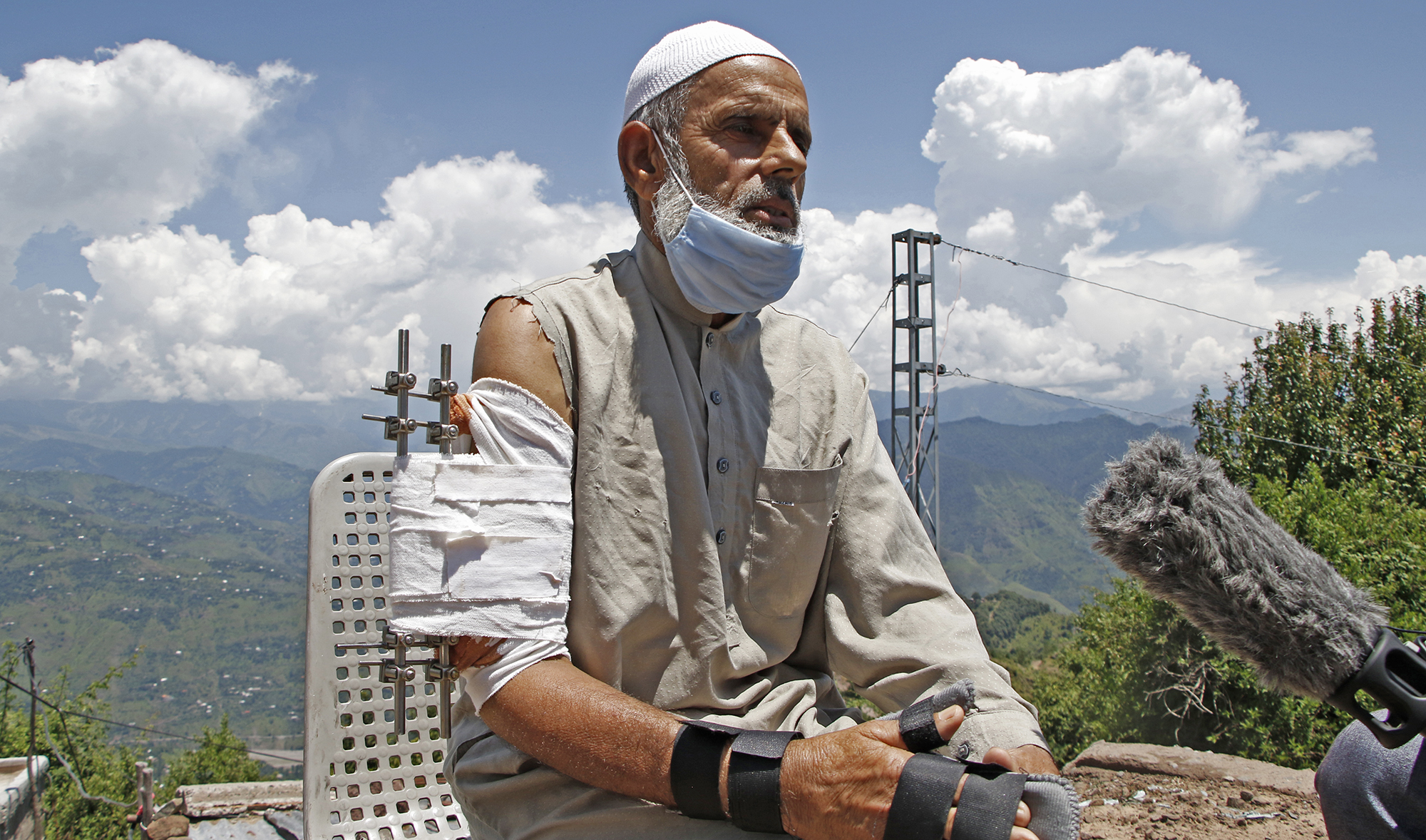
An injured man speaks to media in Chirikot Sector, Pakistan, on July 22, 2020. (AN photo)
Indian and Pakistani troops often exchange mortar and artillery shelling along the Line of Control. The two nations have also fought at least three full-fledged wars over the Himalayan valley.
Both countries claim the region in full, but rule only parts, and often accuse each other of breaching a 2003 cease-fire pact by shelling and firing across the LoC. Both countries deny their side starts the skirmishes on the border.
“India has been using cluster bombs against civilians in Azad Kashmir which is a violation of international treaties,” an army commander escorting journalists in Chirikot said on Wednesday.
India has not yet commented on reports published about Wednesday’s Kashmir visit.
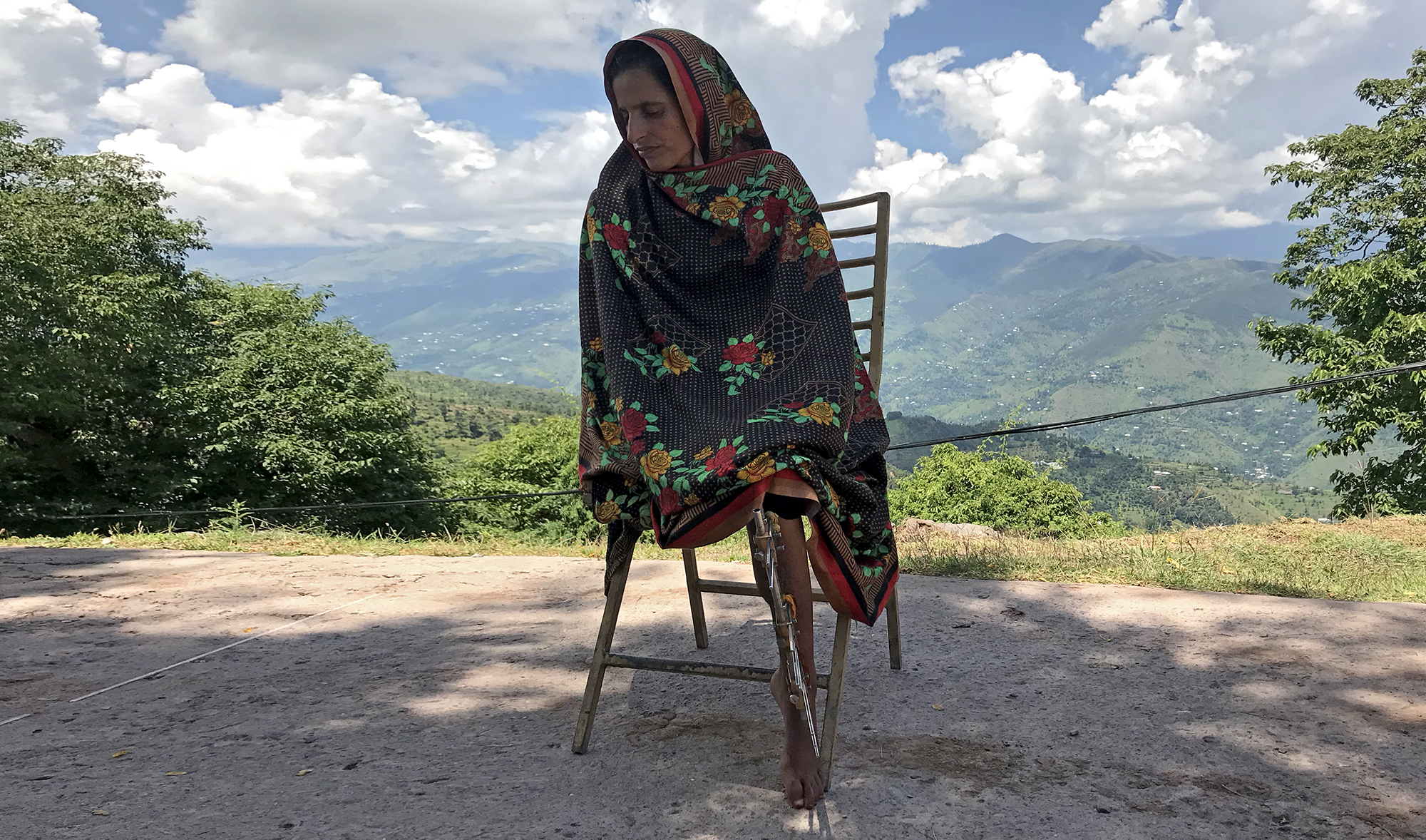
An injured woman poses for a photograph in Chirikot Sector, Pakistan, on July 22, 2020. (AN photo)
Kashmir has long been a flashpoint between the neighbors but tension was renewed after New Delhi withdrew the autonomy of the Himalayan region last August and split it into federally-administered territories. Indian-administered Kashmir has since mostly been under curfew.
Resident Muhammad Shabab, 44, who said he was hit with a bullet each in his left thigh and right shoulder about four months ago, said his grandmother was killed by Indian shelling during the Eid Al-Fitr holiday “when she was putting henna on her hands.”
“They target our women,” he said, urging Indian Prime Minister Narendra Modi to halt the violence and also lift the curfew in Indian-administered Kashmir.
Last month the President of Azad and Jammu Kashmir, the part of Kashmir ruled by Pakistan, said Indian forces had committed over 1,000 cease-fire violations in the current year.
Indian Army data shared with the media in April showed 411 cease-fire violations by Pakistan’s military in March, the highest number in a single month since at least 2018. That compares with 267 violations in March last year recorded by the Indian Army, according to the data.
Maj. Gen. Babar Iftikhar, of the public relations wing of the Pakistan Army, said in April: “(The) Pakistan Army never initiates cease-fire violations along LoC, but it has always responded befittingly to Indian Army’s unprovoked firing.”


