

Explosion hits Iran power plant

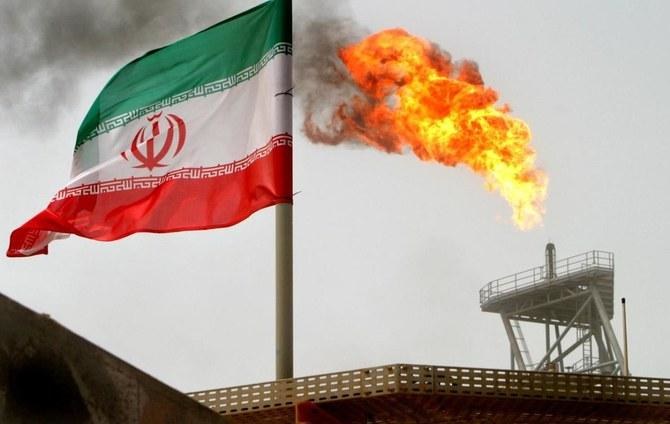
A gas flare on an oil production platform in the Soroush oil fields is seen alongside an Iranian flag in the Gulf, Iran, July 25, 2005. (Reuters)
Short Url
Updated 20 July 2020
Follow

Explosion hits Iran power plant

  • The blast in the Isfahan province was triggered by faulty equipment and caused no casualties, says official
  • Fire breaks out at a cellophane factory in northwest Iran

TEHRAN: An explosion hit a power plant in the central Iranian province of Isfahan Sunday, state news agency IRNA reported, saying it was triggered by faulty equipment and caused no casualties.
The blast was caused by the wear and tear of a transformer at the power plant in Islamabad, the managing director of the Isfahan electricity company told IRNA.
There have been several explosions and fires around Iranian military, nuclear and industrial facilities since late June.
A “worn-out transformer ... at Isfahan’s Islamabad thermal power plant exploded at around 5:00 a.m. today,” the managing director of the power company, Said Mohseni, told the agency.
The facility returned to normal working conditions after about two hours and Isfahan’s power supply was uninterrupted, he added.
A cellophane factory also caught fire on Sunday in the northeastern province of Eastern Azerbaijan, IRNA said.
Two firefighters suffered injuries while battling that blaze, the province’s fire brigade was quoted as saying.
The incidents are the latest in a string of fires and explosions at military and civilian sites across Iran in recent weeks.
Two explosions rocked Tehran in late June, one near a military site and the other in a health center, the latter killing 19 people.
Fires or blasts also hit a shipyard in southern Iran last week, a factory south of Tehran with two dead and the Natanz nuclear complex in central Iran earlier this month.
Iranian authorities called the Natanz fire an accident without elaborating and later said they would not reveal the cause, citing “security reasons.”
The string of fires and explosions have prompted speculation in Iran that they may be the result of sabotage by arch enemy Israel.

SPEEDREAD

There have been several explosions and fires around Iranian military, nuclear and industrial facilities since late June.

The Jewish state accuses the Islamic republic of seeking to acquire a nuclear bomb while Tehran insists its nuclear program is entirely peaceful.
Meanwhile, Iran has halted the execution of three people linked to deadly November protests sparked by a hike in petrol prices, one of the accused’s lawyers told AFP on Sunday.
“We conveyed a request (for a retrial) to the supreme court and they have accepted it. We hope the verdict will be overturned,” Babak Paknia said over the phone.
Iran’s judiciary said last week that a court had upheld the death sentence for the three.
It said evidence had been found on their phones of the three setting alight banks, buses and public buildings in November.
The three are Amirhossein Moradi, 26 and working at a cellphone retailer, Said Tamjidi, a 28-year-old student, and Mohammad Rajabi, also 26.
“We are very hopeful that the verdicts will be overturned ... considering that one of the judges at the supreme court had opposed the verdicts before,” the four lawyers representing the accused said in a statement published by state news agency IRNA.


Battered by Gaza war, Israel’s tech sector in recovery mode

Updated 21 February 2026
Follow

Battered by Gaza war, Israel’s tech sector in recovery mode

  • “High-tech companies had to overcome massive staffing cuts, because 15 to 20 percent of employees, and sometimes more, were called up” to the front as reservists, IIA director Dror Bin told

JERUSALEM: Israel’s vital tech sector, dragged down by the war in Gaza, is showing early signs of recovery, buoyed by a surge in defense innovation and fresh investment momentum.
Cutting-edge technologies represent 17 percent of the country’s GDP, 11.5 percent of jobs and 57 percent of exports, according to the latest available data from the Israel Innovation Authority (IIA), published in September 2025.
But like the rest of the economy, the sector was not spared the knock-on effects of the war, which began in October 2023 and led to staffing shortages and skittishness from would-be backers.
Now, with a ceasefire largely holding in Gaza since October, Israel’s appeal is gradually returning, as illustrated in mid-December, when US chip giant Nvidia announced it would create a massive research and development center in the north that could host up to 10,000 employees.
“Investors are coming to Israel nonstop,” Prime Minister Benjamin Netanyahu said at the time.
After the war, the recovery can’t come soon enough.
“High-tech companies had to overcome massive staffing cuts, because 15 to 20 percent of employees, and sometimes more, were called up” to the front as reservists, IIA director Dror Bin told AFP.
To make matters worse, in late 2023 and 2024, “air traffic, a crucial element of this globalized sector, was suspended, and foreign investors froze everything while waiting to see what would happen,” he added.
The war also sparked a brain drain in Israel.
Between October 2023 and July 2024, about 8,300 employees in advanced technologies left the country for a year or more, according to an IIA report published in April 2025.
The figure represents around 2.1 percent of the sector’s workforce.
The report did not specify how many employees left Israel to work for foreign companies versus Israeli firms based abroad, or how many have since returned to Israel.

- Rise in defense startups -

In 2023, the tech sector far outpaced GDP growth, increasing by 13.7 percent compared to 1.8 percent for GDP.
But the sector’s output stagnated in 2024 and 2025, according to IIA figures.
Industry professionals now believe the industry is turning a corner.
Israeli high-tech companies raised $15.6 billion in private funding in 2025, up from $12.2 billion in 2024, according to preliminary figures published in December by Startup Nation Central (SNC), a non-profit organization that promotes Israeli innovation.
Deep tech — innovation based on major scientific or engineering advances such as artificial intelligence, biotech and quantum computing — returned in 2025 to its pre-2021 levels, according to the IIA.
The year 2021 is considered a historic peak for Israeli tech.
The past two years have also seen a surge in Israeli defense technologies, with the military engaged on several fronts from Lebanon and Syria to Iran, Yemen, Gaza and the occupied West Bank.
Between July 2024 and April 2025, the number of startups in the defense sector nearly doubled, from 160 to 312, according to SNC.
Of the more than 300 emerging companies collaborating with the research and development department of Israel’s defense ministry, “over 130 joined our operations during the war,” Director General Amir Baram said in December.
Until then, the ministry had primarily sourced from Israel’s large defense firms, said Menahem Landau, head of Caveret Ventures, a defense tech investment company.
But he said the war pushed the ministry “to accept products that were not necessarily fully finished and tested, coming from startups.”
“Defense-related technologies have replaced cybersecurity as the most in-demand high-tech sector,” the reserve lieutenant colonel explained.
“Not only in Israel but worldwide, due to the war between Russia and Ukraine and tensions with China.”