India’s major entertainment company to air Pakistani content after more than three years

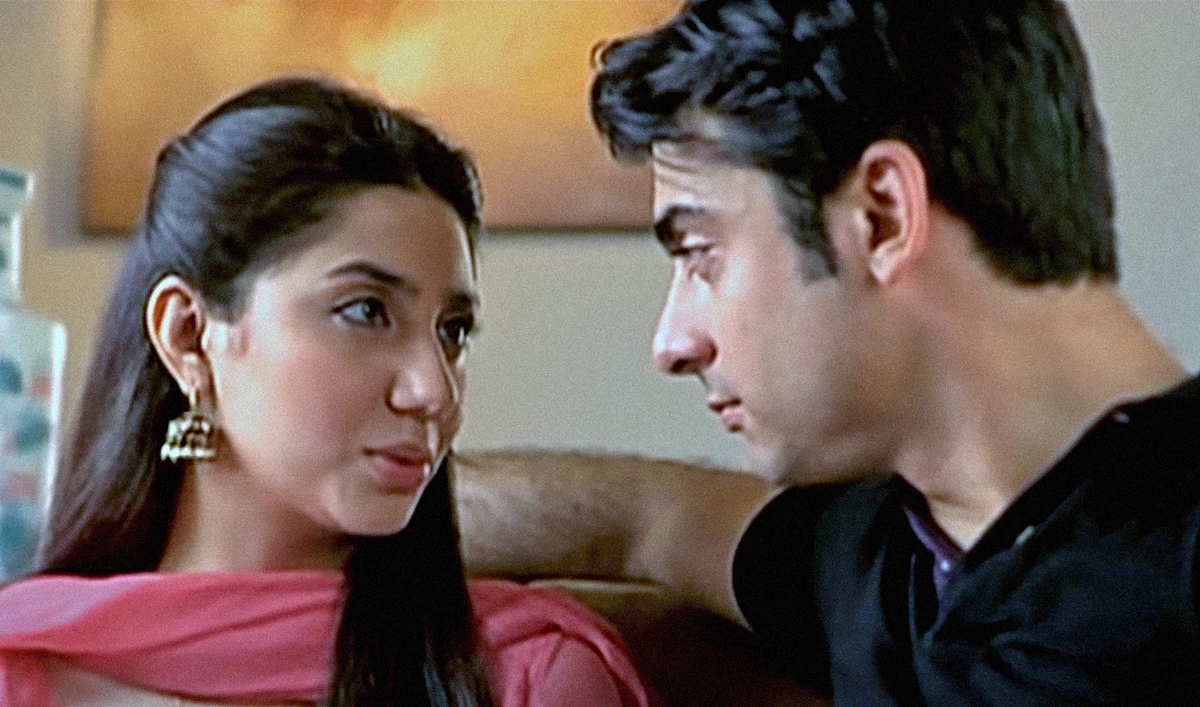
The screen grab shows Pakistani actors Mahira Khan and Fawad Khan during a scene in their hit TV series "Humsafar." India’s Zee Entertainment Enterprise has decided to broadcast Pakistani shows worldwide through Zindagi, a tab available on its digital app Zee5. (Photo courtesy: Hum TV)
Short Url
Updated 19 July 2020
Follow

India’s major entertainment company to air Pakistani content after more than three years

  • ZEE Entertainment had removed Pakistani dramas after 2016 Uri attack in Kashmir
  • ’Art knows no nation, boundary or religion,’ says the organization’s management

KARACHI: After imposing a ban on entertainment content from Pakistan in the wake of an attack in the disputed Himalayan territory of Kashmir in September 2016, India’s Zee Entertainment Enterprise has decided to broadcast Pakistani shows worldwide through Zindagi, a tab available on its digital app Zee5.
Designed to target the South Asian diaspora across the globe, Zindagi will not only feature Pakistani content that primarily served the country’s local market but also roll out fresh shows by engaging Pakistani producers, directors and actors.

Pakistani film and TV star Imran Abbas welcomes India’s Zee TV Entertainment’s decision to broadcast Pakistani shows.

Five such original programs for the users of the online platform are almost ready and will be available in the next few months
Before introducing it through its digital platform, Zee also managed a television channel by the name of Zee Zindagi that was launched in June 2014. The channel ran quite a few Pakistani dramas and made Mahira Khan and Fawad Khan major celebrities in India. Following the Uri attack in Indian-administered Kashmir, however, Zindagi removed all Pakistani shows from its line-up.
Momina Duraid, the creative head of Hum Network Television, expressed excitement over the development while talking to Arab News on Friday.
“It is a proud moment not only for Hum TV but also for Pakistan that our programs are going to be watched by a much larger audience worldwide,” she said. “It is definitely a win for our cultural values and norms as the entertainment industry is the most vital tool to present and sometimes elevate the status of a society.”
Duraid further said that Hum TV had sold its content to Zee’s digital platform for a number of years under internationally recognized procedures. The content included drama serials that had already been aired in Pakistan. However, she confirmed that her channel was not developing original content for Zindagi at present.
Announcing the development, Amit Goenka, who manages Zee5, said: “Zee’s strength has always been its ability to narrate unique stories, to connect with billions of audiences worldwide, and to offer different genres of content. Zindagi has always been appreciated for its premium content offering and culturally rich stories from across the globe, which are far more attuned to the digital audience sensibilities.”
He added that his organization’s digital platform would live up to its legacy of projecting multicultural narratives and, by doing that, reflect its belief that “art knows no nation, boundary, or religion.”
Pakistan warns citizens in Iran to keep travel documents ready amid intensifying protests

Updated 6 sec ago
Follow

Pakistan warns citizens in Iran to keep travel documents ready amid intensifying protests

  • Iranian universities reschedule exams, allow foreign students to leave the country for one month
  • Donald Trump pledges support for Iranian protesters as ‘activists’ report more than 2,500 deaths

ISLAMABAD: Pakistan’s top diplomat to Iran on Tuesday urged Pakistani nationals to keep their travel documents handy and advised students to plan ahead after Iranian universities rescheduled examinations to allow international students to leave, as weeks-long nationwide protests further intensified.

Iran has been gripped by protests since late December after shopkeepers in Tehran’s Grand Bazaar shut their businesses to protest worsening economic conditions, triggered by the Iranian rial plunging to record lows against the US dollar.

The demonstrations quickly spread beyond the capital, with unrest reported in most of the country’s 31 provinces and involving traders, students and other groups.

Authorities have responded with arrests, use of force and Internet and mobile network disruptions, which rights groups say are aimed at curbing coordination and limiting coverage of the protests.

At least 100 Pakistani citizens, including students and pilgrims, have returned home through the Pakistan-Iran border in the southwestern province of Balochistan, a Pakistani official told Arab News on Tuesday, though many are still believed to be in the neighboring state.

“I urge all Pakistani citizens in Iran to keep their travel documents, particularly immigration-related documents such as passport and ID cards, readily available with them,” Ambassador Mudassir Tipu said in a post on X. “Those who have expired documents, or their documents are not in their possession, they may kindly urgently approach us for timely and expeditious assistance.”

In a separate post, he said Iranian universities had rescheduled examinations and allowed international students to leave the country for one month, advising Pakistani students to make their plans accordingly.

On Jan. 1, Pakistan advised its citizens to avoid traveling to Iran, citing safety concerns linked to the protests. The Pakistani embassy in Tehran also set up a crisis management unit to provide round-the-clock assistance to citizens.

Iran eased some restrictions on Tuesday, allowing international phone calls via mobile networks for the first time in days, but maintained limits on Internet access and text messaging as the death toll from the protests rose to at least 2,571 people, according to the Associated Press that quoted “activists.”

In a message on Truth Social, US President Donald Trump urged Iranian protesters to continue their anti-government demonstrations, saying “help is on its way,” without providing details. Shortly afterward, Ali Larijani, secretary of Iran’s Supreme National Security Council, accused the United States and Israel of responsibility for the deaths of Iranian civilians.

Iranian state television said officials would hold funerals on Wednesday for “martyrs and security defenders” killed during the unrest, which has intensified over the past week.