- Head of force says volunteers filling “human resource shortage” in government departments, will be “utilized whenever and wherever needed”
- Opposition politicians say the ruling PTI government is leveraging country’s huge youth population for “political gains”
ISLAMABAD: A one-million-strong task force of young volunteers set up to facilitate official coronavirus relief efforts has been put to work in aid of multiple other Pakistan government departments, the prime minister’s special adviser on youth affairs said, causing opposition figures to question if the ruling Pakistan Tehreek-i-Insaf party was leveraging the country’s youth for “political gains.”
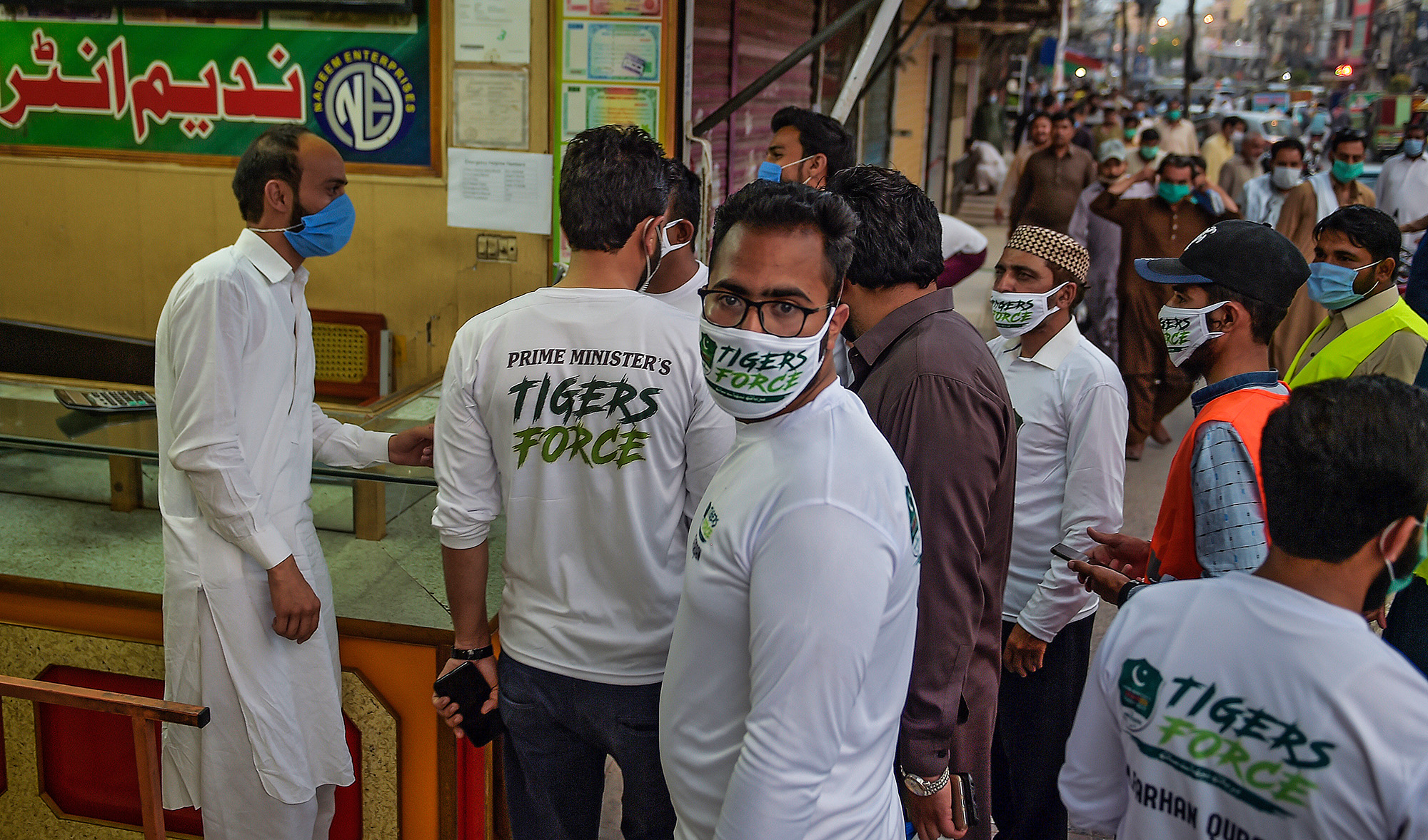
On March 27, a month after Pakistan confirmed its first coronavirus case, Prime Minister Imran Khan said he was setting up the ‘Prime Minister’s COVID-19 Relief Tigers Force,’ popularly known as the Tiger Force, which would enlist young volunteers from across the country to help combat coronavirus.
But Arab News interviews with the head of the Tiger Force as well as opposition politicians have revealed that the scope of the force has been widened since it was formed and volunteers are now helping with various other government projects. These include a tree plantation drive and a waste management project and Pakistan’s fight against the country’s worst locust invasion in over 25 years.
“We have a human resource shortage [in government departments] … these volunteers are helping to fill the gap,” Muhammad Usman Dar, the PM’s special assistant on youth affairs, who also heads the Tiger Force, told Arab News in a phone interview on Tuesday night. “This additional human resource will be utilized whenever and wherever needed.”
He said the volunteers, which included men and women, a majority of them young salaried professions and students, had registered through a government app, and were working in different areas around the country in coordination with local administrations. The initiative, he said, was “giving a platform to them [volunteers] to bring positive change in their areas.”
Dar said in the last three and a half months, around 350,000 volunteers out of a million had “actively participated in different relief activities,” insisting that no taxpayer money had been spent on the project.
The volunteers have helped district administrations implement coronavirus standard operating procedures like social distancing in mosques and public places, distributed food and other essentials among the poor and ensured that ‘smart lockdowns’ in coronavirus hotspots were followed, Dar said.
“We are now going to start the next phase of the tiger force … the youth will now be taking part in the plantation drive,” he added, saying the prime minister would soon launch a countrywide drive to plant millions of new trees with the help of Tiger Force volunteers. He said volunteers would also work with local officials to ensure solid waste management.
On June 5, PM Khan told Tiger Force volunteers in a televised address that he wanted them to assist the government in tackling climate change and battling locusts, in addition to coronavirus relief efforts.
“We will ask you to collaborate with the administration on how to help those areas that have been affected [by locusts],” Khan said, adding that the volunteers also needed to aid in the “huge threat from climate change.”
Opposition politicians have cried foul, saying the task force was formed by the ruling Pakistan Tehreek-i-Insaf government to leverage and mobilize the country’s huge young population for “political gains.” Currently, 64 percent of the nation’s population is younger than 30, and 29 percent of Pakistanis are between 15 and 29, according to UNDP figures.
“Majority of the volunteers are untrained youth and they are doing nothing but harassing doctors and paramedics in health facilities,” Sehar Kamran, a politician from the opposition Pakistan Peoples Party, told Arab News. She said interference by the “so-called volunteers” was hindering the work of district administrations, which the head of the task force denies.
In April, Pakistani media reported that police had arrested two men in the city of Faisalabad for collecting ID card details and other private information from citizens while impersonating members of the Tiger Force. In Taxila in June, police arrested a member of the Tiger Force for allegedly asking for bribes from shop owners who were violating coronavirus lockdown rules.
Mushahidullah Khan, a senator representing the Pakistan Muslim League-Nawaz opposition party, also raised questions about the “scoop” of the force and said he doubted government claims that no public funds were used to set up and run the task force.
“A large team was engaged in the prime minister office to recruit the volunteers … and this definitely required billions of rupees to complete the task,” he told Arab News.
Dar, however, said such comments hurt the morale of the country’s youth and said all volunteers worked pro bono and had to follow a code of conduct.
“The law will take its course if anyone of them is found involved in any illegal activity … their membership [from the Tiger Force] will be revoked,” Dar said.
Political analysts say the government needs to properly train the force to effectively employ it for grassroots work.
“I think the volunteer force plan was rolled out without any proper homework, and that’s why the government is now thinking to engage them in multiple tasks,” said Ahmed Bilal Mehboob, president of the Pakistan Institute of Legislative Development and Transparency. “They are the strength of the government at the grassroots level, but the challenge is to train them for effective social work with some financial incentives.”