LONDON: Even the most cursory of web searches for Lawrence Abu Hamdan yields results dominated by the 2019 Turner Prize. After all, Abu Hamdan and his fellow nominees Helen Cammock, Oscar Murillo and Tai Shani made history when they asked to share the famed arts prize as a collective. The move raised the profile of all four artists, garnering headlines around the world and making them the talk of the art scene.
But to focus entirely on Abu Hamdan’s Turner Prize work is to do him a disservice. Though his award-winning work on Saydnaya — based around interviews with former detainees of the brutal Syrian prison — has become his highest-profile project (and one that has raised international awareness of human rights violations), his career has seen him amass a substantial portfolio of fascinating exhibitions.
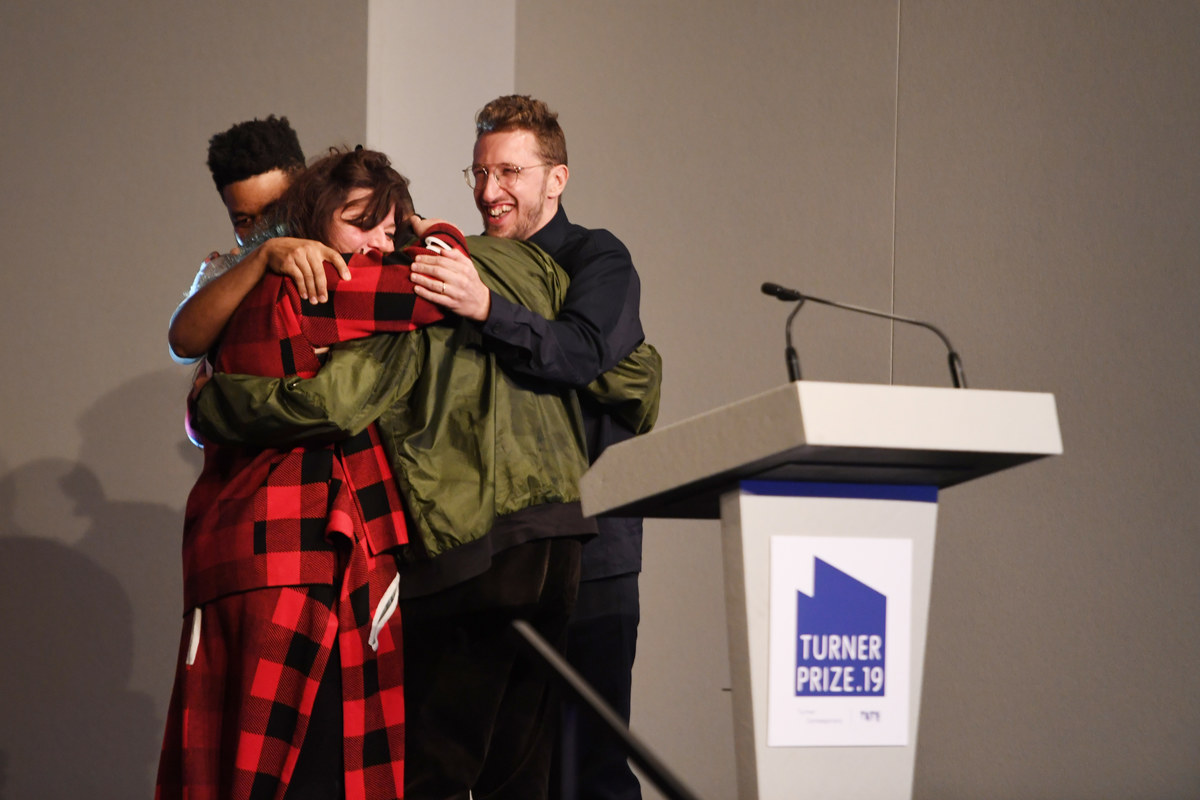
Abu Hamdan shared the Turner Prize with four other nominees for the first time in history. (Getty)
Jameel Arts Centre in Dubai is currently exhibiting Abu Hamdan’s 2017 work “This Whole Time There Were No Landmines” in one of the venue’s Artist Rooms until January 3. Featuring mobile-phone footage and audio recordings from 2011, the work documents the moments when the ‘shouting valley’ — a part of Syria’s Golan Heights that was annexed by Israel in 1967 and which draws divided families to the area to shout messages across the border — saw 150 Palestinian protestors forcibly exercise their right to return during the Arab Spring.
“My whole work has been about the relationship between sound and borders, in many different ways, be those walls, or national borders, and so on,” Abu Hamdan tells Arab News. “And an interest in sound as something that escapes the ways in which we’ve defined and carved up private space, national space, or the world, according to borders.
“It was interesting that this was where the border was, in fact, breached,” he continues. “And what is also incredible is that those same voices that had been shouting to each other all these years, as a means to manifest the division and protest against it, they were the ones on that day who were shouting for the protesters to stop. They were shouting that there were landmines.”

Saydnaya - Ray Tracing. (Supplied)
As the title of the work suggests, it turns out that, in fact, there were not any landmines.
“The voices had always been the thing that could cross the border,” Abu Hamdan continues. “But on that day they were doing everything to maintain the border, to stop it being destroyed.”
It’s no surprise that an artist who describes himself as a ‘Private Ear’ talks with infectious enthusiasm about such varying ways of relating to sound.
“It’s important to me to find a way to try and articulate that moment, and to somehow archive it — but not in ways that it has been spoken about; using the language of art to explore and historicize events by other aesthetic means.”
Part of this involves exploring how memory of sound differs from other methods of recollection. In Abu Hamdan’s “Earwitness Inventory” work, he showcases 95 custom-designed objects derived from legal cases in which acoustic memories have played a significant role.
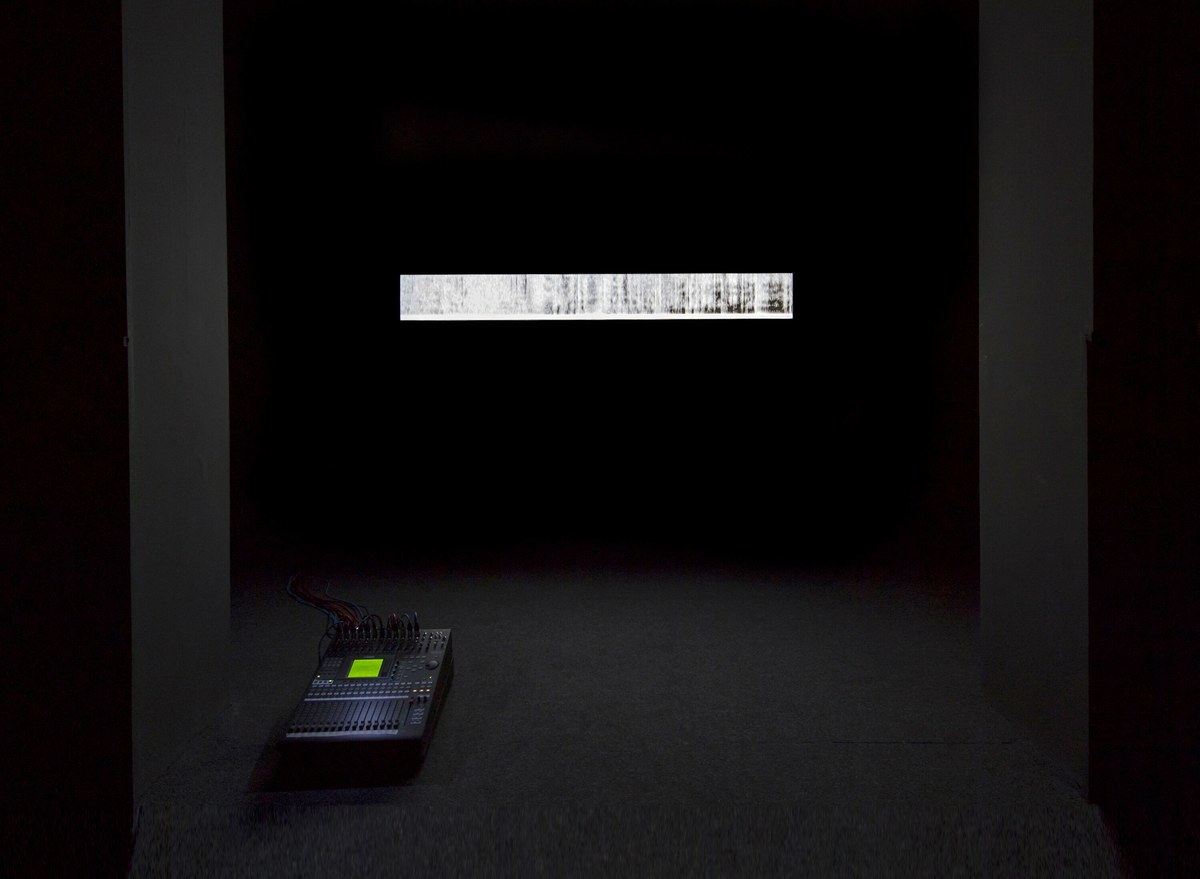
Saydnaya - The missing 19db. (Supplied)
“When people describe eyewitness events, what they see is often described in exactly the terms it came to them at the time. With sound, you start to have this strange kind of lag; you have objects standing in place for things which are not seen — what they thought they heard before they knew what they heard. It’s been a fascinating exploration of the way that sound is committed to memory.”
Perhaps one of the best examples of this exploration is Abu Hamdan’s work on Saydnaya. The Turner Prize-winning project has earned plenty of international plaudits, but it has also had an incredible impact on the artist himself. Abu Hamdan was asked by Amnesty International, through research agency Forensic Architecture (with whom he has worked many times) to learn more about the brutal prison via acoustic recollection.
“(The prisoners) were held in dark conditions, or blindfolded as they moved in and out, or they stayed in a cell for the whole period of their incarceration,” he explains. “They were only really hearing what was going on outside the four walls of their cell.
“It was a huge thing to be involved with, but on a more personal level the reason why I have dedicated so much of my time to this subsequently is that it taught me so much — about the relation of sound to violence, of sound to architecture, or the specific relations of deprivation and the human voice. And it taught me so much about silence. If we listen carefully to what those people had to say, we could understand something more fundamental about the way in which power is exerted and the way in which violence is performed more broadly in the acoustic spectrum.”
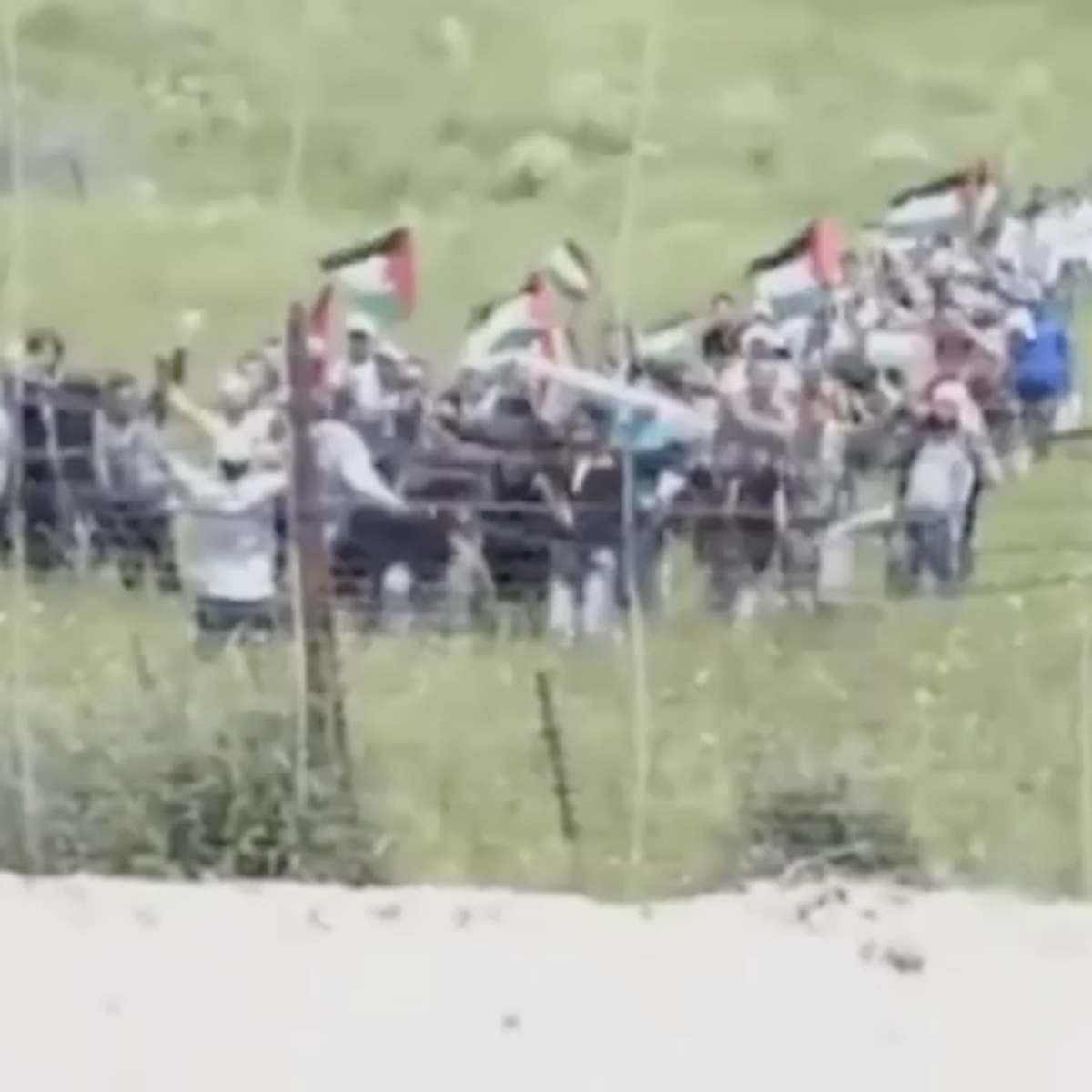
Lawrence Abu Hamdan, This whole time there were no landmines, 2017, 1:1 video loops on eight monitors, colour and sound. (Art Jameel Collection. Still image courtesy of the artist.)
The revelations that resulted from the Saydnaya work have, in his own words, changed Abu Hamdan’s brain. Subsequent projects, he explains, are not necessarily about Saydnaya, but are trying to be lessons from Saydnaya “in the sense that I tried to distill what they taught me about fundamental things — private space, human voice, memory, architecture — and show how they changed my way of thinking about these things. I had to find a way of communicating that and reflecting on that.”
Abu Hamdan talks about his work, and about his relationship with sound, as part of a life-long journey. And although, perhaps counterintuitively, he doesn’t describe himself as a good listener, he talks with great enthusiasm about sonic imagination, a gift he has refined through early memories of his parents’ code-switching (adapting the way they spoke to different audiences) and forays into the DIY music scene (Abu Hamdan includes music from his 2004 London-based band, Cleckhuddersfax, on his website as a part of his acoustic journey — despite admitting that he doesn’t like listening to it).
“You think sound, and you think about the word through sound,” he says. “And I think you are more willing to ask questions about people’s relationship to that as a kind of perception.
Right now, Abu Hamdan is embarking on a new body of work to do with reincarnation. His father is Druze Lebanese, so it is a subject he has always been aware of, but it has come to dominate his work of late.
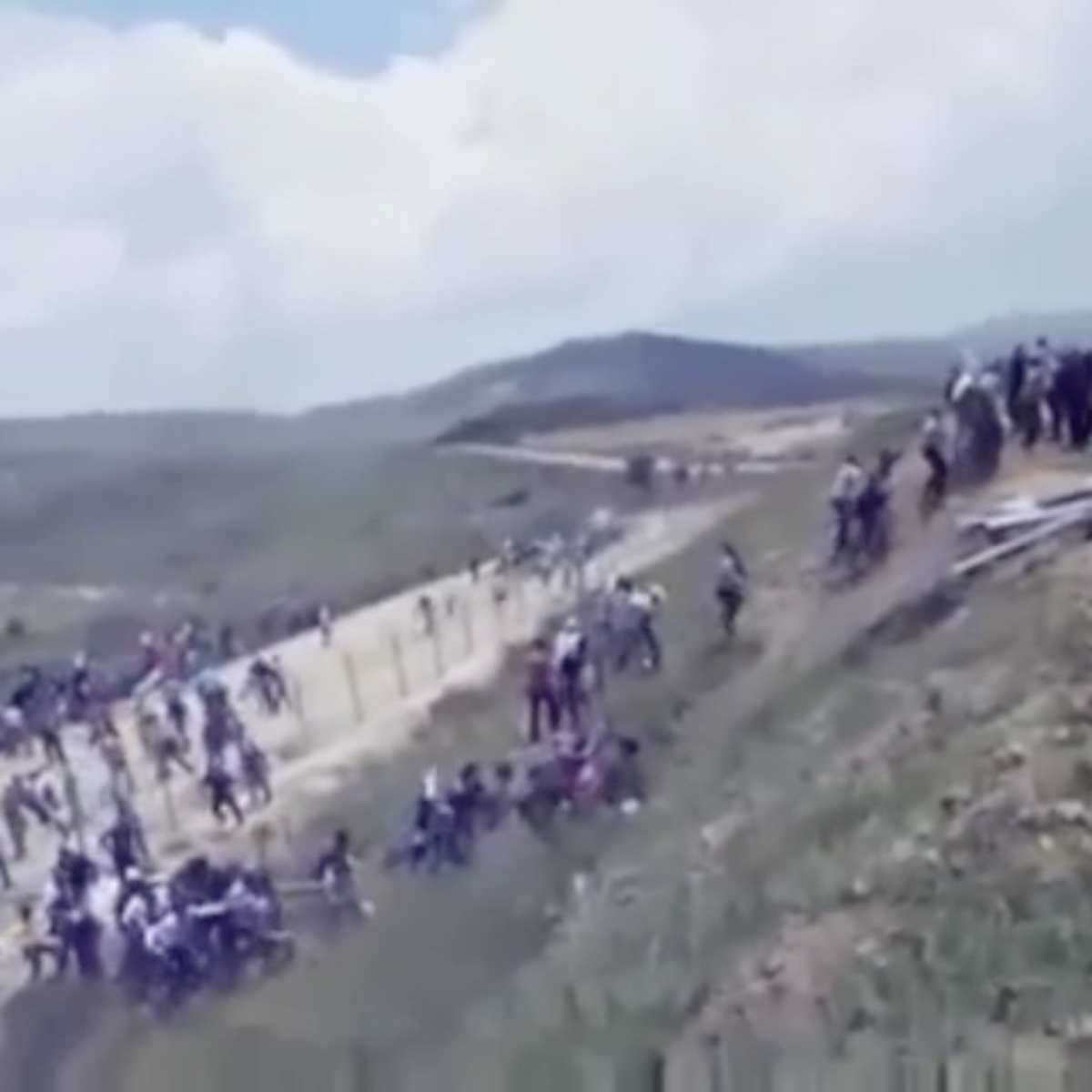
Lawrence Abu Hamdan, This whole time there were no land mines, 2017, 1:1 video loops on eight monitors, color and sound. (Courtesy of the artist and mor charpentier. Photo coutesy of Takeshi Sugiura)
“I made the first (piece) in a body of work, which made me understand that it really is a body of work, because a lot was learned from it, once again, and there’s a lot to say,” he explains. “The first time I showed it was in the Sharjah Biennial, it was commissioned by them last year, and a second part of that will be developed for a show next year in the Bonniers Konsthall in Stockholm.”
And despite the fact that he has amassed an impressive collection of works throughout a career that shows no signs of slowing down, Abu Hamdan doesn’t mind revisiting the moment that many will know him for, and the one that dominates his Google results: that collective acceptance of the Turner Prize.
“We didn’t feel comfortable with the idea that people are going to the show looking for a winner, rather than looking at the works. We took the decision to re-center the work, It’s one of the proudest things I have in my career,” he says. “The moment we did that was one of the happiest memories I have. I think anyone who saw the show and saw the works would understand exactly why we did that.
“Perhaps the way (the story) has circulated was not so much about the work, but rather about our decision. But that’s also fine. I mean, we knew it was kind of a spectacular moment, and we wanted to create that,” he continues. “There are very few moments in contemporary art which interface with popular culture as much as the Turner Prize. So it was really important that we were able to make a statement with it, in a way.”