THE HAGUE: Member countries of the global chemical weapons watchdog voted overwhelmingly Thursday to take action on a probe that explicitly blamed Syria for nerve gas attacks for the first time, diplomats said.
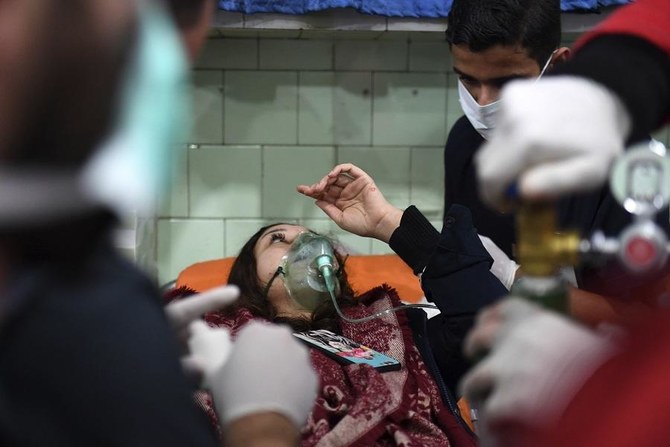
The report in April by a new investigations team at the Organization for the Prohibition of Chemical Weapons (OPCW) found the Syrian air force used sarin gas and chlorine on the village of Lataminah in March 2017.
Only Russia, China and Iran voted against the decision at the OPCW’s executive council — its decision-making body comprising 41 of its 193 member states — accusing Syria of breaching the Chemical Weapons Convention.
British ambassador Peter Wilson tweeted that countries had voted to “take action on the IIT (Investigation and Identification Team) report” calling it a “resounding majority vote for an end to CW (chemical weapons) use.”
The motion, proposed by France, called for Syria to “rectify the situation” and asked the head of the OPCW to report back on the matter, French ambassador Luis Vassy said in a speech to the council this week.
It also referred the situation to the annual meeting of all member countries in November with “recommendations for measures which could be taken... in the event of lack of redress.”
The motion was passed by 29 votes, with three against and nine abstentions.
The first ever report by the OPCW’s new investigations team found that two Syrian fighter jets dropped bombs containing the nerve agent sarin on Lataminah and that a helicopter dropped a barrel bomb full of chlorine on the village.
The team was set up in 2018 under Western pressure to identify the perpetrators of attacks. Previously the watchdog could only say whether attacks had been carried out, and not who was responsible.
OPCW chief Fernando Arias said earlier this week that the team is investigating further incidents in Syria.
Damascus and its backer Moscow have dismissed the probe’s conclusions, alleged that chemical weapons attacks were faked, and accused Western powers of politicizing the OPCW, which won the Nobel Peace Prize in 2013.
Syria has continued to deny the use of chemical weapons and insists it has handed over its weapons stockpiles under a 2013 agreement, prompted by a suspected sarin attack that killed 1,400 in the Damascus suburb of Ghouta.


![]()

Syria condemned at toxic arms watchdog over sarin attacks
Syria condemned at toxic arms watchdog over sarin attacks
Latest updates


© 2026 SAUDI RESEARCH & PUBLISHING COMPANY, All Rights Reserved And subject to Terms of Use Agreement.