

KSRelief distributes 50 tons of dates in Pakistan

Dr. Khalid Muhammad Al-Othmani, Director KSRelief Pakistan, and Aon Abbas Buppi, Managing Director Pakistan Bait-ul-Mal, are signing a Memorandum of Understanding in Islamabad for the distribution of 36 tons of dates provided by the Saudi relief agency on July 2, 2020. (Photo courtesy: KSRelief)
Short Url
Updated 02 July 2020
Follow

KSRelief distributes 50 tons of dates in Pakistan

  • Pakistan Bait-ul-Mal has signed a Memorandum of Understanding with KSRelief as distribution partner
  • Top Bait-ul-Mal official applauds Saudi government for distributing relief items among needy Pakistanis during the COVID-19 pandemic

ISLAMABAD: The King Salman Humanitarian Aid and Relief Center (KSRelief) has launched a project to distribute 50 tons of dates among Pakistan’s underprivileged social segments, the Saudi humanitarian agency said in a statement on Thursday.

The organization has signed a Memorandum of Understanding (MoU) with the Pakistan Bait-ul-Mal that will distribute 36 tons of the commodity. The rest of the 14 tons will be shared with deserving families and people by the Saudi relief agency that will send out its teams to different parts of the country for the purpose.

“Dr. Khalid Muhammad Al-Othmani, Director KSrelief Pakistan, handed over 36 tons of dates to Aon Abbas Buppi, Managing Director of Pakistan Bait-ul-Mal, for distribution among deserving people of Kashmore (Sindh), Dera Bugti (Balochistan) and Wana (Waziristan) in Pakistan,” the statement said.

KSRelief provides humanitarian and development aid to more than 47 countries over four continents. With international, regional and local partners in place in these states, the Saudi organization has delivered assistance to millions of beneficiaries worldwide.

Pakistan is the fifth-largest recipient of aid from KSRelief and has received $120.14 million in aid since 2005.

Managing Director of Pakistan Bait-ul-Mal Aon Abbas Buppi thanked the Saudi authorities for remembering its Pakistani brothers and sisters during the ongoing coronavirus pandemic.
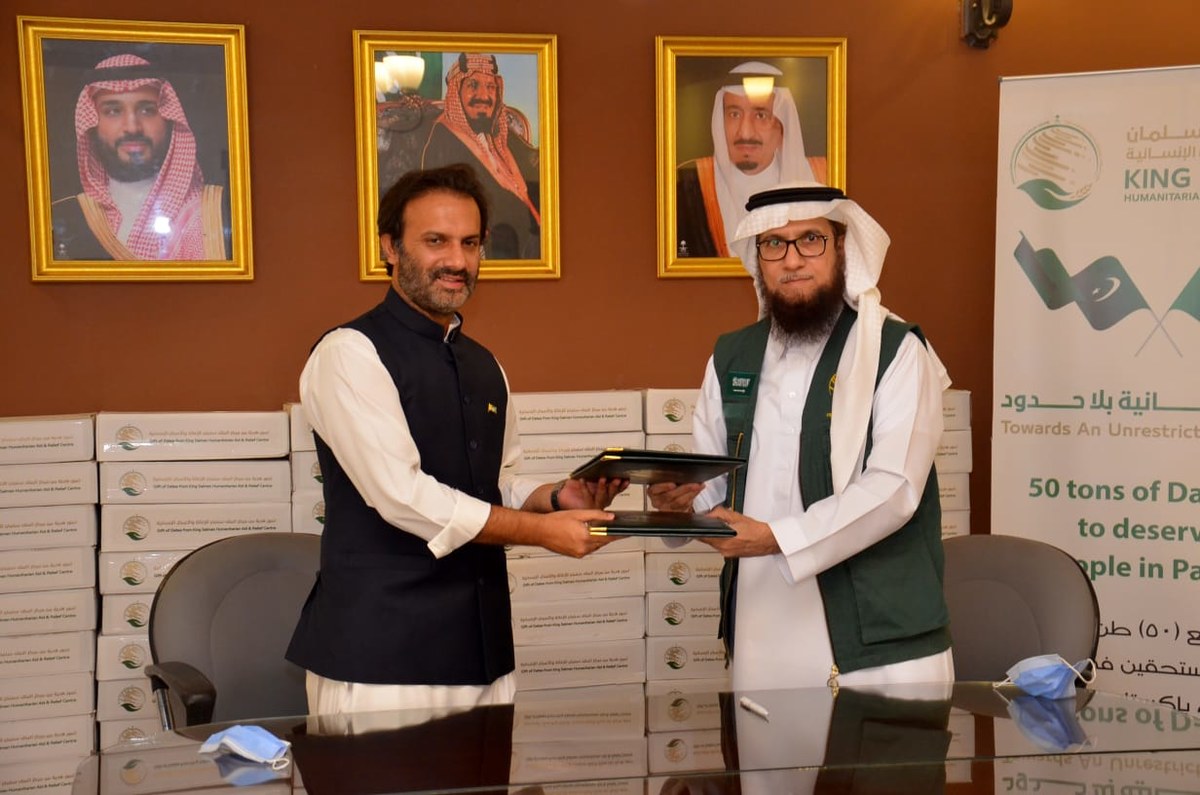


Dr. Khalid Muhammad Al-Othmani, Director KSRelief Pakistan, and Aon Abbas Buppi, Managing Director Pakistan Bait-ul-Mal, are signing a Memorandum of Understanding in Islamabad for the distribution of 36 tons of dates provided by the Saudi relief agency on July 2, 2020. (Photo courtesy: KSRelief)

“I am highly grateful to KSRelief for today’s MoU through which they have handed over to us 36 tons of dates. We are the implementation partners of KSRelief. These dates will be distributed in three of the poorest districts of Sindh, Balochistan and Khyber Pakhtunkhwa,” he told Arab News, adding that the Saudi gift meant a lot since it came during one of the toughest periods of human history.

“The Saudi government through its welfare organization has kept on providing relief items to needy Pakistanis even during the pandemic. It had earlier distributed 20,000 food bags in Punjab during the lockdown phase which was commendable,” he added.
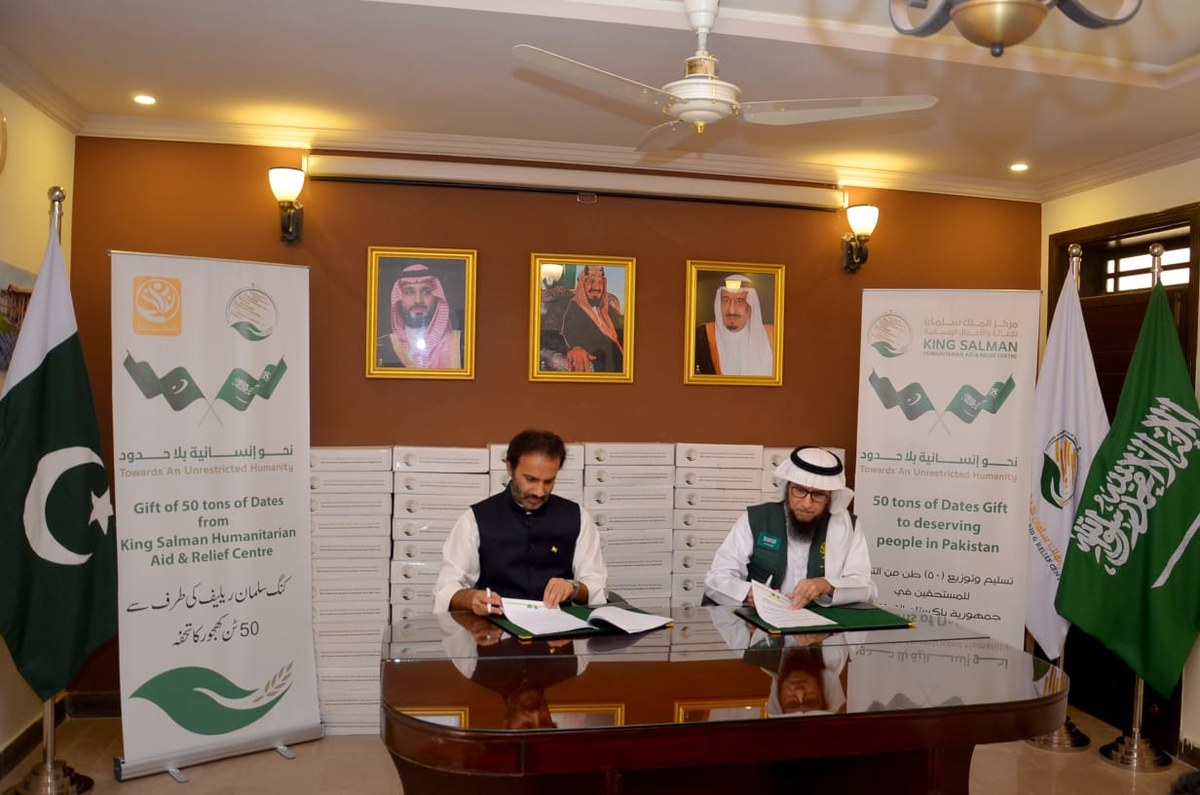


Dr. Khalid Muhammad Al-Othmani, Director KSRelief Pakistan, and Aon Abbas Buppi, Managing Director Pakistan Bait-ul-Mal, have signed a Memorandum of Understanding in Islamabad for the distribution of 36 tons of dates provided by the Saudi relief agency on July 2, 2020. (Photo courtesy: KSrelief)

Buppi hoped the cooperation between both official relief organizations was going to strengthen in the future.

“I am hopeful that this cooperation between Bait-ul-Mal and KSRelief will continue in the future as well. While government-to-government cooperation is important between the two countries, the cooperation between two official welfare organizations can have significant, positive and direct impact on public lives,” he said, adding that KSRelief had been working with the Pakistan Bait-ul-Mal for the last several years.

“Last year, we worked together in Kashmir on different relief projects. One of them entailed distribution of food bags to poor families. We are also going to launch another joint relief project in South Waziristan soon,” Buppi said.


Pakistan seeks operationalization of World Bank’s $20 billion framework to advance reform priorities

Updated 25 February 2026
Follow

Pakistan seeks operationalization of World Bank’s $20 billion framework to advance reform priorities

  • Pakistan’s finance chief meets World Bank Country Director Bolormaa Amgaabazar in the capital
  • The Bank’s 10-year Country Partnership Agreement for Pakistan was approved in January last year

ISLAMABAD: Pakistan’s Finance Minister Muhammad Aurangzeb on Wednesday called for the operationalization of the World Bank Country Partnership Framework (CPF) to advance the government’s key reform priorities during a meeting with the Bank’s country director, according to a statement.

The Bank’s Board of Directors approved a 10-year CPF deal with Pakistan, indicating $20 billion in financing for Pakistan under the framework. The amount will include public and private financing from the World Bank Group, with roughly half expected to come from private-sector operations led by the International Finance Corporation (IFC).

“The Finance Minister emphasized the importance of effective operationalization of the CPF, particularly in priority areas such as population management and climate change,” the finance ministry said in a statement after Aurangzeb’s meeting with the Bank’s Country Director Bolormaa Amgaabazar.

“He underscored the need for strong coordination between federal and provincial governments to ensure coherence in policy design and implementation.”

Discussions focused on population, human capital development, climate resilience, agricultural reform and energy sector sustainability, it added.

The ministry said both sides exchanged views on enhancing institutional coordination, improving transparency in project design and strengthening monitoring mechanisms to deliver intended outcomes. It highlighted that the World Bank expressed readiness to continue supporting agricultural transformation efforts in collaboration with the IFC.

“Both sides agreed to continue technical-level engagements to explore feasible solutions in line with Pakistan’s reform agenda and fiscal framework,” the finance ministry added.

Climate resilience and population control are major concerns for policymakers in Pakistan, a country whose population exceeds 241 million, making it the world’s sixth-most populous country. Limited infrastructure, health care, and educational opportunities place added strain on public services, contributing to unemployment and poverty.

The South Asian nation is also among the countries most affected by climate change. Unusually heavy monsoon rains in 2022 killed more than 1,700 people and caused over $30 billion in damages. Torrential rains and floods since late June last year have claimed more than 1,000 lives, as authorities continue surveys to assess the full extent of the destruction.