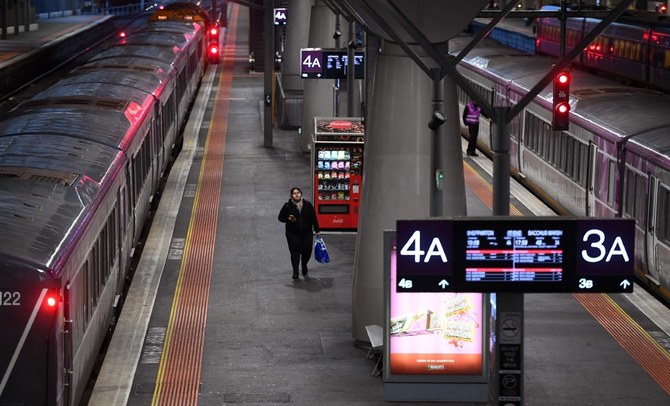
MELBOURNE: Authorities will lock down around 300,000 people in suburbs north of Melbourne for a month from late on Wednesday to contain the risk of infection after two weeks of double-digit rises in new coronavirus cases in Australia’s second most populous state.
Australia has fared better than many countries in the pandemic, with around 7,830 cases and 104 deaths, but the recent surge has stoked fears of a second wave of COVID-19, echoing concerns expressed in other countries.
Globally, coronavirus cases exceeded 10 million on Sunday, a major milestone in the spread of a disease that has killed more than half a million people in seven months.
From midnight, more than 30 suburbs in Australia’s second-biggest city will return to stage three restrictions, the third-strictest level in curbs to control the pandemic. That means residents will be confined to home except for grocery shopping, health appointments, work or caregiving, and exercise.
The restrictions will be accompanied by a testing blitz that authorities hope will extend to half the population of the area affected, and for which borders will be patrolled, authorities said. The measures come as curbs ease across the rest of the state of Victoria, with restaurants, gyms and cinemas reopening in recent weeks.
Victoria recorded 73 fresh cases on Tuesday from 20,682 tests, following an increase of 75 cases on Monday. State premier Daniel Andrews warned on Wednesday that the return of broader restrictions across city remained a possibility.
“If we all stick together these next four weeks, we can regain control of that community transmission ... across metropolitan Melbourne,” Andrews said at a briefing. “Ultimately if I didn’t shut down those postcodes I’d be shutting down all postcodes. We want to avoid that.”
Victoria’s spike in cases has been linked to staff members at hotels housing returned travelers for which quarantine protocols were not strictly followed. Victorian state authorities have announced an investigation into the matter.
Some other Australian states and territories are preparing to open borders, but applying limits and quarantine measures to citizens of Victoria as the school holiday season gets under way.
South Australia, the country’s fifth most populous state, has had just three new cases in the past month. But citing the spike in coronavirus infections, on Tuesday it canceled its scheduled reopening to other parts of the nation.
New South Wales (NSW), Australia’s most populous state, has stopped short of closing its borders to all Victorians, but those holidaying from hotspot areas — not permitted under NSW rules — can be handed a fine of A$11,000 ($7,596) or jailed if they are detected, state authorities said.
The delays reopening internal borders cast doubts over a federal plan to set up “travel bubble” with neighboring New Zealand that would allow movement between the two countries.


![]()

Australia to lock down 300,000 in Melbourne suburbs after coronavirus spike
Short Url
https://arab.news/cwjtq
Australia to lock down 300,000 in Melbourne suburbs after coronavirus spike
- Recent surge has stoked fears of a second wave of COVID-19
- Lockdown restrictions will be accompanied by a testing blitz


Latest updates




© 2026 SAUDI RESEARCH & PUBLISHING COMPANY, All Rights Reserved And subject to Terms of Use Agreement.