Pakistan resumes Arabic dubbing of two TV shows for cultural project with Riyadh

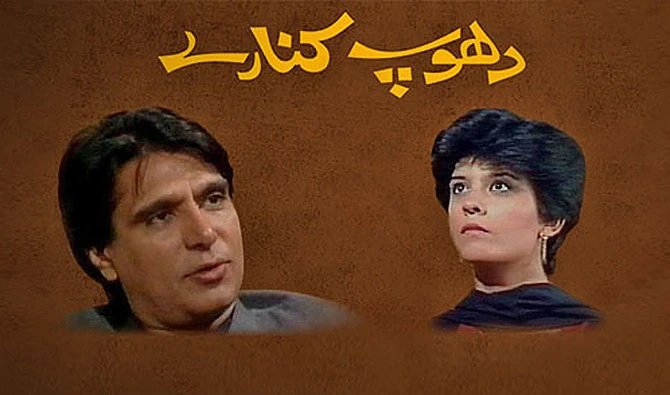
Screenshot of popular 1987 Pakistani television series “Dhoop Kinare,” which Pakistan's state television is subtitling in Arabic in preparation for its broadcast in Saudi Arabia. (Photo courtesy: social media)
Short Url
Updated 24 June 2020
Follow

Pakistan resumes Arabic dubbing of two TV shows for cultural project with Riyadh

  • Work on drama serials Tanhaiyan and Aahat had been put on hold due to budgetary constraints
  • Was initiated by former Information Minister Fawad Chaudhry who floated the idea to Saudi officials last year

KARACHI: Pakistan Television Corporation (PTV) has resumed the Arabic dubbing of two Urdu drama serials as part of a cultural exchange program initiated between Islamabad and Riyadh last year, Pakistan’s information minister said on Tuesday.

It follows former information minister Fawad Chaudhry’s visit to the Saudi capital last year wherein he had announced Islamabad’s plans to exports its television series to the Kingdom soon.

Three serials have since been selected for dubbing, namely Dhoop Kinare, Tanhaiyan and Aahat, with PTV officials citing delays in the dubbing process of the latter two due to budget constraints. The Arabic version of Dhoop Kinare, however, has been completed, according to Dr. Lubna Farah, a translation expert who is supervising the project.

“Work has resumed on the project and [the finished product] will soon be given probably to Saudi Arabia and the UAE [to air on] their television channels,” Information Minister Shibli Faraz told Arab News, declining further details.

However, Muhammad Idrees, Controller International Affairs at PTV, said it was as yet unclear when pending work would resume on the two dramas, adding: “It is entirely a ministry [of information] prerogative when and where they send these dramas.”

“The project was initiated three years ago...the other two [Tanhaiyan and Aahat] could not be completed because of the non-availability of the remaining funds,” said Shazia Sikander, a former international affairs director at PTV during whose tenure the project was started.

This is the first project in which PTV has dubbed local TV productions for Saudi viewers, and is the result of Saudi Crown Prince Mohammed bin Salman’s vision to modernize the Kingdom and create new entertainment avenues for its people.


China backs Pakistan in fight against militancy after deadly Balochistan attacks

Updated 03 February 2026
Follow

China backs Pakistan in fight against militancy after deadly Balochistan attacks

  • China is a major ally and investor in Pakistan and has pledged over $65 billion in major infrastructure projects, including in Balochistan
  • Chinese Foreign Ministry spokesperson Lin Jian says ‘we mourn for lives lost, and our hearts go out to injured and those who lost loved ones’

ISLAMABAD: China condemns the recent attacks that killed more than 200 people in Pakistan’s southwestern Balochistan province, a Chinese foreign ministry spokesperson said on Tuesday, reaffirming Beijing’s support for Pakistan in its fight against militancy.

The Baloch Liberation Army (BLA) group launched coordinated attacks in several cities across Balochistan on Saturday, killing 33 civilians and 17 security personnel. Officials said 117 militants were killed in skirmishes and follow-up operations.

Balochistan, which borders Iran and Afghanistan, is the site of a decades-long insurgency waged by Baloch separatist groups who often attack security forces, foreigners and non-local Pakistanis and kidnap government officials.

China is a major ally and investor in Pakistan and has pledged over $65 billion in investment in road, infrastructure and development projects under the China-Pakistan Economic Corridor (CPEC).

“China strongly condemns the [Balochistan] attacks... We mourn for the lives lost, and our hearts go out to the injured and those who lost their loved ones,” Chinese Foreign Ministry spokesperson Lin Jian said at a press briefing on Tuesday.

“China firmly opposes any form of terrorism and will as always firmly support Pakistan in combating terrorism, maintaining solidarity and social stability, and protecting the safety of the people.”

Chinese nationals working in Pakistan have often been targeted by militants, particularly in the southwestern Balochistan province, where China is developing a deep seaport that is touted as the crown jewel of CPEC.

Interior Minister Mohsin Naqvi said last week the attacks, claimed by the separatist Baloch Liberation Army (BLA), were planned from India. New Delhi rejected the allegation as “baseless,” saying Islamabad was attempting to deflect attention from its internal challenges.

Balochistan is home to vast reserves of minerals and hydrocarbons. Separatist militant groups such as the BLA blame Islamabad for exploiting Balochistan’s natural resources and denying locals a share in them. The military and civilian government reject these allegations and say they are investing in the province’s development.